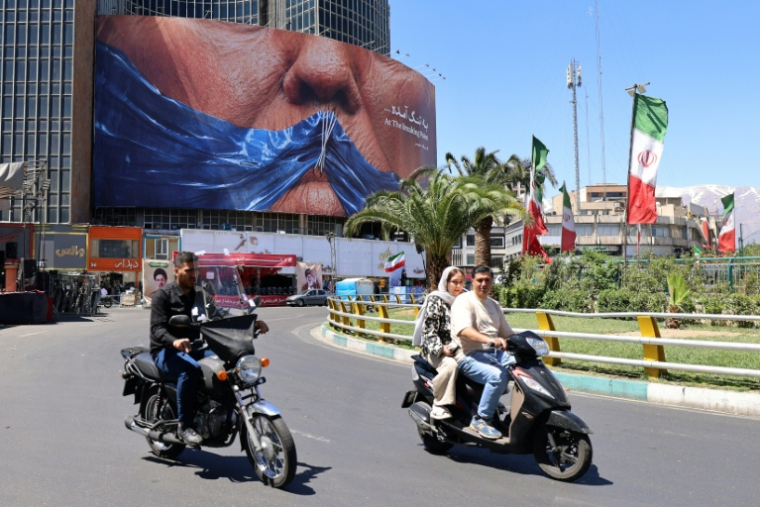
An anti-Trump poster in Valiasr Square in Tehran, May 10, 2026 (AFP / ATTA KENARE)
Oil prices started to rise again on Monday, Donald Trump having sharply rejected Iran’s response to American proposals to end the war, Tehran for its part warning the French and British against any intervention in the region.
“I just read the response from the so-called ‘representatives’ of Iran. I don’t like it – IT’S TOTALLY UNACCEPTABLE!”, the American president wrote in capital letters on Sunday evening in a brief message on his Truth Social network.
Even before the opening of Asian markets, oil prices rose, with a barrel of Brent gaining 2.69% to 104.01 dollars, while the prospect of a rapid reopening of the Strait of Hormuz, through which a fifth of black gold normally transits, seemed to be receding. consumed around the world, and which Iran has blocked since the start of hostilities on February 28.
More than a month after the start of the truce between the two belligerents, negotiations seem more deadlocked than ever and hopes for a settlement nebulous, with neither party having publicly revealed its proposals.
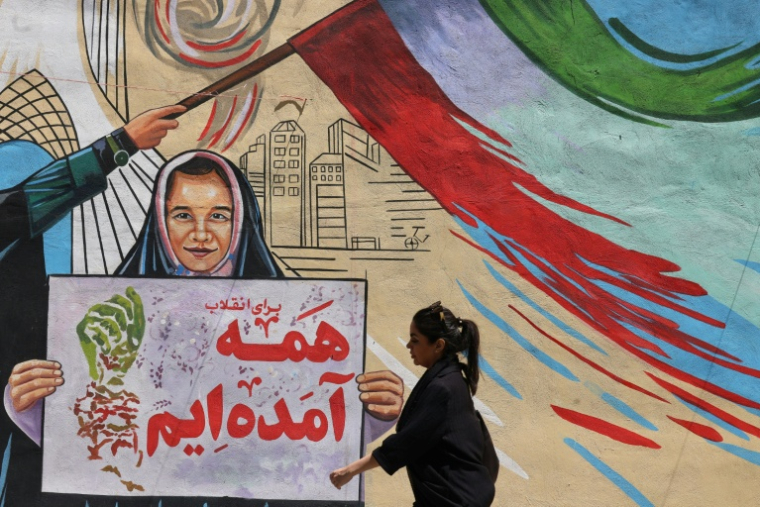
“For the Revolution, we all came”: an anti-American and anti-Israeli mural in Tehran, May 10, 2026 (AFP / ATTA KENARE)
After days of waiting, Iran announced on Sunday that it had responded to the American plan, but without detailing its response.
Iranian public television limited itself to reporting that Tehran’s response, transmitted via the Pakistani mediator, was “focused on ending the war (…) on all fronts, particularly in Lebanon, and on guaranteeing the security of maritime navigation”.
– Reopening of the strait –
According to the Wall Street Journal (WSJ), which cites sources close to the matter, Tehran’s proposal provides for a gradual reopening of the Strait of Hormuz, and a simultaneous lifting of the blockade of Iranian ports by the American navy.
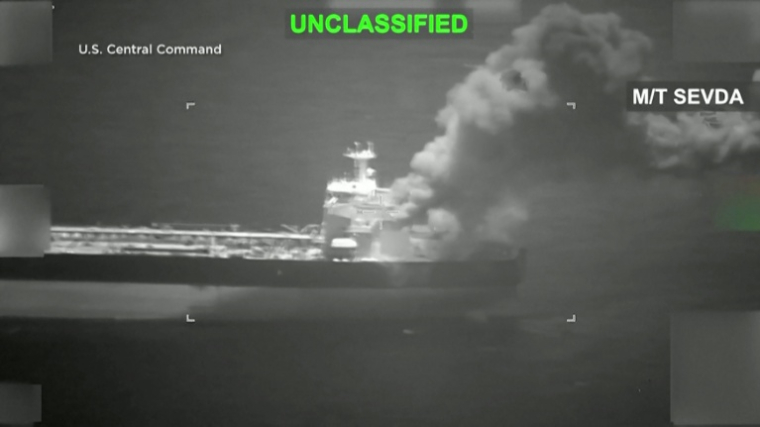
A video released by the US military on May 8, 2026 shows an apparent strike against the M/T Sevda, an Iranian-flagged oil tanker (US Central Command Public Affairs / -)
According to the American daily, Tehran would also be ready to “dilute” part of its enriched uranium and send the rest to a “third country”.
Washington and many countries suspect Tehran of wanting to acquire atomic weapons via uranium enrichment, which it denies, defending its right to civilian nuclear power.
“There are still nuclear materials – enriched uranium – which must be removed from Iran” and “enrichment sites to be dismantled,” Israeli Prime Minister Benjamin Netanyahu told the American channel CBS earlier on Sunday.
The war, which left thousands dead, mainly in Iran and Lebanon, “has accomplished a lot, but it is not over,” he warned.
– Drones in the Gulf –
In the Gulf, new attacks were reported on Sunday.
In Qatar, a bulk carrier coming from Abu Dhabi was targeted by a drone in territorial waters, before continuing its journey, according to the Ministry of Defense.
The Iranian Fars news agency claimed that it “flew the American flag and belonged to the United States”, without explicitly saying that Iran had targeted it.
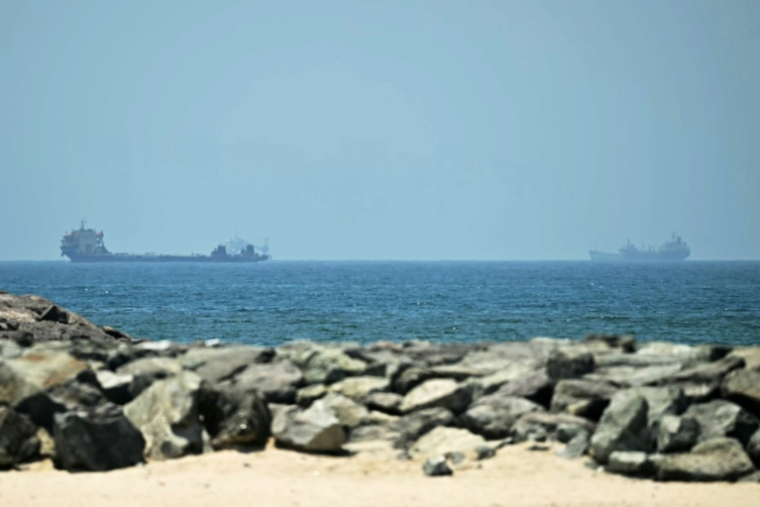
Ships in the Gulf near the coast of Sharjah, United Arab Emirates, May 9, 2026 (AFP / Giuseppe CACACE)
Other countries were targeted by drones: Kuwait did not specify the origin, but Abu Dhabi directly accused Tehran.
As soon as the war was launched by Israel and the United States, the Gulf monarchies, allies of Washington, were the subject of Iranian strikes.
These attacks come two days after the American army targeted two Iranian oil tankers in the Gulf of Oman, an access route to the Strait of Hormuz.
“Our restraint is over,” warned Ebrahim Rezaei, spokesperson for the national security committee of the Iranian Parliament. “Any attack on our ships will trigger a strong and decisive Iranian response against ships and bases” of the United States.
“We will never bow our heads to the enemy, and if it is a question of dialogue or negotiation, this does not mean capitulation or retreat,” President Massoud Pezeshkian wrote on X.
– Paris and London in the crosshairs –
The United Kingdom and France are working for their part to set up an international coalition aimed at securing the Strait, after a settlement of the conflict.
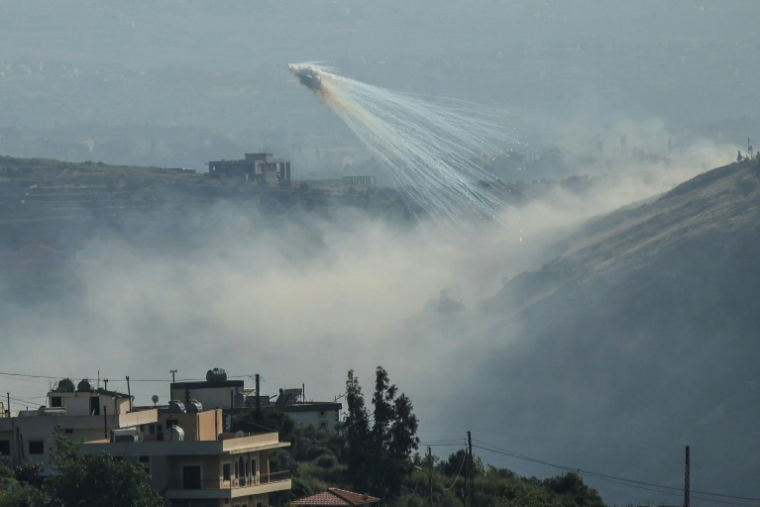
Israeli bombing on the surroundings of the village of Yohmor, in Lebanon, May 10, 2026 (AFP / -)
The defense ministers of the two countries will co-chair a videoconference meeting on Tuesday with around forty of their counterparts from countries ready to contribute to such a mission, London announced.
Tehran warned that any deployment would trigger a “decisive and immediate response” from the Iranian army, after the announcement by Paris and London of the sending of military buildings to preposition themselves in the region.
France “never considered” a military deployment in Hormuz, but a security mission “in concert with Iran”, said President Emmanuel Macron.
On the other front of the conflict, in Lebanon, Israel and pro-Iranian Hezbollah continue their mutual attacks, despite a ceasefire in force since April 17.
Two rescuers affiliated with Hezbollah were killed and five others injured in Israeli strikes in southern Lebanon, the Health Ministry said, according to which Israeli operations have left 2,846 dead since the start of the war on 2 March.