
China’s silent strategy: waiting as the art of war
Paradoxically, some Chinese strategists find themselves in a position where a rapid resolution of the conflict does not necessarily interest them. China economist Markus Taube summed it up this way: “The longer the United States remains mired in this quagmire and the longer the problem remains unresolved, the better it is for China.” Significantly, Beijing has rejected a UN resolution calling for the opening of the Strait of Hormuz.
The underlying logic is coldly calculated. First, the war in Iran mobilizes American resources – military, diplomatic and financial – that could otherwise be deployed against China. Second, the current conflict weakens Trump’s position domestically, thereby reducing his negotiating power with Beijing on trade issues. Third, Russia is profiting considerably from the conflict by increasing its oil exports to China, thereby filling the gaps created by US sanctions. Following dwindling supplies from Iran and Venezuela, Moscow has become China’s main oil supplier. It is certainly not China’s first choice, but it offers it a reliable alternative.
Fourth and final point: China has invested massively in electromobility in recent years, with the aim of reducing its long-term strategic dependence on oil. The war against Iran accelerates the political and economic arguments in favor of this transformation. Short-term difficulties are offset by long-term strategic positioning.
The Achilles heel of American strategy: when oil weapons are directed against the shooter
Trump’s strategy of using the Strait of Hormuz as economic leverage against China has a fundamental flaw: it harms the United States itself. The rise in oil prices directly impacts American consumers. The national average price of gasoline reached $3.41 per gallon in the weeks following the start of the war. American inflation has reached its highest annual level. The political pressure on Trump to lower energy prices again is considerable, particularly in view of the midterm elections in November 2026.
The idea that closing the Strait of Hormuz would penalize China more than other countries turns out to be partially unfounded upon closer analysis. Thanks to its reserves, its diversification strategy and the influence of Russia, China is better placed than many of its Asian neighbors, and even better than generally expected. At the same time, the surge in oil prices also affects the United States’ European allies who, while benefiting from American LNG exports, are suffering from rising energy costs. As Handelsblatt pointed out in April 2026: “The Hormuz Trap marks the beginning of a new geopolitical era; Iran, but also Trump himself, are exploiting sea lanes for foreign policy purposes.
A complete closure of the strait would not, mathematically speaking, allow the lost oil to be quickly replaced. The Gulf region’s alternative pipelines – the Saudi East-West Pipeline and the UAE’s ADCOP Pipeline – could jointly offset a maximum of 3.5 to 5.5 million barrels per day. Strategic reserves could provide an additional 6 to 7 million barrels per day in the short term. Even if all alternative solutions were activated simultaneously, a daily deficit of more than 10 million barrels would remain. This scenario illustrates why, ultimately, each party has an interest in a controlled opening of the strait, despite all geopolitical calculations.
Nuclear poker: the véritable arm in arrière-plan
At the heart of this conflict is Iran’s nuclear capacity, which makes the dilemma so worrying for Washington. Before the start of the war, Iran had enriched uranium to 60%, well above the 3.67% limit allowed by the 2015 JCPOA nuclear deal. IAEA General Grossi described this level of enrichment as “quasi-militarily relevant” and estimated that the existing quantity – between 440 and 450 kilograms – was theoretically sufficient to manufacture more than ten nuclear warheads as late as April 2026. the head of the Atomic Energy Organization of Iran bluntly declared that the demands of the United States and Israel to limit the enrichment program were “pious wishes that we will ignore.”
During the negotiations in Islamabad, the two positions were sharply opposed: the United States insisted on a 20-year moratorium on uranium enrichment and the physical transfer of all highly enriched uranium abroad. Iran proposed a moratorium of three to five years and mentioned at most a dilution supervised on site. This difference is not purely theoretical: a 20-year moratorium would prevent Iran from developing a preventive nuclear strike capability during its lifetime. A five-year moratorium, in geopolitical terms, represents little more than a reprieve.
At the end of April 2026, Russia offered its mediation: Moscow said it was ready to take charge of the storage of Iranian uranium – a technically feasible option, Russia having already stored Iranian uranium within the framework of the old Vienna agreement. However, Washington has shown no interest in this proposal The reason is probably strategic: storage in Russia does not definitively prevent the nuclear option, but only shifts the problem geographically.
Internal divisions in Iran: who is really negotiating in Tehran?
An often underestimated factor in conflict analysis is the power dynamics within Iran. According to an Axios article, Iran’s new leadership is deeply divided over the question of acceptable nuclear concessions. On one side, the pragmatic forces gravitating around the Minister of Foreign Affairs, Abbas Araghchi, who publicly demonstrated his desire to negotiate and spoke of “encouraging progress” in Geneva. On the other side, hardliners, represented by the director of the Atomic Energy Agency and some members of the Revolutionary Guards, reject any restriction of the nuclear program, considering it a national capitulation.
This division explains Iran’s often contradictory behavior: a Minister of Foreign Affairs announces the opening of the Strait of Hormuz, and less than 24 hours later, the Iranian general staff reverses this announcement. Trump first expressed satisfaction on TruthSocial that “the Strait of Hormuz is fully open and operational” and that Iran has pledged to “never close the Strait again”; then came Tehran’s denial. This game of hesitations and reversals does not reflect a cynical attempt at deception, but rather real disagreements within the Iranian authorities.
This division makes it difficult to reach reliable agreements. Even if a diplomat in Islamabad or Geneva agrees, it is unclear whether the military – and particularly the Revolutionary Guards, which de facto control the Strait of Hormuz and the nuclear program – will implement it. Past experience of Iranian-US relations shows that political leaders can be pragmatic, while paramilitary structures pursue their own goals.
Contemporary energy geopolitics: paradigm shifts in slow motion
The war in Iran and the Hormuz dilemma are not isolated events. They are part of a broader paradigm shift in global energy policy. The era of “secure” energy supplies via established trade routes is over. Sea lanes have become the main battleground for geopolitical power; they are no longer just conflict zones, but active instruments of state foreign policy.
The Handelsblatt newspaper summed up this change succinctly: not only Iran, but also Trump himself, have turned the blockade of the sea lanes into an instrument of foreign policy. Iran has closed the strait to tankers transporting oil to countries it does not support. The United States, in retaliation, imposed a blockade on Iranian ports. Both sides use energy flows as a weapon, causing collateral damage on a global scale. According to Handelsblatt, six weeks of war with Iran have triggered an “energy supply shock on a scale not seen for the global economy since the 1970s.”
In this new context, China’s long-term strategic investments – in electric vehicles, rare earths and alternative supply chains – constitute a structural asset. Beijing has realized that its dependence on a single sea route represents a major security flaw. The solution lies in diversification: Russian oil transported by pipeline, African oil, progressive electrification of transport and national production of renewable energies. At the same time, China has maintained access to Iranian oil supplies through discreet diplomatic channels: Chinese ships have apparently benefited from guarantees of non-attack and, in some cases, have been able to circumvent the Iranian blockade by paying bribes.
The situation is particularly delicate for Europe. The continent is dependent on LNG imports, whose prices have soared due to the Strait of Hormuz crisis. Full normalization of energy markets requires a political solution to the Iranian conflict, but Europe has virtually no direct influence on these negotiations. Traditional European mediators, such as Germany and France, are effectively sidelined.
The hidden agenda: energy domination at the heart of the Trump doctrine
Trump has never hidden that energy domination was for him a central instrument of American foreign policy. On the first day of his second term, he declared a national energy emergency and, since then, has continued to pursue the goal of making American oil and gas the world benchmark for energy production. LNG exports increased by more than 20% during his presidency. European allies Japan and South Korea have already committed to buying American energy.
The link with the war in Iran is direct: if Iranian and Venezuelan oil disappears from the market – whether due to war damage, sanctions or deliberate blockades – a vacuum is created. This void can only be filled by supplies controlled by the United States or its allies. Washington exercises direct or indirect influence on oil production, from Canada to Guyana via Venezuela – approximately 20% of world production.
However, as indicated from the outset, this plan presents a systemic weakness: Russia is the third party that benefits from it. Moscow has the capacity to supply virtually any resource in commercial quantities and can guarantee stability of supply thanks to its geographical location and its nuclear umbrella. Each “victory” won by Washington over one of China’s energy suppliers – Iran, Venezuela, or others – effectively strengthens Russia’s position, with Beijing then turning to the most reliable alternative supplier. This paradox of the Trump doctrine was clearly highlighted by Carnegie researchers from March 2026.
Between agreement and ongoing crisis
The next few weeks will probably be crucial. Trump has called a White House meeting on Iran for Monday, April 27, 2026, to discuss the impasse and possible next steps with his team. The latest Iranian proposal is on the table and Pakistani mediators are ready. The question is whether Washington will take the bait.
Three scenarios are possible. In the first, the Trump administration accepts the Iranian proposal in a modified form: a temporary opening of the Strait of Hormuz in exchange for an extension of the ceasefire, the nuclear issue being explicitly reserved for a second round of negotiations. This would relieve pressure on the global oil market in the short term, but weaken the US negotiating position in the long term. In the second scenario, Washington insists on a global agreement: no opening of the Strait of Hormuz without substantial and simultaneous concessions on nuclear weapons. This risks worsening the escalation, but does not prematurely compromise its negotiating leverage. In the third scenario, Iran permanently breaks off negotiations and reestablishes an active blockade, which would lead to a further surge in oil prices in the short term and further destabilize the global economy.
From an economic point of view, the situation is clear: the world has a vital interest in a rapid normalization of maritime traffic on the Strait of Hormuz. Each month of prolonged partial lockdown costs the global economy hundreds of billions of dollars in additional energy costs, logistics costs and lost productivity. The IEA had already decided, in March 2026, on an unprecedented release of 400 million barrels from strategic reserves over a period of 30 days – an emergency mechanism which does not fundamentally call into question the character irreplaceable part of the Hormuz sea route.
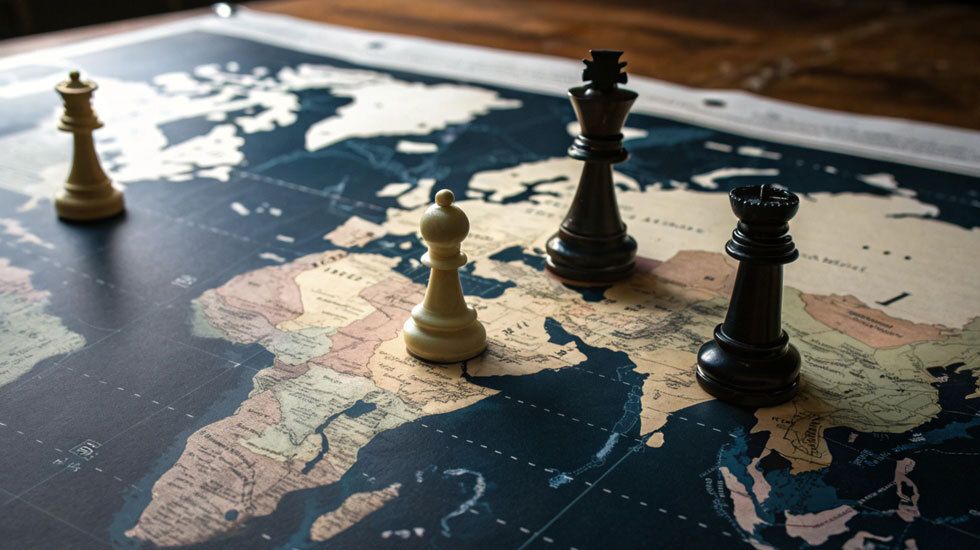
The Strait of Hormuz, as British geostrategist Nicholas Spykman once put it, is not a geographical accident, but the beating heart of the global energy system. Whoever controls this beating heart controls a crucial lever of the global economy. Trump, Tehran and Beijing are all well aware of this fundamental truth – and it explains why this ostensibly regional conflict is in reality a planet-wide chess game aimed at reshaping the economic and political power structures of the 21st century. century. The Iranian offer to open the Strait of Hormuz and postpone the nuclear issue is therefore less an offer of peace than a tactical masterstroke – a maneuver that forces Trump to choose between the price of his principles and the price to pay.



:fill(black)/2026/06/12/6a2bf72c44adf656066407.jpg "Scènes de fêtes au Mexique pour louverture du Mondial")
