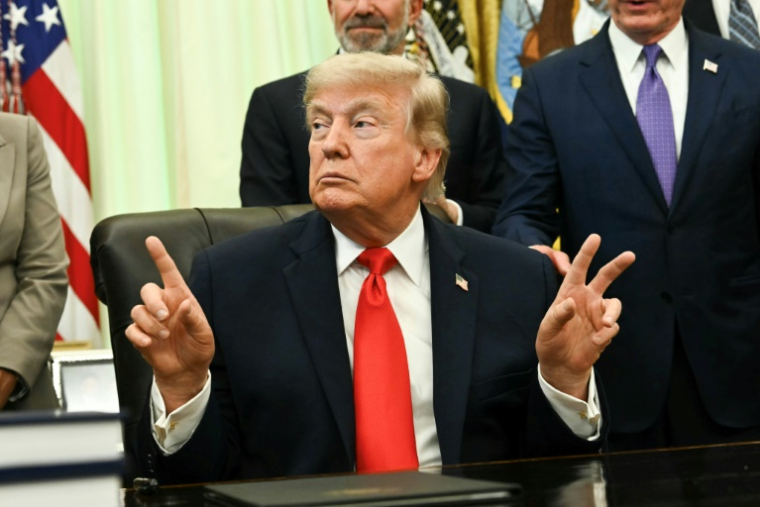
Donald Trump in the Oval Office, June 11, 2026. (AFP / Kent NISHIMURA)
Iran and Pakistan’s mediator said Friday that an agreement with the United States was close to end three and a half months of conflict in the Middle East, with a senior American official also expressing an optimistic tone.
After weeks of laborious negotiations and repeatedly dashed hopes, are we in the home stretch? The main protagonists say they are confident even if the version of the text given by the Iranian media differs significantly from that put forward by Washington.
“The memorandum of understanding in Islamabad (capital of Pakistan, mediator of the negotiations) has never been so close”, wrote on X the head of Iranian diplomacy Abbas Araghchi, calling on the media not to “speculate on its content and promising details “in due time”.
The spokesperson for his ministry confirmed on state television that an agreement had been found “on most points” and that a meeting was underway to “obtain consensus between decision-making bodies” in Iran.
Same positive tone from the side of the Prime Minister of Pakistan, main negotiator in this conflict triggered by American-Israeli strikes on February 28, before the entry into force of a truce on April 8. “Peace has never been closer than today,” according to Shehbaz Sharif.
And in Washington, the senior official estimates, on condition of anonymity, that there is an “80 to 85%” probability of a framework agreement (Memorandum of understanding) opening a period of 60 days of technical discussions, but “not 100%”. “The finish line is not yet crossed,” he warned.
“What is a deal for?”
Switzerland has already offered to host a possible signature, while a G7 summit in the presence of Donald Trump is due to begin on Monday in Evian, on the banks of Lake Geneva, on the French side. And the markets are betting on an agreement, with oil falling below $90 per barrel.
The American president, who has already announced an imminent agreement 39 times according to a CNN count, is struggling to find a solution to this unpopular war, as the mid-term elections approach and while his country should be celebrating with the World Cup co-organized by the United States.
He posted a furious message on Friday. “The terms (agreement) that Iran leaked to the lying media have NOTHING to do with the terms we agreed to in writing,” the Republican billionaire wrote on his Truth Social network.
“These are people who have no honor. It is impossible to negotiate in good faith with them,” he said.
The Iranian Mehr press agency published during the day what it presented as a draft 14-point protocol, with drastic conditions: maintaining control over the Strait of Hormuz, right to uranium enrichment, rapid release of $24 billion in frozen Iranian funds abroad.
Washington, for his part, delivered a completely different version of the text.
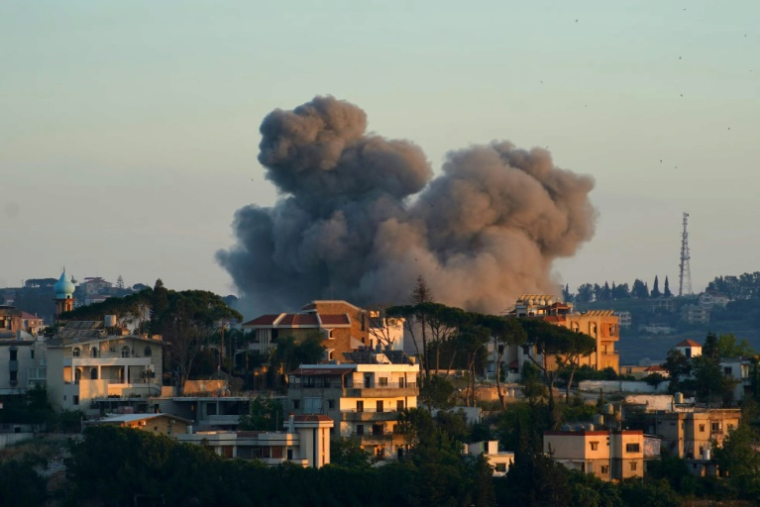
Smoke after an Israeli strike on Nabatiyé, in southern Lebanon, June 12, 2026. (AFP / Abbas FAKIH)
According to the official, the compromise should lead to the reopening of Hormuz, a strategic sea route for global hydrocarbon trade.
It must also lead to the “dismantling” of the Iranian nuclear program and allow the United States to recover highly enriched uranium, which would be “destroyed on site” then “taken out” of the country.
Tehran denies wanting to acquire an atomic bomb, as the United States and Israel accuse it of doing.
Finally, on the question of assets, “the Iranians will not receive money and the funds will not be released simply by signing an agreement or participating in a meeting”, insisted on X the American vice-president JD Vance.
This point is central for Iran, after decades of sanctions which are suffocating its economy.
“What is a deal for?”
The conflict has engulfed the Middle East, left thousands dead, mainly in Iran and Lebanon, and shaken the world economy.
“I don’t know if this will be good or bad for us,” a 29-year-old woman reacted to AFP in Tehran, asking to remain anonymous. “The main goal of this war was for the United States to dismantle the system, and that didn’t happen. So what’s the point of a deal?”
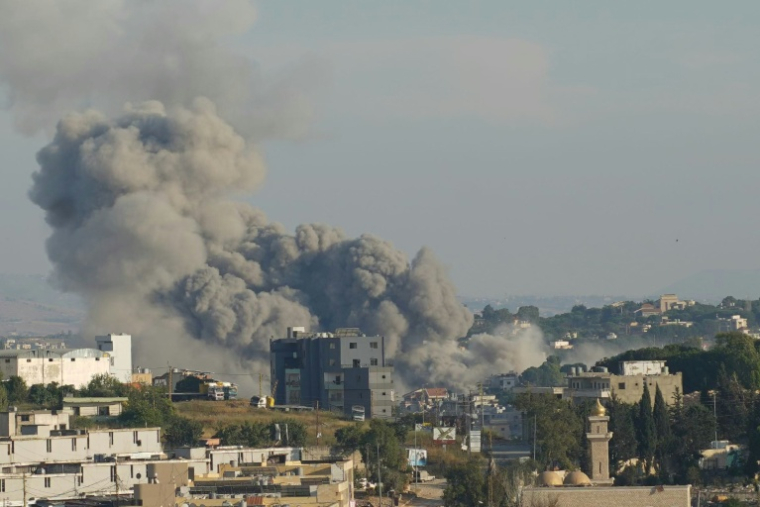
Smoke rises from a site hit by an Israeli air attack in Nabatieh in southern Lebanon on June 11, 2026 (AFP / Abbas Fakih)
Another major sticking point, the Lebanese front.
According to Washington, the agreement under discussion with Iran does include Lebanon, as requested by Tehran even though Washington had always said it wanted to deal with this issue separately.
Lebanon was drawn into war on March 2, when Hezbollah targeted Israeli territory in support of Iran. Since then, Israel has been shelling the neighboring country, saying it wants to “eliminate” the Shiite movement, strikes which have left more than 3,700 dead.
/2026/06/12/6a2bd18d8af1c253720555.jpg "\"Is he a genius in the art of the deal or is he talking nonsense?\"Donald Trump’s strategy against Iran raises questions, according to a geopolitical scientist")
/2026/06/12/6a2bf4e1c1df0409196392.png "Ukraine strikes Tatarstan, in central Russia, 1,600 km from its border")