
 |
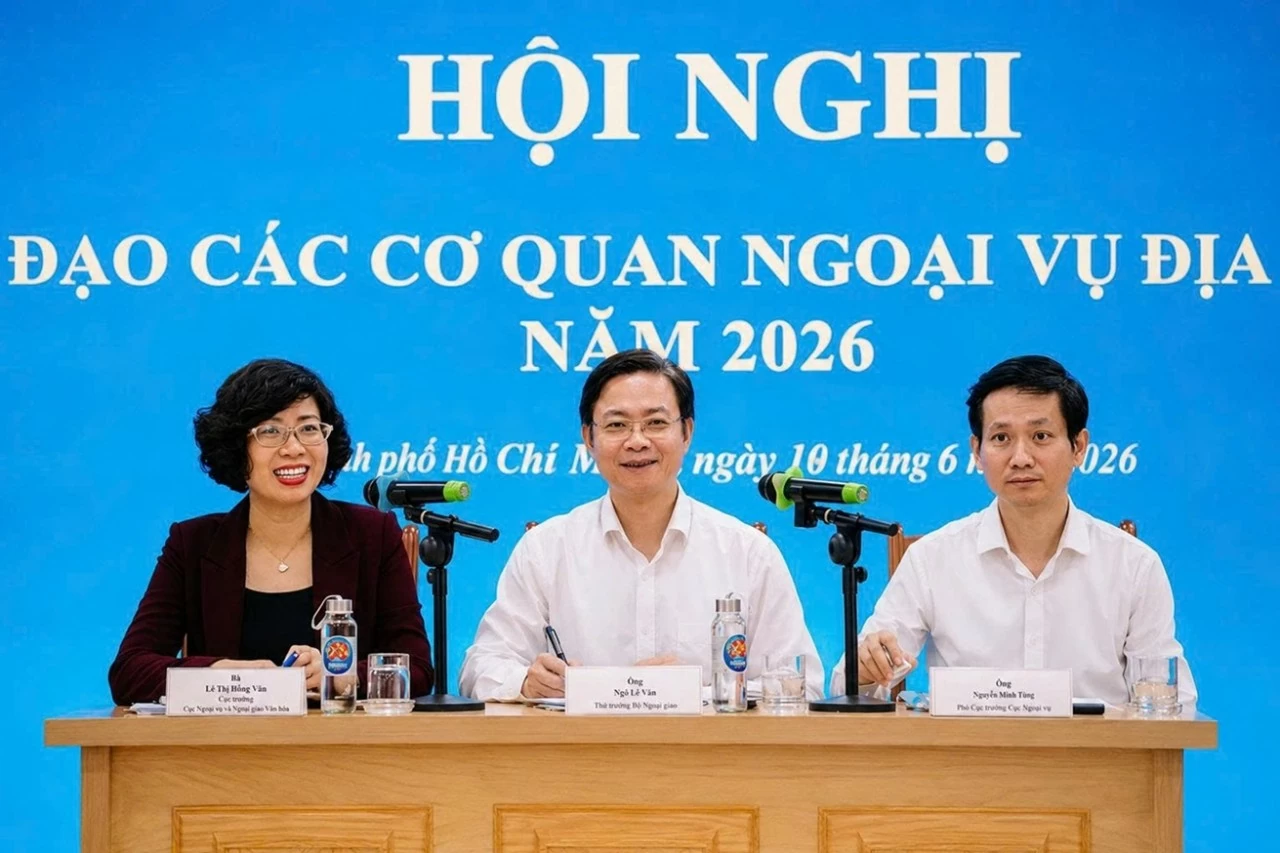
| Deputy Foreign Minister Ngo Le Van attends the Conference of Leaders of Local Foreign Affairs Agencies in 2026. (Photo: Chu Van) |
This point was highlighted by Deputy Foreign Minister Ngo Le Van during the 2026 Conference of Heads of Local Foreign Affairs Agencies held on June 10 in He Chi Minh City.
Speaking at the conference, Deputy Minister Ngo Le Van said the world is entering a period of profound transformation with the formation of a new international order, increasingly fierce strategic competition between major powers, while science and technology, innovation and digital transformation become decisive factors in the national competitiveness.
In this context, the 14th National Party Congress identified foreign affairs and international integration as a crucial and ongoing task, playing a pioneering role in ensuring a peaceful and stable environment and mobilizing external resources for national development.
“Local communities are no longer just a rear base, but must become the first line of foreign affairs and international integration,” underlined Deputy Minister Ngo Le Van.
According to the Deputy Minister, local communities are the direct beneficiaries of investment capital, technologies, knowledge and international cooperation opportunities. Consequently, the effectiveness of foreign policy must not be measured only by the number of agreements signed, but also by their materialization in investment projects, in export turnover, in tourist flows, in job creation and in positive impacts for the development of populations.
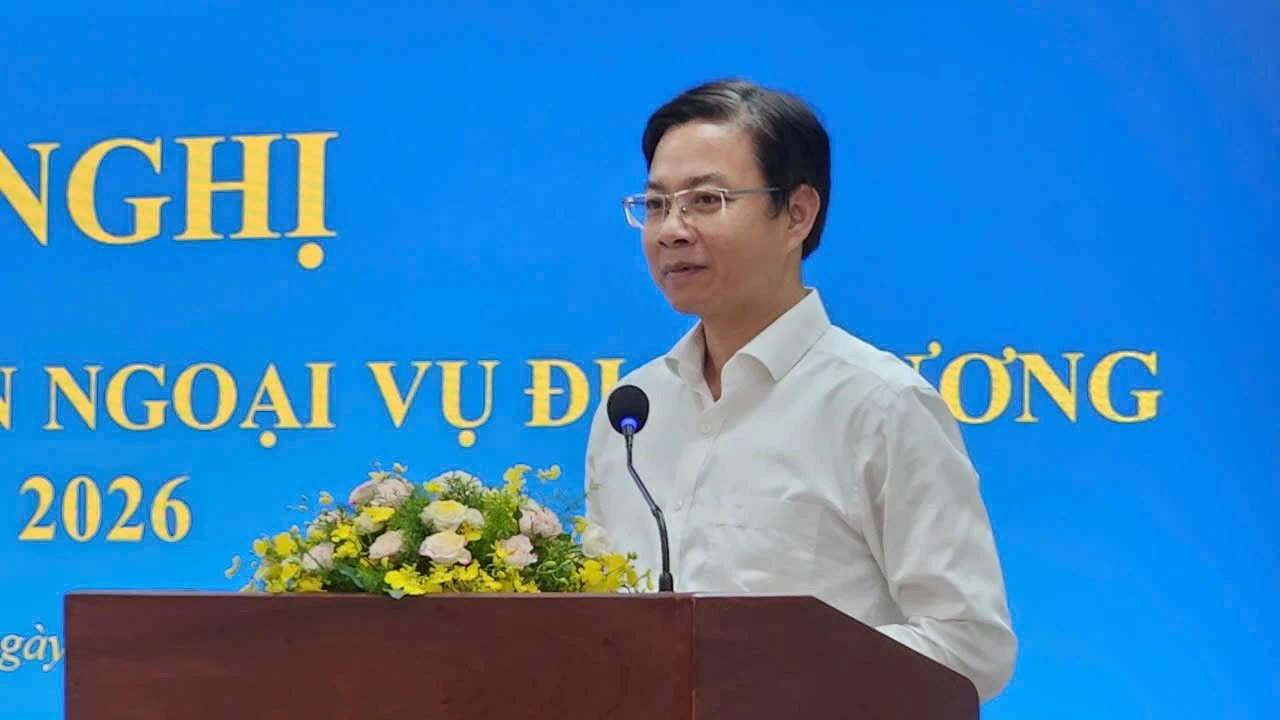 |
| Deputy Minister Ngo Le Van speaks during the conference. (Photo: Chu Van) |
During the conference, Vice Chairman of the People’s Committee of Ho Chi Minh City, Bui Minh Thanh, said that organizing this conference was an honor for the city, especially as Ho Chi Minh City enters a new phase of development with demands increasingly advanced international integration.
According to Vice President Bui Minh Thanh, external relations have become one of the main drivers of economic growth, attracting investments, transferring technologies, developing high-quality human resources and strengthening the region’s position on the international stage.
You may like
Ho Chi Minh City has always attached paramount importance to foreign affairs, emphasizing the importance of closely linking them with socio-economic development goals and placing citizens and businesses at the heart of its services. It actively promotes investment, trade, culture and innovation in order to attract resources from quality for sustainable development.
Evaluating the action of local authorities in matters of foreign policy during the past period, the Ministry of Foreign Affairs noted that they have made numerous concrete contributions to the overall development of the country. International cooperation has intensified considerably and many cooperation mechanisms and twinning agreements have been successfully implemented.
Since the start of the 13th term of the National Congress, local governments across the country have signed more than 420 international cooperation agreements. Many of them have transformed their external relations into foreign direct investment projects, developed their export markets, attracted international tourists and implemented cooperation programs in training, labor and technology transfer.
Economic diplomacy remains a priority area. In recent times, the Ministry of Foreign Affairs, in collaboration with local authorities, has organized numerous major networking conferences, creating more than 1,000 links between local communities and international businesses and partners, thereby contributing to the promotion of investment, trade and local economic development.
Furthermore, cultural diplomacy remains a key element of the country’s soft power. Local communities are investing more and more in the preservation and promotion of their cultural heritage, the enhancement of their image and the development of local brands.
Vietnam currently has 78 UNESCO World Heritage sites. According to Deputy Minister Ngo Le Van, these titles not only help honor cultural values, but also “transform heritage into assets”, thus creating additional resources for tourism and economic development and strengthening the prestige of the country.
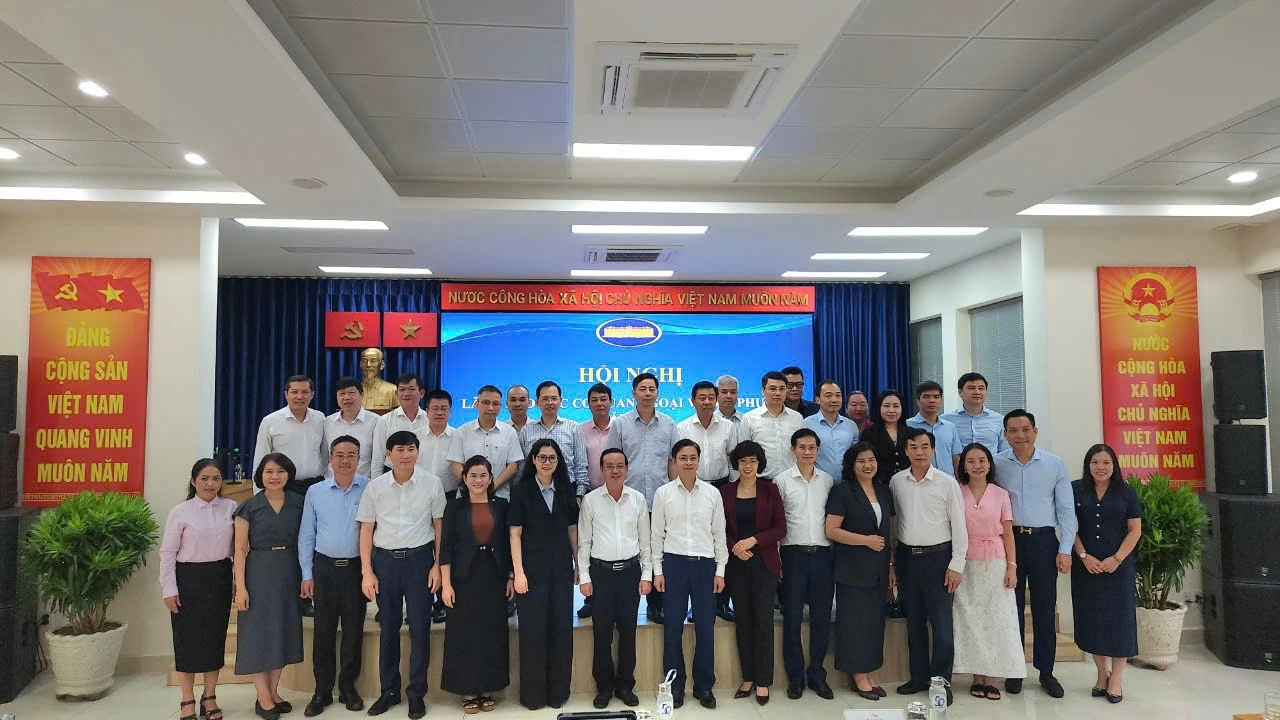 |
| Delegates attending the conference pose for a souvenir photo. (Photo: Chu Van) |
The Conference, however, frankly recognized many shortcomings that need to be corrected. The effectiveness of economic diplomacy between local communities remains uneven; many international cooperation agreements, once signed, have not been implemented effectively or do not have mechanisms for monitoring and evaluating results. In certain local authorities, the staff responsible for foreign affairs remains small, must manage multiple tasks and do not fully meet the requirements of the new context.
According to Deputy Minister Ngo Le Van, it is necessary to change the perception that “foreign affairs are the responsibility of the central government.” Local communities must be more proactive in creating opportunities for international cooperation, attracting resources in terms of capital, technology, innovation and ecological transition, in order to give new impetus to development.
This year’s conference takes place against a backdrop of restructuring of local government organizational models, consolidation of numerous foreign policy agencies, expansion of administrative areas and significant changes in resources. This context presents both challenges and opportunities for building a more effective, professional and efficient local foreign policy apparatus.
The opinions, suggestions and practical experiences exchanged during the Conference will be compiled and used in the preparation of the 22nd National Conference on Foreign Affairs, scheduled for the end of August 2026.
Source : https://baoquocte.vn/thu-truong-ngoai-giao-ngo-le-van-chu-dong-hoi-nhap-quoc-te-tao-dong-luc-moi-cho-phat-trien-dia-phuong-404881.html


