President Donald Trump has always considered himself above all an outstanding negotiator, but he seems to have reached an impasse with Iran, his strong words, his threats and even his military actions having failed to move Tehran from its long-held positions.
With the Trump administration’s changing goals, it is becoming difficult to assess the progress of American efforts. Mr. Trump and his top advisers insisted that the United States had already won the war and that the Islamic Republic was ready to strike a deal amid intensifying American threats during the fragile ceasefire.
But Mr. Trump once again backtracked, declaring on Monday that he had suspended plans for an imminent resumption of attacks at the request of the Arab Gulf states, because “serious negotiations are underway and, according to them, as great leaders and allies, an agreement will be reached, which will be completely acceptable to the United States of America, as well as for all countries in the Middle East and beyond.”
Although he said he had canceled the strikes planned for Tuesday, Mr. Trump continued to bluster, saying he had told military leaders to “be prepared to launch a full-scale, all-out attack on Iran at any time in the event an acceptable agreement is not reached.” President Trump has repeatedly set deadlines for Tehran, before backing down.
But despite growing internal unrest, a drained economy and the death of numerous leaders, there is no indication that Iran is ready to meet Donald Trump’s demands. In reality, Iran has remained stuck to its positions. This has prevented the achievement of Mr. Trump’s main objectives: Iran has still not agreed to abandon its nuclear program or the development of its ballistic missiles, nor to stop supporting its allies in the region, notably those in Gaza, Iraq, Lebanon and Yemen.
On Monday, the White House defended the president’s approach, saying that “Mr. Trump always prioritizes peace and diplomacy,” but that he will only accept a deal that puts America first. “President Trump holds all the cards and wisely keeps all options on the table to ensure that Iran can never have a nuclear weapon,” spokeswoman Olivia Wales said in a statement sent to The Associated Press.
The lever of the Strait of Hormuz
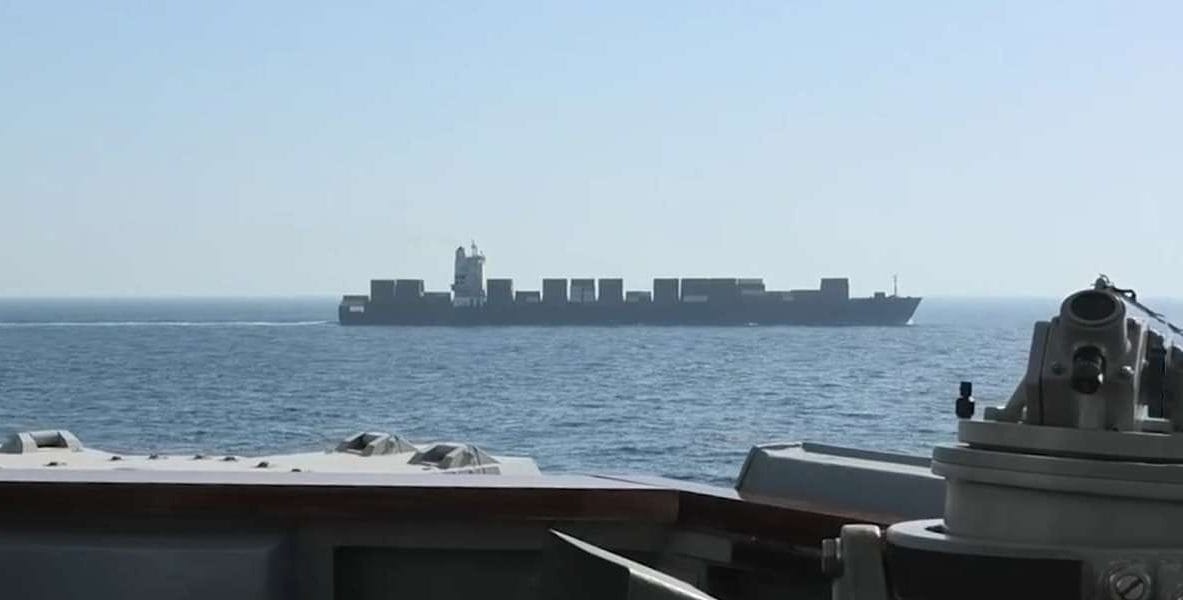
Importantly, Iran still exercises significant control over the Strait of Hormuz, a vital sea route for global oil supplies, even as the US military has imposed its own blockade on Iranian ports. The subsequent wild swings in the global energy market sent gasoline prices soaring, hurting U.S. consumers and creating potential problems for Donald Trump’s Republican Party ahead of the midterm congressional elections in November.
Mr. Trump’s strategy of intensifying pressure – economic and military – to bend foreign governments to his will is not working in Iran as it has in Venezuela, Cuba and elsewhere. Oil blockades brought both countries to their knees and the Trump administration quickly ousted Venezuelan leader Nicolas Maduro, but it does not have an asset as effective as Iran’s control of the Strait of Hormuz.
With the war against Iran driving up costs for Americans, Mr. Trump’s economic approval rating has plummeted, according to an AP-NORC poll conducted last month, with Republicans themselves having less confidence in his leadership.
For all of Donald Trump’s rhetoric, Iran has been unwilling to accept restrictions on its policies that go beyond what it conceded during nuclear deal negotiations with world powers during the Obama administration. Mr. Trump called this agreement “the worst ever negotiated” by the United States and withdrew from it during his first term in 2018.
Since a fragile truce took effect last month, Trump has criticized the slow pace of negotiations aimed at reaching a permanent deal.
“For Iran, time is running out, and they had better move, FAST, otherwise there will be nothing left of them,” argued Mr. Trump on social networks on Sunday, shortly after a call with Israeli Prime Minister Benjamin Netanyahu.
The Iranian response was not long in coming: “Our armed forces have their finger on the trigger, while diplomacy continues,” reported Mohsen Rezaei, military advisor to the Iranian Supreme Guide, on state television.
The conflict in an “impasse”
Ali Vaez, director for Iran at the International Crisis Group, who has observed years of unsuccessful diplomacy between Washington and Tehran, stressed that these long-standing adversaries do not consider themselves defeated by the conflict
“Since the ceasefire came into force, Washington and Tehran seem to assume that time is on their side: each believes that the blockade and counter-blockade in the Strait of Hormuz increase the costs for the other side, while granting them a respite to prepare for a possible resumption hostilities,” said Mr. Vaez.
Despite the impact of the US economic pressure campaign, Iranian officials have not reached the threshold of tolerance “to the point of accepting what they perceive as capitulatory demands”, he added.
David Schenker, former assistant secretary of state for the Middle East during the first Trump administration and currently at the Washington Institute for Near East Policy, called the current situation “an impasse.”
He said Trump likely had “reluctance” about returning to all-out military conflict, particularly because of Gulf Arab countries’ fears of Iranian retaliation and the volatility of energy markets, with its political implications for the United States. United States.
Rich Goldberg, a former National Security Council official during Mr. Trump’s two terms who now works for the think tank Foundation for Defense of Democracies, insisted that Mr. Trump always acted from a position of strength, including on the Strait of Hormuz.
Mr. Goldberg, who is particularly interested in American energy dominance, said that while reopening the strait would ease the “pain at the pump” felt by many Americans, it was not crucial.
“Short-term pain at the pump distracts people from America’s global energy dominance,” he argued. This is not a permanent crisis.”