It is neither a war nor an invasion. However, in Washington as in Beijing, the matter is taken extremely seriously. In a few days, a financial operation led by BlackRock around the Panama Canal has awakened all the strategic obsessions of the great powers. Because behind two commercial ports now lies an explosive question: who really controls the vital routes of global trade?
A financial operation that has become a matter of state
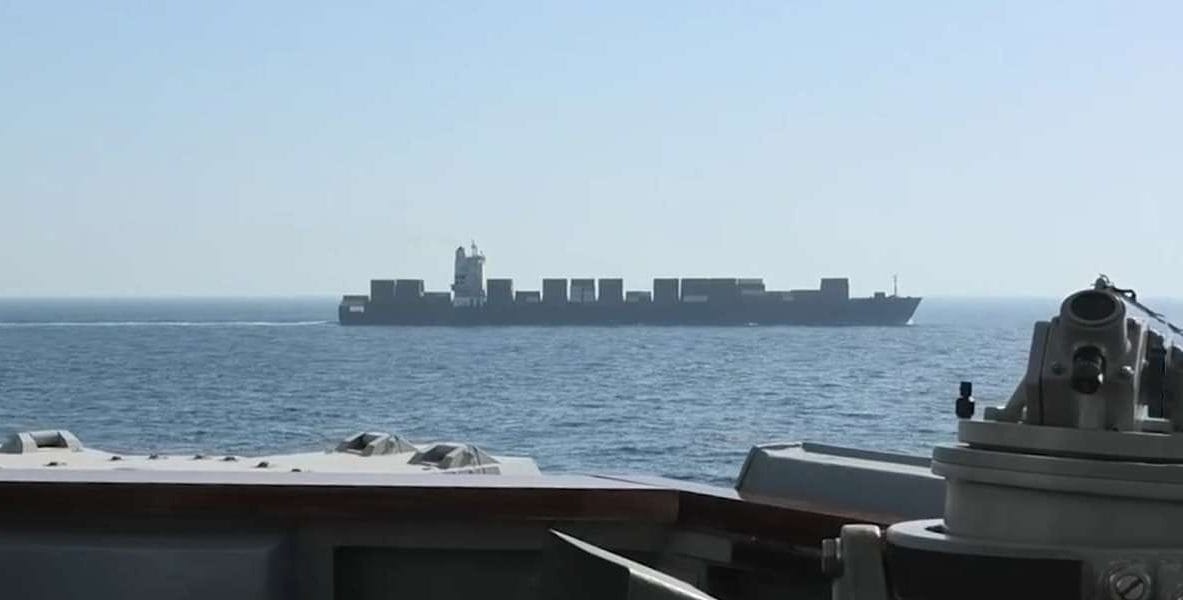
Initially, the story resembles a classic transaction between financial giants. A consortium led by BlackRock announced on March 4, 2025 an agreement to buy part of the port activities of the Hong Kong group CK Hutchison Holdings, notably the ports of Balboa and Cristóbal, located on each side of the Panama Canal. But very quickly, the issue went beyond the simple economic framework. For what ? Because these ports are strategic. Absolutely strategic. The Panama Canal is one of the most important maritime passages on the planet. A huge part of world trade passes through it each year, particularly between Asia and the East Coast of the United States. Controlling the infrastructure around the canal, even indirectly, means having colossal leverage over global trade flows. And in Washington, some officials have long seen the presence of Chinese or Hong Kong companies around the canal as a major geopolitical risk.
Why the United States is obsessively watching Panama
To understand American nervousness, we have to go back a century. For decades, the Panama Canal symbolized American power on the American continent. The United States built the canal at the beginning of the 20th century before gradually returning it to Panama at the end of the 1990s. But in the American strategic imagination, this area remains an essential part of the “backyard” of the United States. The problem is that China has enormously strengthened its economic presence in Latin America in recent years: massive investments, infrastructure, energy, ports, strategic minerals and telecommunications. Result: in Washington, many fear that Beijing will gradually use its economic influence to gain geopolitical weight near the canal. The takeover led by BlackRock was therefore perceived by some as a form of American “regaining control” around a vital point in world trade.
Beijing sees a disguised American offensive
On the Chinese side, the reading is totally different. Media close to power have accused Washington of using its financial power to reduce Chinese influence in strategic global infrastructures. Because the subject goes far beyond Panama. For several years, the great powers have engaged in discreet but gigantic competition for control of ports, maritime routes, submarine cables, digital networks, critical minerals and energy infrastructure. In other words: the world is entering an era where infrastructures become weapons of power. And in this battle, private investment funds sometimes play an almost geopolitical role.
The detail that changes everything: BlackRock is not buying the channel
This is where we have to be very clear, because many viral videos say something else. BlackRock is not buying the Panama Canal itself. The canal remains controlled by the Panamanian state via the Panama Canal Authority. But the ports around the canal represent an essential strategic layer: logistics, storage, movement of goods, flow management and maritime services. And in today’s world, controlling peripheral infrastructure can sometimes be almost as important as controlling the passage itself. This is exactly what worries Beijing and reassures certain American officials.
A new cold war… global finance version
Above all, this affair tells something deeper: modern geopolitics no longer necessarily resembles the classic conflicts of the 20th century. Today, clashes also involve investments, financial funds, technologies, ports, logistics networks and global supply chains. Freighters sometimes replace tanks. Infrastructure replaces military bases. And the financial giants are becoming global strategic players capable of influencing the balance between powers. The Panama Canal is therefore no longer just a place of maritime transit. It once again becomes a symbol of the new global battle for control of the arteries of planetary commerce.