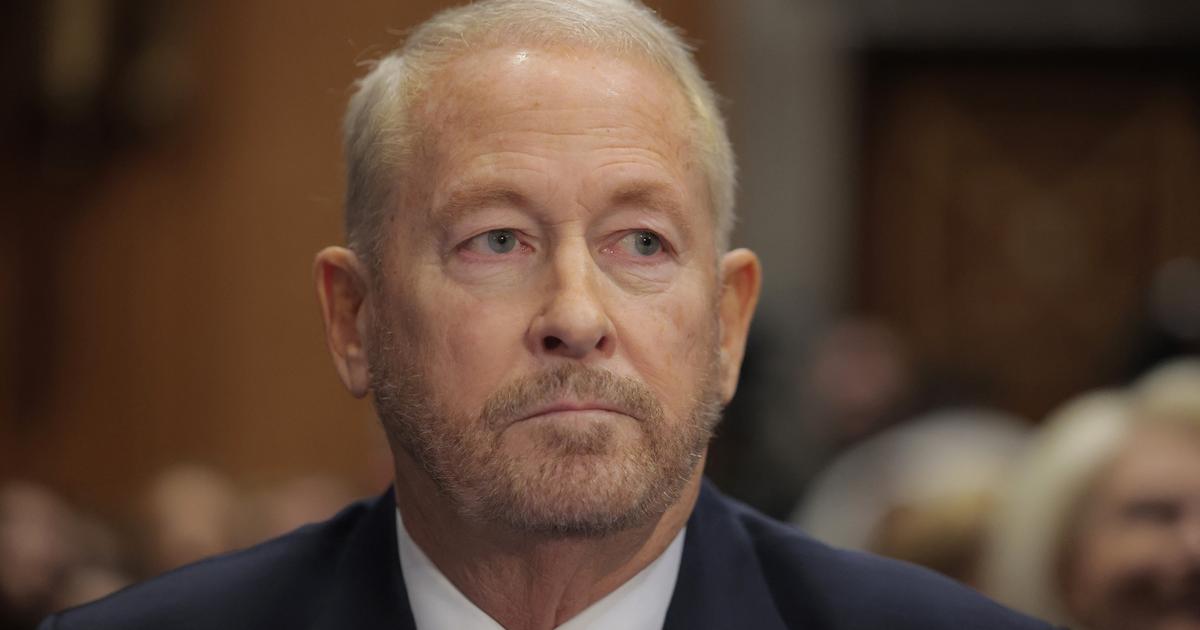
During a press conference organized this Monday, June 15 at the Marthe-Condat auditorium of the University of Toulouse, Denis Mukwege, gynecologist and human rights activist, 2018 Nobel Peace Prize winner for his work repairing the bodies of women who had been mutilated in the Republic Democratic Republic of Congo, discusses for La Dépêche du Midi sexual violence as a weapon of war in the Democratic Republic of Congo (DRC) and in countries in conflict, awareness and the essential role of men, institutions and international law. Odile Rauzy, president of the University of Toulouse, also spoke about the partnership they have.
Rape in times of conflict is a strategy of mass destruction aimed at lastingly traumatizing civilian populations through the bodies of women and children. Nobel Peace Prize winner Denis Mukwege was in Toulouse this Monday to analyze the mechanisms of this scourge and decipher the challenges of the new scientific and medical partnership signed with the university.
Why did you come here, to the University of Toulouse?
Odile Rauzy, president of the University of Toulouse : If Mr. Mukwege is here, it is first of all a recognition of a strong partnership between the university and its actions. The university has a health faculty very committed to the fight against discrimination and sexual and gender-based violence.
DM : The university’s journey in the fight against all discrimination, particularly sexist and sexual violence, is remarkable. It is an honor for me to be welcomed.
What does this partnership between you and the university consist of?
Odile Rauzy : This partnership aims to combine our experiences and enrich our knowledge on the management of violence against women, in an interdisciplinary manner. The possibility of collaborating allows us to move forward in supporting victims, whether at the medical, psychological, social, societal or even legal level. We rely on our medical expertise, psychological support, the legal dimension and the societal impact of violence since in Toulouse, we have a certain number of assets in these respects. We want to create together a committed community, which can act globally, from prevention to post-traumatic follow-up against this scourge. This partnership is also for training, research and awareness, so that this issue is never taboo again. The idea is to be able to join the chair that Doctor Mukwege holds.
DM : The chair is created by different universities which gave me the honorary degree of doctor honoris causa 2026. We hope that Toulouse can bring a lot to our partnership.
Also read:
2026 World Cup – DR Congo: list of players, prize lists and schedule of matches for the Leopards
How is society evolving on the subject of sexual violence? Do you feel a change?
DM : Yes. Twenty years ago, it was impossible to even broach this subject. At the time, I was trying to use scientific publications to create a shock, without really provoking the expected engagement around me. Today, we talk about it more. But society still struggles to transfer the shame to the executioner, not the victim. Too often, the family protects the abuser. Real awareness will come when victims can speak without fear and shame changes sides.
What is the specificity of sexual violence in armed conflicts?
DM :Â In a peaceful situation, rapes are latent: we don’t talk about them; in the conflict, they are obvious because there are no more rules. The consequences for the victims are immense: psychological, social, family. There is not a single conflict that we know of where rape will not be used as a weapon of war: in Ukraine, in Iraq, in Kosovo, in Rwanda, in Sudan. I always say that the first to suffer are women and children. It’s not just a shame for the victim, it’s a shame for all of us.
Also read:
“I’m going to empty a magazine into your mouth”, “you dirty whore, I’m going to fuck you and kill you”: detained for the murder and rape of his ex-wife, he is convicted of death threats and violence in prison
Should international law accompany this fight?
DM :Â Absolutely, it’s essential. Rape in conflict can be war crimes and crimes against humanity. Without a strong international legal framework, there is no sanction, no prevention. We must continue to support this right, even if some act against it, because it is our reference for protecting victims and penalizing the executioners.
Should awareness of this violence also come from men?
DM :Â This concerns both women and men. They should get involved because the victims are women, and we share the same humanity. It has to start in the cradle. Depending on how you treat your boy, you are setting the stage for what he will become. Education is needed to make boys understand that a relationship with a woman is not a relationship of domination, but a relationship of equality. The dignity of girls suffers from this patriarchal society which wants to crush them.
Also read:
“My children asked me every day if their father was going to die”: disabled since his kidnapping followed by violence and mutilation, the forty-year-old facing his executioners
Have your beliefs, as a pastor, guided your ambitions?
DM :Â You must first act as a human before being a pastor or teacher. We all share the same humanity. It is the being that I must treat first.
Have you noticed a decline in female genital mutilation in the DRC thanks to your actions?
DM : Traditionally, they are more widespread in West Africa. When there is conflict in the DRC, hospitals behave like a real barometer of the extent of the patients we treat.