Lebanon is once again bent under war. Since March 2, 2026, the country has been the target of attacks by the Israeli army. Massive evacuation orders followed one after the other. The civilian populations are the first victims. Photographer Rafael Yaghobzadeh knows this reality well. He has been following the twists and turns of this country for several years. Today he takes us to meet these men, women and children forced to flee. He tells us about the pain of exile. But also the resilience and solidarity of those who walk tirelessly on the ashes of peace, in the hope of a better future.Â
I arrived in Lebanon on the evening of March 4, 2026. Israel had launched the assault on Beirut two days earlier, and had just announced a mass evacuation order in the southern neighborhoods of the city. The announcement was unprecedented in its scale.
The following days, other announcements followed. There was general panic. Nobody knew where to go, where to take refuge. The inhabitants massively deserted Beirut, by car or on foot, in total uncertainty. We expected the worst.
From the first days of hostilities, entire neighborhoods of the city were targeted by the Israeli army. Places of residence, hotels, hospitals… All of them, destroyed, without distinction. There no longer seemed to be any limits.
I stayed in Lebanon for a month. A month that led me to meet these women, these men, these children forced into exile. Today, more than a million people have had to leave their homes to flee Israeli attacks. Â
Their testimonies are similar and repeated. Through their portrait, I tell the story of a country scarred by conflicts and successive displacements. And the strength of a people forced to perpetually start again. Â
Who is Rafael Yaghobzadeh?Â
Rafael Yaghobzadeh is a 35-year-old French photographer of Lebanese origin on his mother’s side of the family. His work largely focuses on questions of migration, memory, exile, heritage and heritage. It is part of the long short story through a documentary approach. Since 2011, he has notably covered the Arab Spring and has been working in Ukraine for 12 years.
Rafael started working in Lebanon in 2019, during the strong protest movements. He then returned there in 2020 during the port explosion, then in 2021 during the economic collapse. In 2024, he also covered part of the conflict. With this country, he maintains both personal and family ties. Today, most of his family has gone into exile and no longer lives in Lebanon. Â
In the ashes of LebanonÂ
© RAFAEL YAGHOBZADEH  
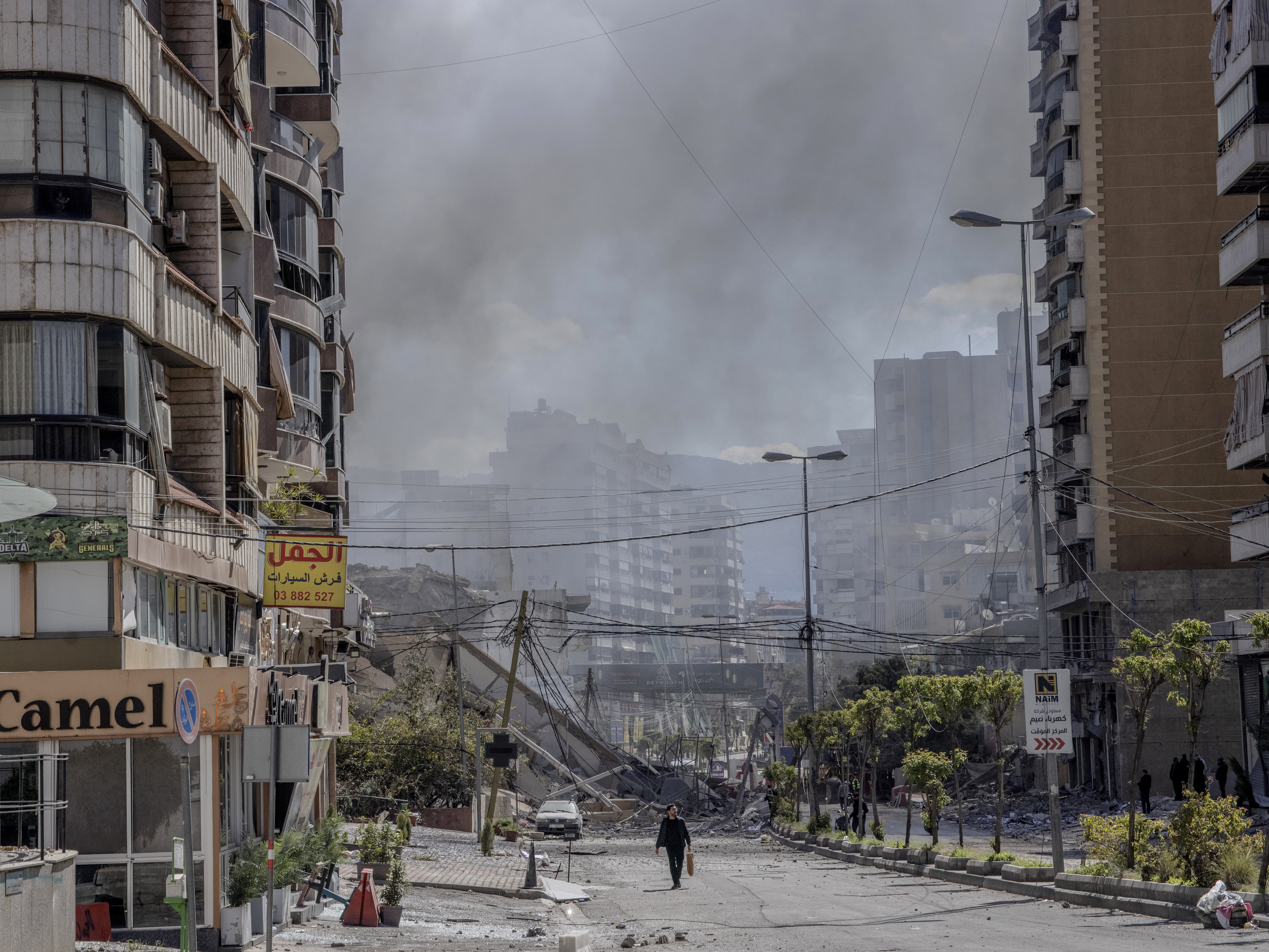
Beirut, Lebanon, March 8, 2026
March 8, 2026. In the morning, the Israeli army announces strikes in the southern district of Beirut, Dahiyé. We are a week after the start of hostilities. I’m on site. A first strike destroyed a building which housed a Hezbollah bank. Then an hour later, a second destroyed another building. Â
I stay on site. In the hours that followed, people returned to the site to collect belongings. The streets are deserted, the businesses are closed. No more human activity. I see this man, with a bag alone in the middle of the rubble. In the past, this neighborhood had already been targeted. Since 2006, massive reconstructions had been undertaken. Today, only ashes remain. Â
In suffering and exile, organize solidarityÂ
© RAFAEL YAGHOBZADEH  
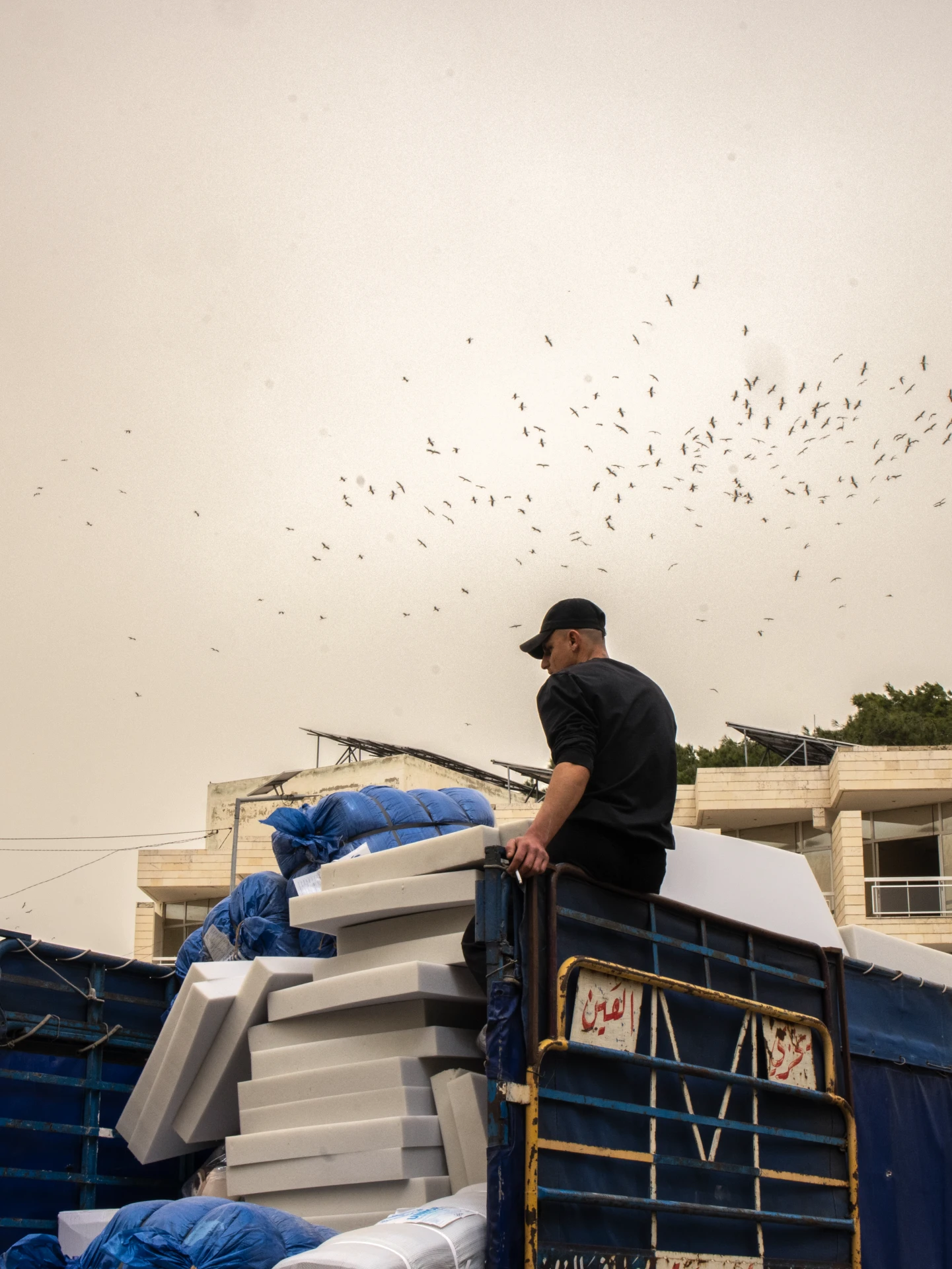
A person displaced from the south on a truck filled with mattresses and humanitarian goods, in Tyre, Lebanon, March 13, 2026. Located in the south of Litania, the city is classified as a “red zone” and under evacuation order by the Israeli army.
On site, the humanitarian crisis is major. From the first days, measures were put in place to respond to the massive displacement of the population. Today, registration centers are scattered all over the country. Public buildings like stadiums and schools are being transformed into emergency accommodation centers. Â
Many organizations are also present to provide goods to those who need them, such as mattresses or blankets. In March, we are approaching the end of winter but it is still cold. Solidarity is also organized among the displaced: some help with the distribution of clothes, restaurateurs prepare meals in the camps…
Reconstruct : un espoir briséÂ
© RAFAEL YAGHOBZADEH
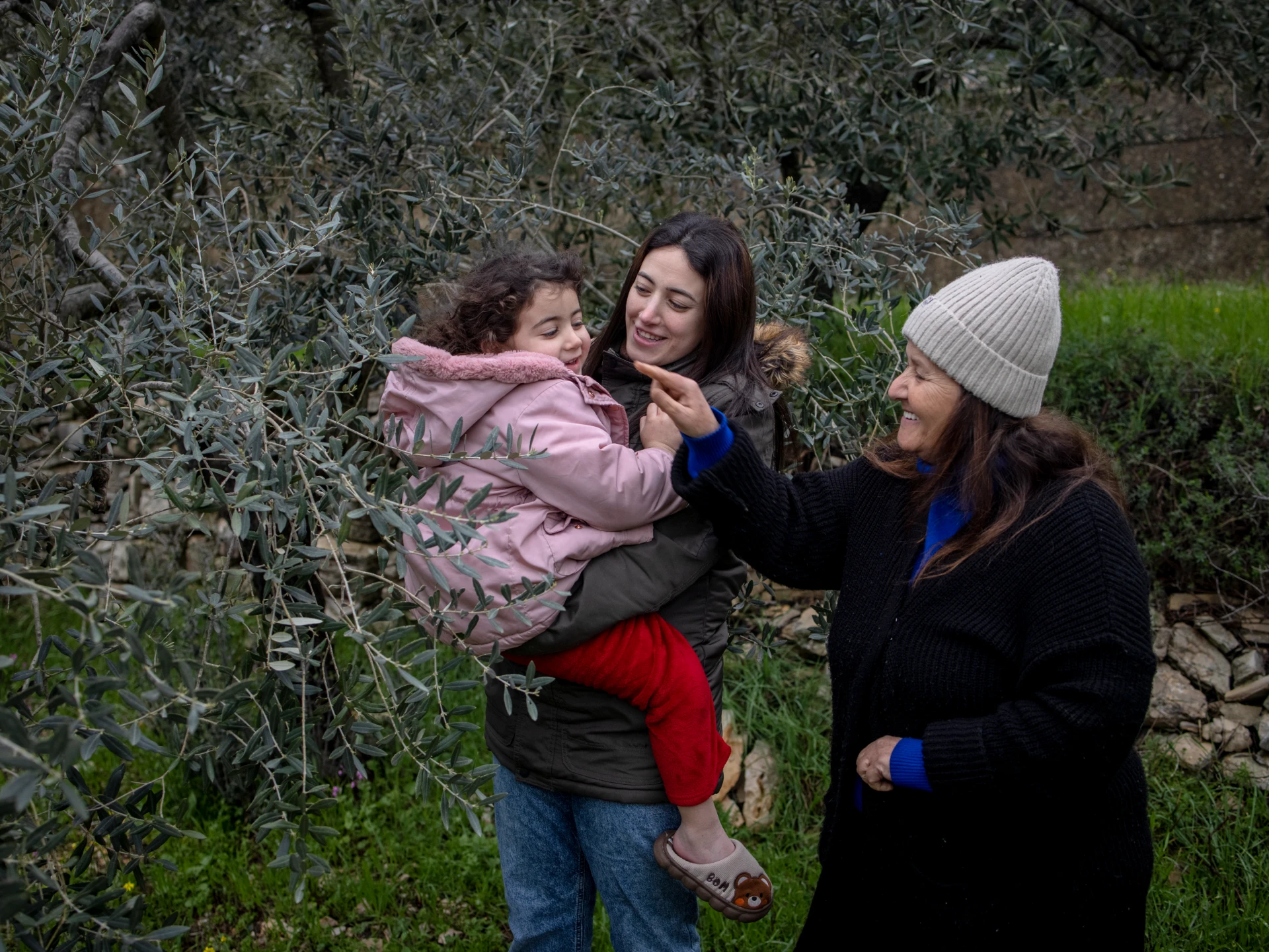
Three generations from Khiam - Mayssam Haider, 57 years old, Rim Abou Abbas, 29 years old and his daughter in their garden in the Byblos region, on March 19, 2026. Their house was destroyed in the southeast of the town of Khiam, in March 2026. Rim with her mother and the rest of the family had to hastily leave the house they were renting in Marjeyoun, when the Christian municipality received, on March 18, the order of Israel to evacuate the displaced Shiites. They settled in their mother’s house, in Ras Osta, near Byblos in the north of the country, in the middle of their orchard and their olive trees.
The village of Khiam was among the first targeted by the Israeli army. Located only a few dozen kilometers from the Israeli border, it has also become a strategic lock. as emblematic. In the 80s, under the occupation, many prisoners from the Israeli army were imprisoned there. Over time, the city has become a true symbol of the cultural, civic and armed resistance movement.  Â
Today, Khiam is massively destroyed. The population has completely deserted the village. This is the case of Haider who took refuge with her daughter and granddaughter in northern Lebanon, not far from Byblos, in a Shiite village located in a region with a Christian majority. For them, history repeats itself. After fleeing Khiam in 2024, they chose to return thanks to the ceasefire. And rebuild everything. But their hopes went up in smoke when hostilities resumed. Â
Haider and his daughter worked in an international organization. Today, they have lost their jobs. Like them, many are forced to settle in regions whose faith they do not share. Looks are sometimes suspicious, discrimination is present. Many are thus confronted with a double precariousness in exile: material and social. Â
survive the war we report on
“As the 10-day ceasefire in Israel’s war with Hezbollah drew to a close, I decided to drive to the southern coastal city of Tyre, to see the state of my family home, and the city, in case it was again bombed. I arrived in Tire at the scene of an Israeli strike, in a usually very busy street on the seafront. It took place just a few minutes before the ceasefire came into force. It was April 17, at midnight.[…] Now Tire felt like a huge funeral, and I imagine that was the case throughout southern Lebanon.…
Read also: “Surviving the war we report on”: in Lebanon, the story of our colleague Bissan Fakih…
When history repeats itself Â
© RAFAEL YAGHOBZADEH  
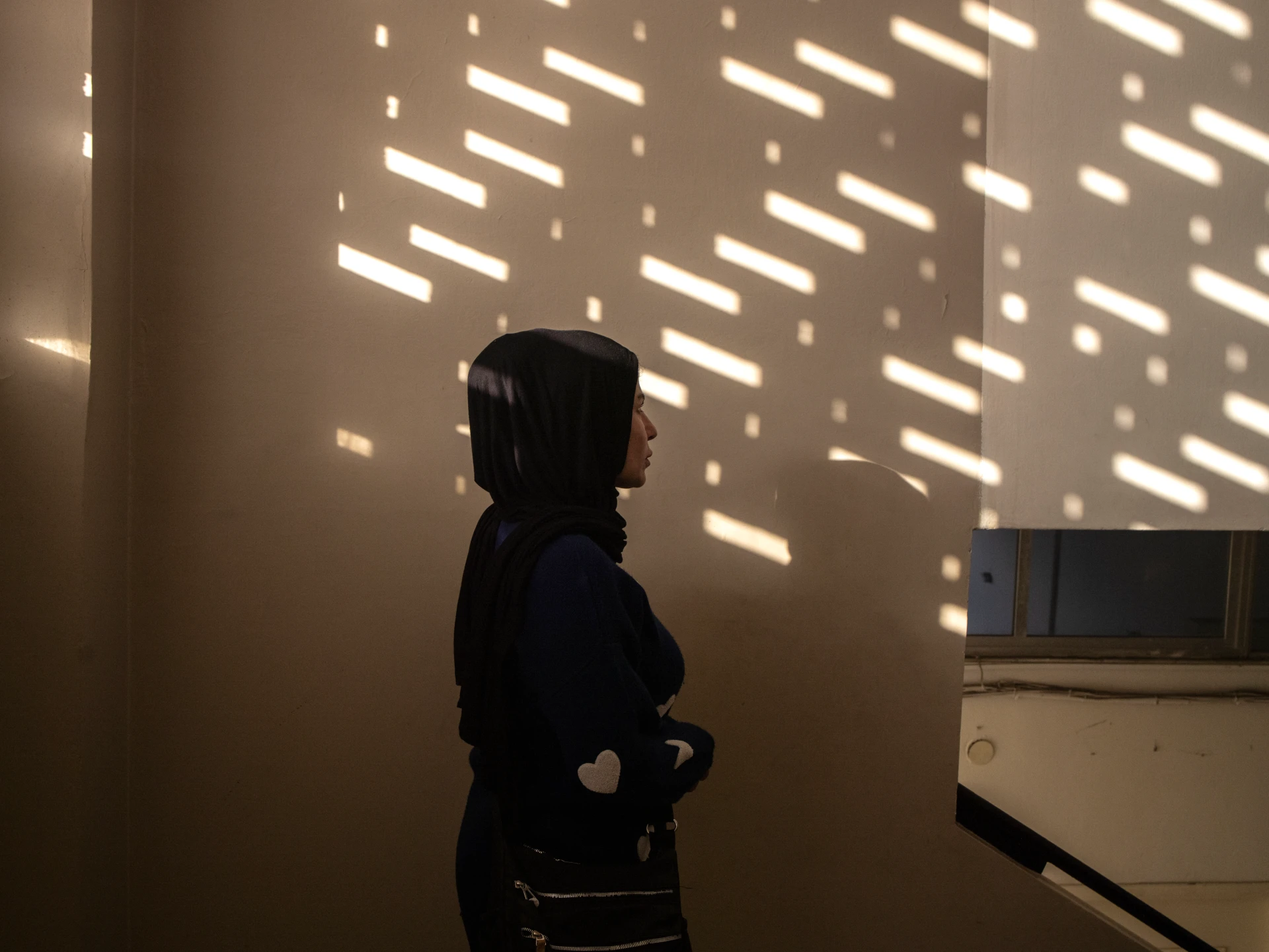
Nagham El Zein – a displaced person from southern Lebanon found refuge in a school which accommodates several families, in – Jounieh, a Christian town on the Lebanese coast, on March 6, 2026. On the first day of the war, Nagham arrived from Sour (Tyr), in southern Lebanon, with her husband and their five children, aged 16 to 24. The Shiite family presented themselves in front of the public school where they had spent 66 days during the fall 2024 war.
For Nagham too, it’s history repeating itself. I met her four days after the start of hostilities. On March 2, 2026, she left Sour with her husband and five children to take refuge in a public school in the Christian town of Jounieh, located north of Beirut. The same as the one in which she had taken refuge two years earlier in 2024. Â
In her home, the feeling of insecurity is omnipresent. The multiple displacements fuel inter-community tensions, between welcoming populations and those in exile. In the city, curfews are put in place by the authorities and prevent displaced populations from going out into the streets from 9 p.m.  Â
This school is the only public establishment that welcomes displaced people in the city. Around ten families are there. Many know each other, because they come from the same neighborhoods or the same towns. A way to find a form of proximity and familiarity, in the pain of exile. And to experience this survival within the collective. Â
A life on holdÂ
© RAFAEL YAGHOBZADEH  
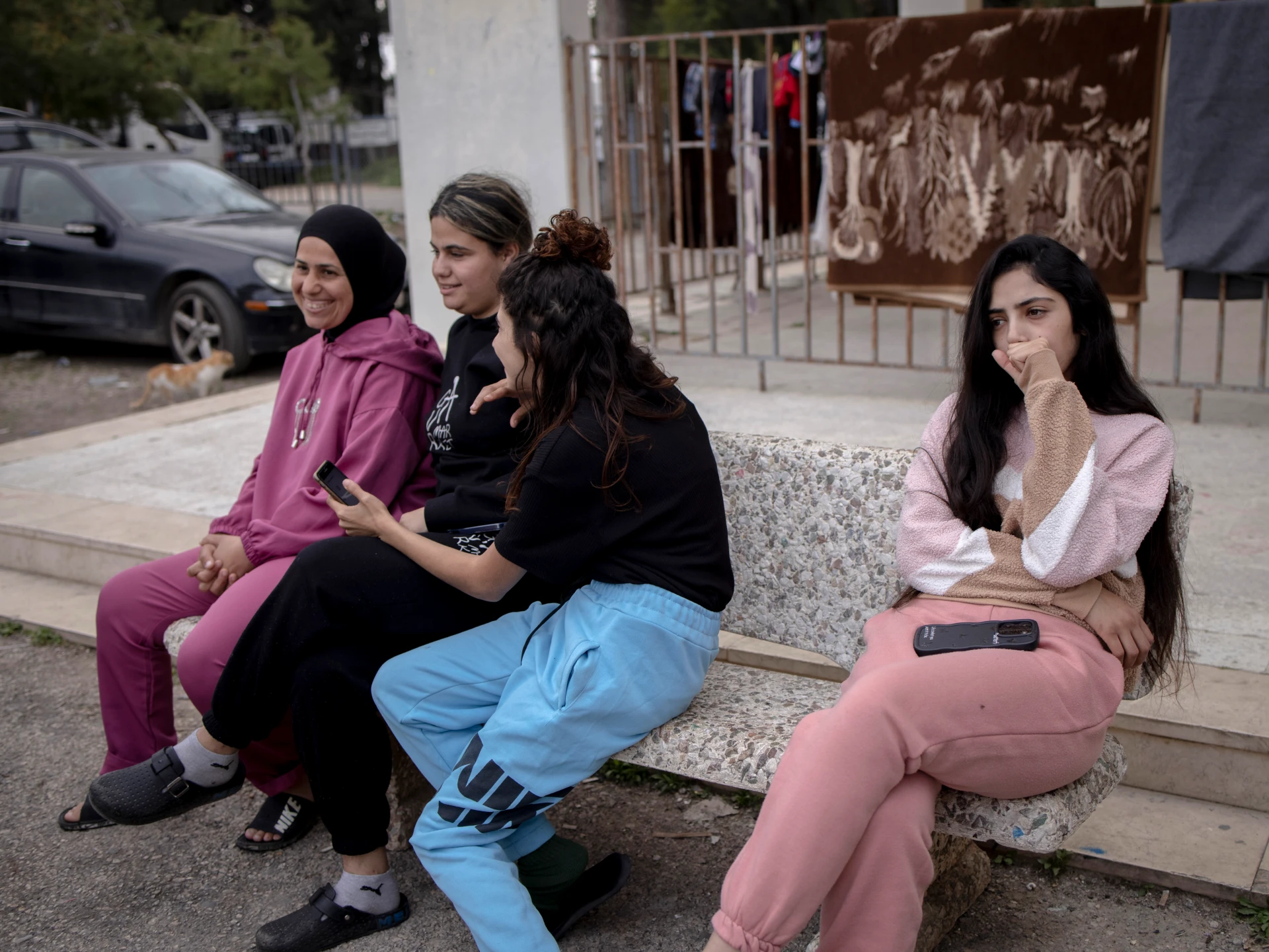
A displaced family from the village of  Dhaïra  on the Israeli border, near an accommodation center in Tyre, Lebanon, March 13, 2026. The Abou Salem family has not returned to their village since the previous war in 2024. After attacking the Sunni village with artillery and white phosphorus, the Israeli army gained a foothold thanks to the ceasefire of November 2024, razing all the homes – including the houses owned by the Abou Salem family – before withdrawing. On March 2, the family left the accommodation they were renting for $350 a month in Bourj Al-Chamali, in the suburbs of Tire (Sour), under bombardment to take refuge in a school converted into emergency accommodation.
For some, the hope of a possible return has vanished. This is the case of the Abou Salem family from Dhaira, on the Israeli border. Their village was completely razed in 2024. Despite a visceral attachment to their land, it is impossible to return there.
Today, the future of this family of farmers remains uncertain: how can we find land to cultivate? How to ensure the education of children? How to find means of subsistence? Waiting has become suspended time.
Like Abou Salem and his family, more than a million displaced people will, in part, no longer be able to return home in the coming years. However, there is no country-wide plan to deal with this new national scourge. After having massively welcomed the Palestinian and then Syrian populations, the same problems arise today in Lebanon for its own population. Â
Growing up under the sound of bombsÂ
© RAFAEL YAGHOBZADEH  
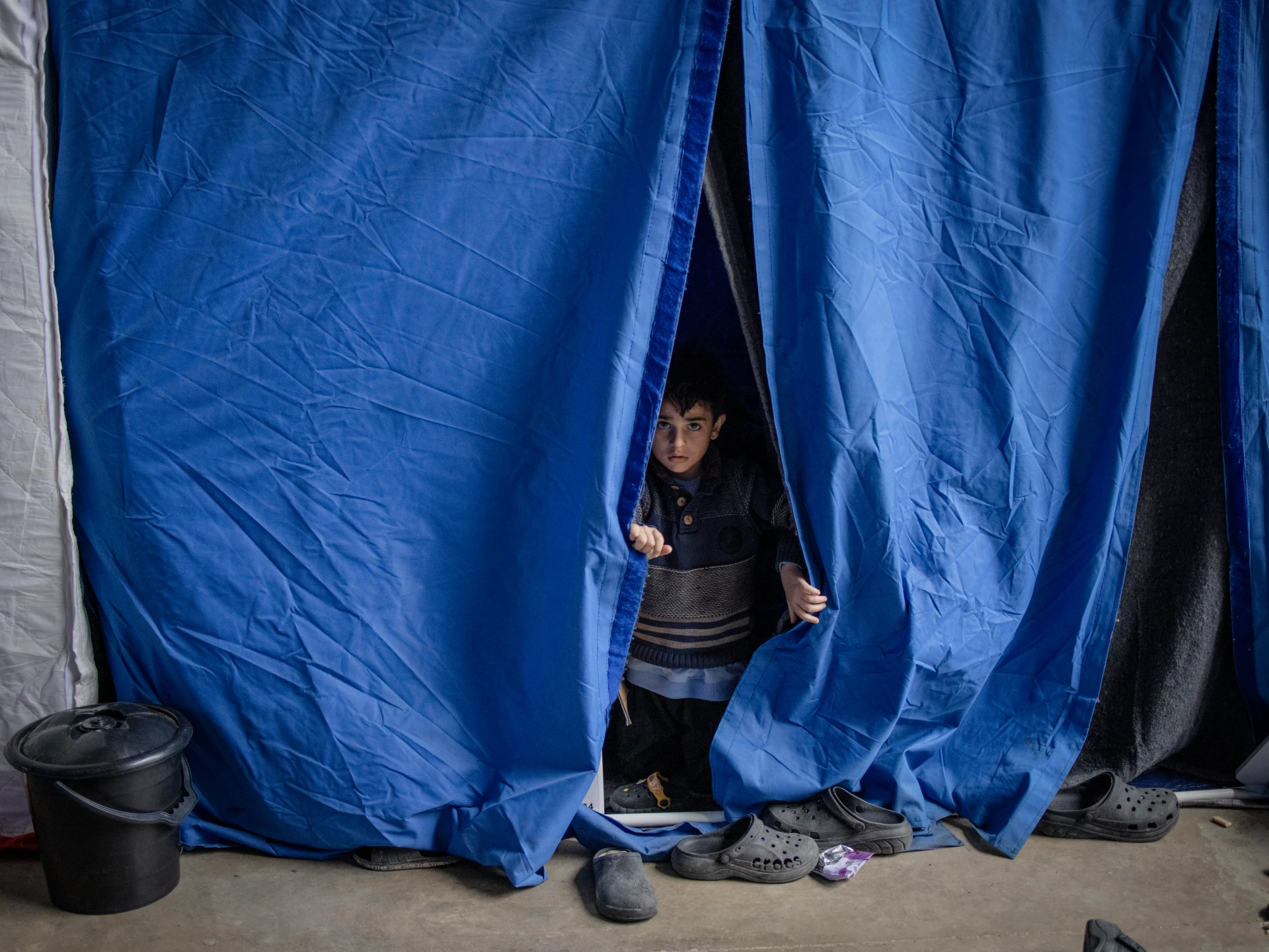
A child in a tent at the Camille-Chamoun stadium which accommodates internally displaced people, in Beirut, March 26, 2026.
© RAFAEL YAGHOBZADEH  
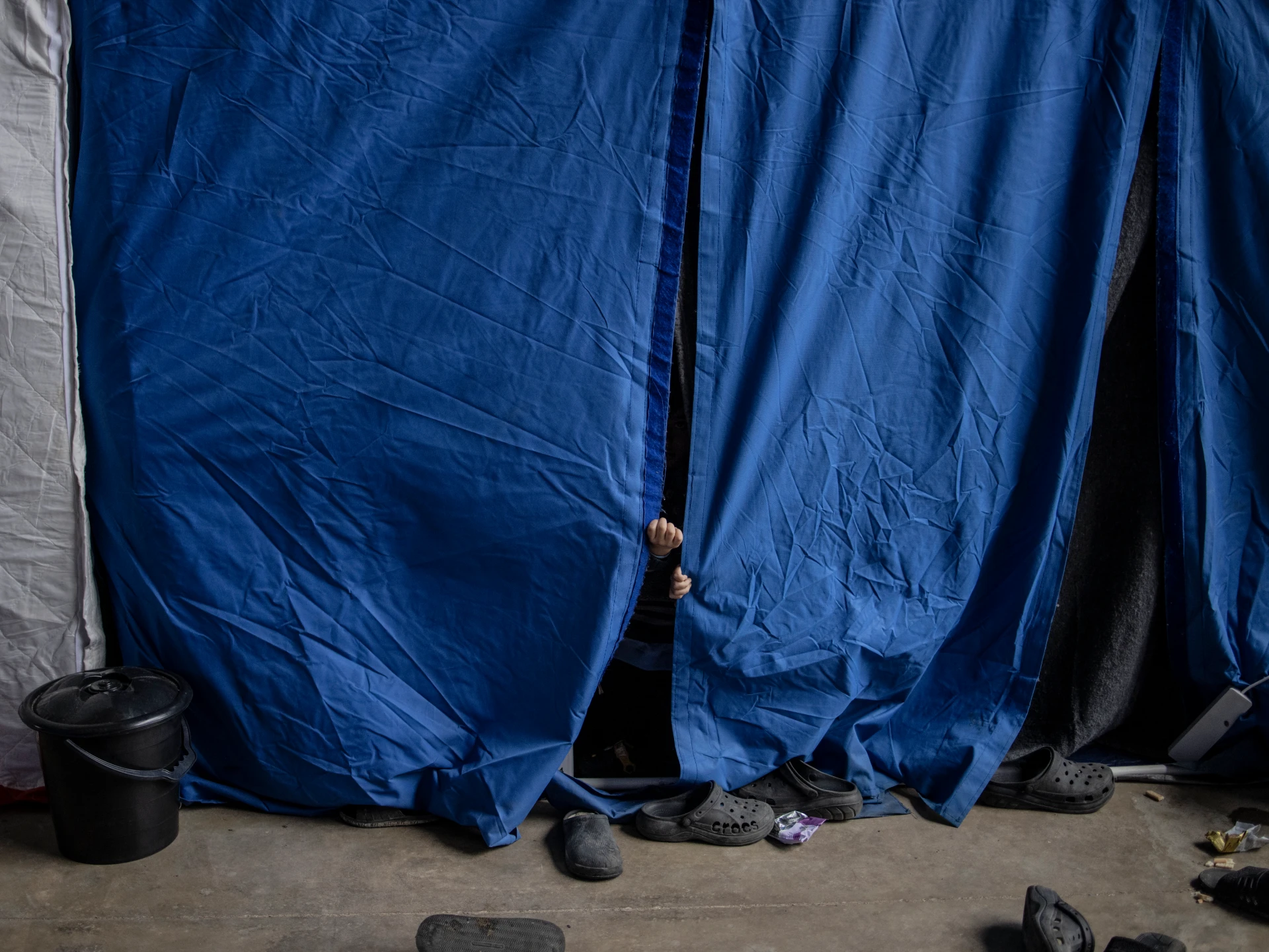
A child in a tent at the Camille-Chamoun stadium which accommodates internally displaced people, in Beirut, March 26, 2026.
Children are the first victims of this crisis. Their proximity to violence is permanent…: they are witnesses to massive destruction, forced into exile, deprived of their rights. War infiltrates everywhere, in an insidious way…: through the noise of drones, through images broadcast in the media, through discussions within the family….
For those from less well-off families, the violence of exile is particularly brutal. Some are forced to sleep in tents. Getting food can be complicated. Among them, I felt both a lot of reserve and an early maturity. These are children traumatized by war. Â
A life marked by war  Â
© RAFAEL YAGHOBZADEH  
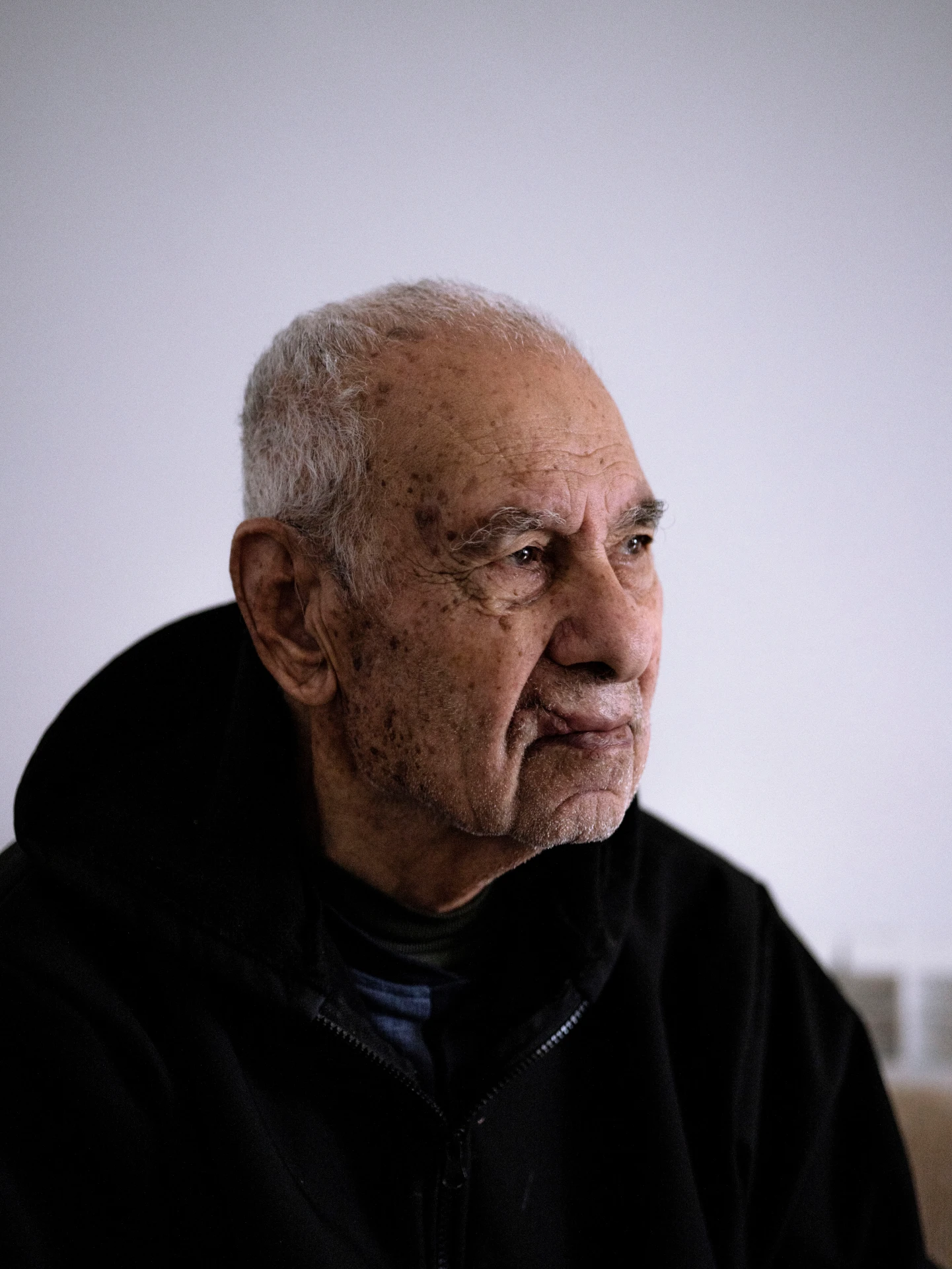
Frieza abu Abbas, professor – originally from Khiam - in  Baabdat, on March 19, 2026. His family and the inhabitants of the town fled on the night of March 2 to 3 and scattered across the country. Fagé Abou Abbas received at midnight, like others, an anonymous phone call, urging him to immediately leave his house Fagé was injured in a car accident during his exile from… Khiam… Baabdat experienced Israeli occupation in 1982, war in 2006 and that of 2024.
Like these children, their grandparents before them grew up with the war. Frieze experienced the Israeli occupation of 1982, the war of 2006 and then that of 2024. With each conflict, he had to flee, rebuild and relearn how to live in uncertainty. With the idea that war could return at any time.
Over the decades, conflicts have changed in nature. The 1982 occupation took place in a context marked by resistance ideologies, pan-Arabism and even communist movements. In 2006 and then in 2024, the destruction intensified and the wars became more unpredictable.
Now, many feel that Lebanon’s destiny goes beyond the national framework. Tensions between Iran and Israel, like regional geopolitical balances, directly impact their daily lives. This accumulation of wars feeds a deep collective fatigue, mixed with a feeling of abandonment and despair. Â
For Syrian families, a never-ending nightmare…  Â
© RAFAEL YAGHOBZADEH  
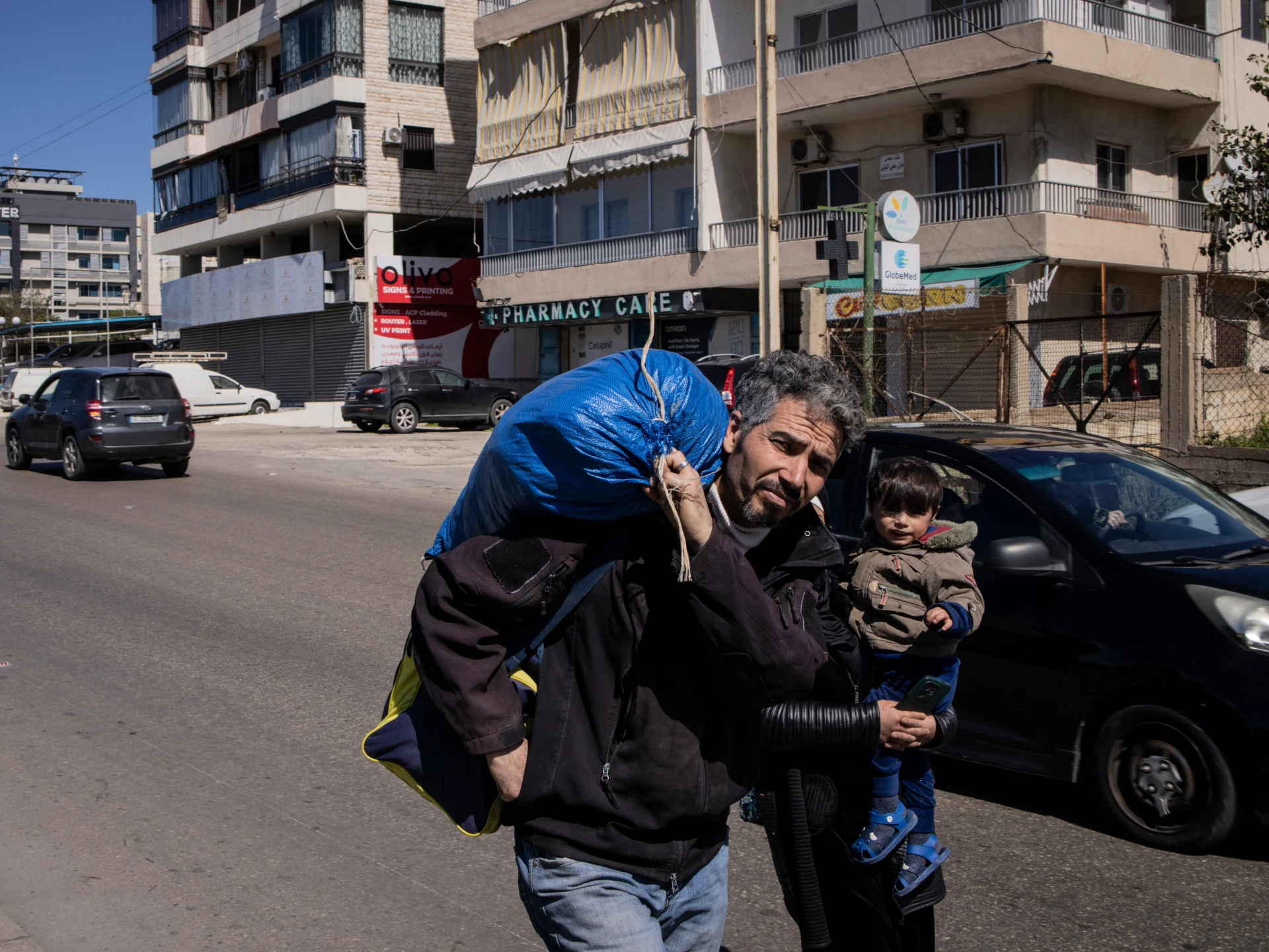
A few days after the Israeli army’s mass evacuation announcement, in Beirut, Lebanon, on March 5, 2026, a Syrian family returns to their home in the southern suburbs, in Beirut, Lebanon, on March 8, 2026. Ibrahim, a 40-year-old Syrian, returns home with his wife and their child. They had taken refuge for a few days to stay with a cousin in the Bekaa
 For Syrian families, it’s a double punishment. After fleeing the war in their own country, they are again subject to repeated displacements in Lebanon, in 2024 then in 2026.   Â
With the fall of Bashar Al-Assad’s regime, part of the Syrian community chose to return to Syria. But others, mostly from the Shiite community, chose to stay. This is the case of Ibrahim and his family who settled permanently in Lebanon.  Â
But today, many live in very precarious situations. They are unable to find work and are stigmatized. Due to a lack of resources, many of them sleep on the streets. They no longer even have the possibility of using a car to travel during evacuation orders.  Â
Résister face à l’horreur  Â
© RAFAEL YAGHOBZADEH  
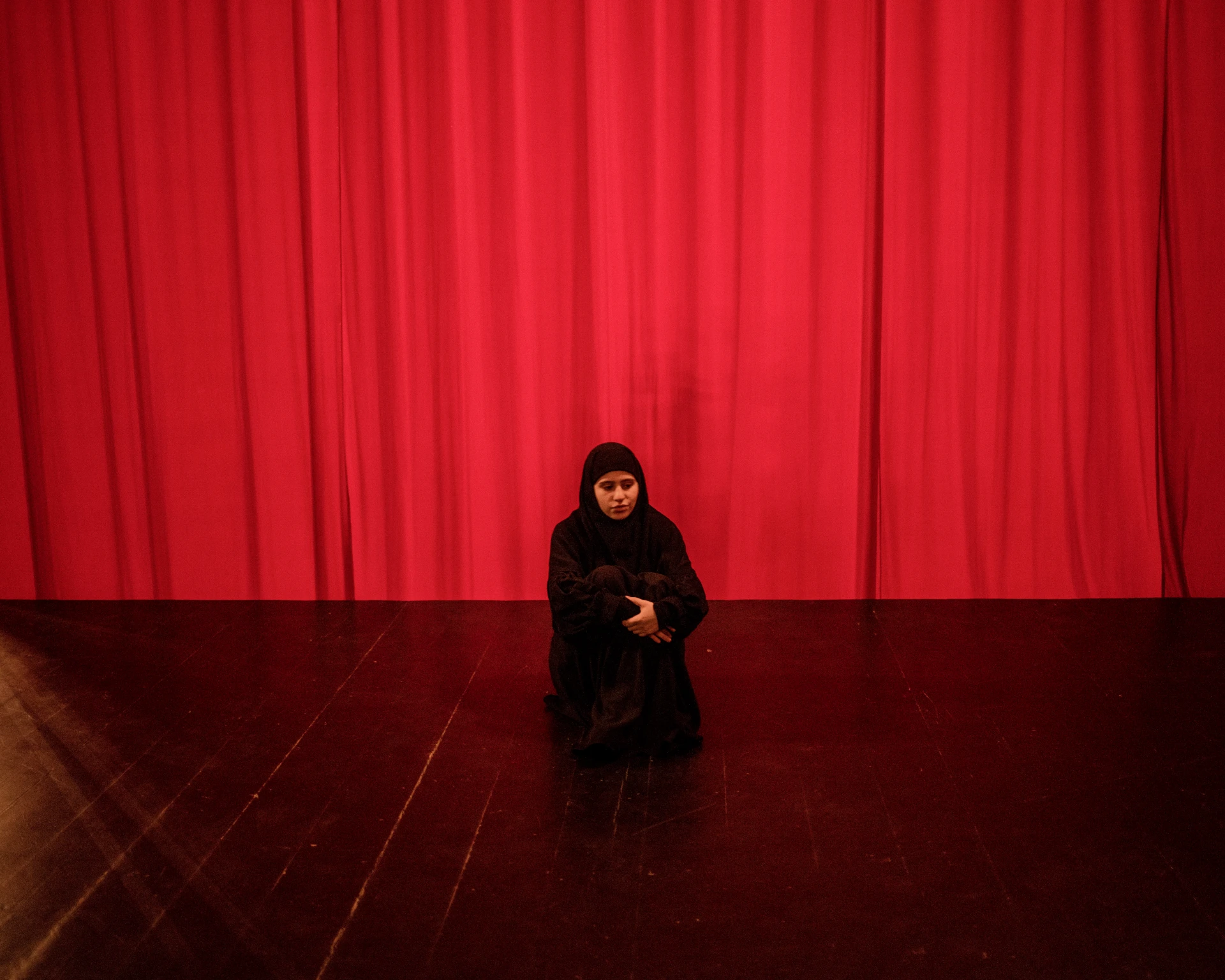
A young displaced person from the south prepares before performing a play entitled  Rajeiin  (“we will return”), at the Lebanese National Theater – the Cinema Le Colisee, in Beirut on March 31, 2026. The troupe is made up of children, adolescents and adults who have been forced to flee their homes since the new war in Lebanon. The performances are full houses.  The legendary cinema in the center of Beirut also offers film screenings for those who wish.
In the midst of hell, certain places become refuges. In Beirut, the Lebanese National Theater, emblematic of Lebanese culture, has become a true symbol of resistance and solidarity. Despite the war, the venue continues to show films and organize cultural events. Since March 2026, it has also welcomed families in exile who have come to take refuge there.  Â
In this theater, pain, anger, hopes can finally be expressed. In the play “We will return”, the testimonies of men, women and children are highlighted by the director and played by people who have themselves experienced exile. Each person’s experience finds the necessary space to move in collective memory. Â
Reborn from the ashes…Â
Throughout my trip to Lebanon, I was struck by the repetitive nature of the testimonies. Weariness, fatigue, sadness, despair. Family stories intertwined and sadly echoed each other. Â
For decades, Lebanon has been plagued by destruction, conflicts and crises. Sometimes it seems to me that this country is condemned to an eternal start again. A tragic story marked by exile, mourning, pain, which leaves a deep mark in the hearts of its inhabitants.  Â
 But from this suffering is born a strength, a cohesion, a common resilience. There is this rage to survive collectively, to unite to stand up and rebuild a better future together. This is why I cannot help but associate Lebanon with the image of the Phoenix, always ready to rise from its ashes.
It is precisely the ruins of the past and the ashes of the present that will give it the strength to rebuild itself again.  Â
what is amnesty international doing?
Amnesty International is a global movement that brings together more than 10 million people. Through our research and campaigns, we help fight human rights abuses around the world. Our organization is impartial and independent: our funding relies entirely on the generosity of the public.
Support our independence
Support our investigation and questioning work
 Â
 Â
 Â
 Â
/2026/06/12/6a2bd18d8af1c253720555.jpg "\"Is he a genius in the art of the deal or is he talking nonsense?\"Donald Trump’s strategy against Iran raises questions, according to a geopolitical scientist")
/2026/06/12/6a2bf4e1c1df0409196392.png "Ukraine strikes Tatarstan, in central Russia, 1,600 km from its border")