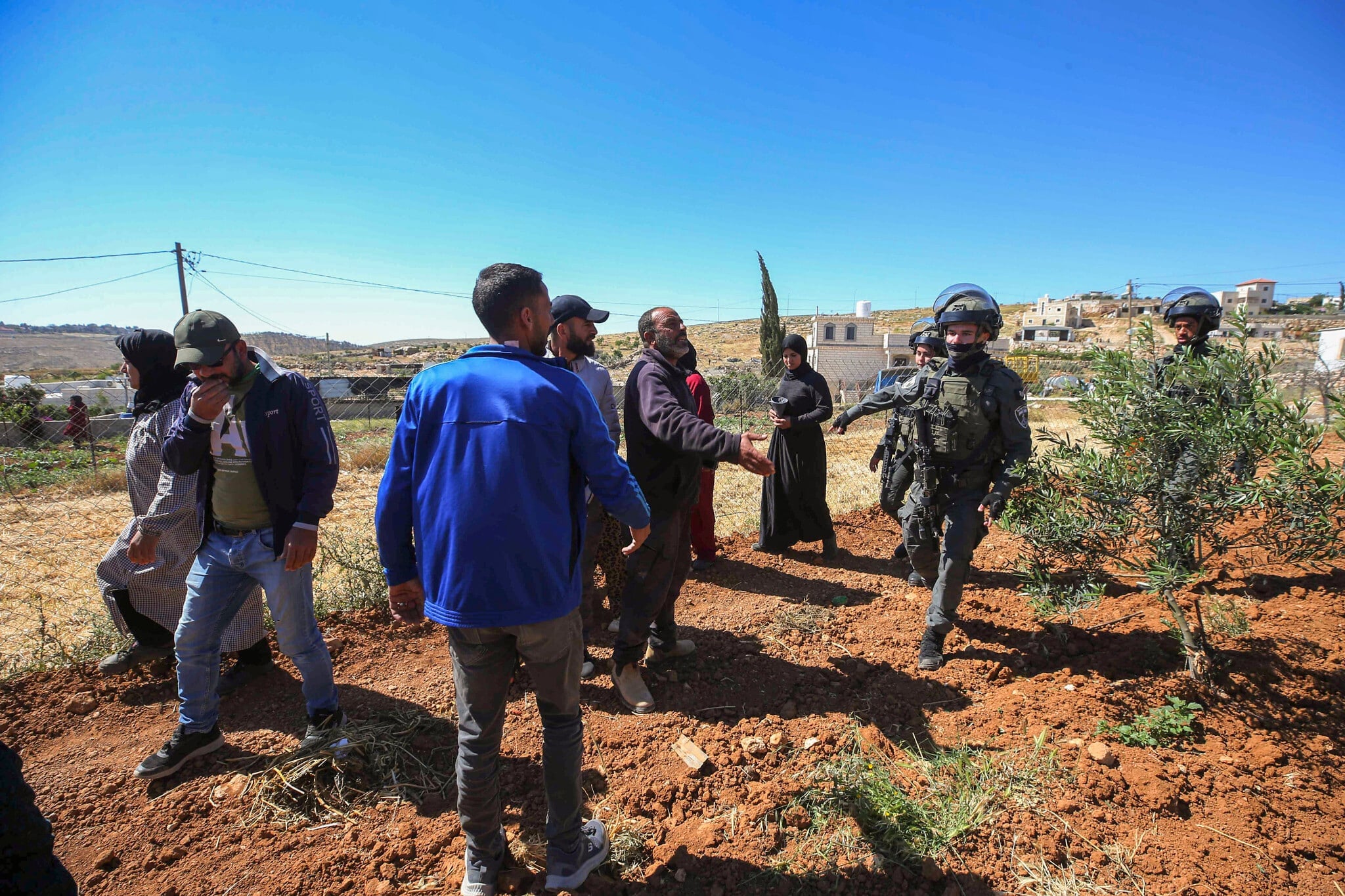
Saeed Awad, a 55-year-old resident of the village of Abu Shaban, located in the hills south of Hebron, says he has been arrested six times by soldiers this year alone.
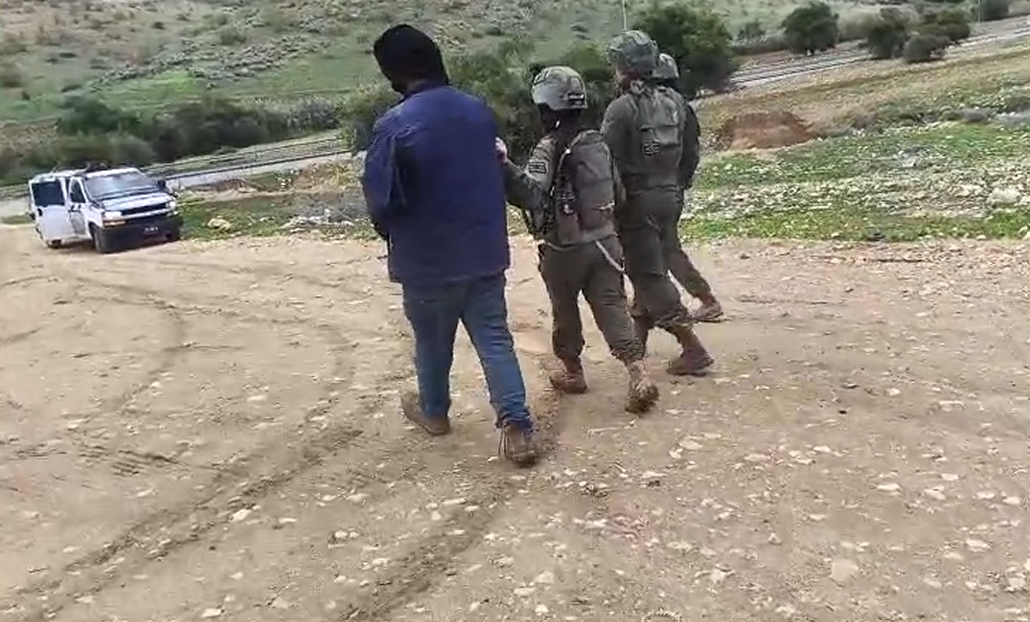
According to Awad, during each of these arrests, soldiers arrested him near his home and took him, blindfolded and handcuffed, to a nearby military base located in the Sussiya settlement. Once there, he was detained for hours, sometimes overnight, before being released without charge and without even being questioned.
Since he was detained and not arrested, the soldiers were not required to present a warrant or specify the facts with which he was accused.
According to the procedures of the army itself, as indicated by human rights groups, these detentions must not exceed six hours and the detainee must remain at the place of his arrest, without being transferred to a base.
Awad is one of five Palestinians who have filed an appeal against what they describe as “illegal detentions” to which they have allegedly been subjected in recent months. They demand that this practice be put an end to, while, according to activists, the number of these cases is sharply increasing.
Several human rights groups, including HaMoked: Center for the Defense of the Individual, the Association for Civil Rights in Israel (ACRI) and the Human Rights Defenders Fund (HRDF), also joined the lawsuit, filed on May 14.
The court ordered the IDF to respond to this appeal by June 28.
In response to a request from Times of Israelthe army declared: “The appeal has been received and is currently being processed by the competent authorities within the IDF. A response to this appeal will be provided in accordance with the usual procedure. HAS”
According to the HRDF, the phenomenon of detentions already existed, but it grew significantly from November.
Between mid-November and mid-May, the HRDF claims to have recorded 159 cases of detention of Palestinians in the West Bank who allegedly violated military procedures.
The organizations that filed a legal challenge say they do not know what explains this increase, but point out that it began around the olive harvest season, a period often marked by an upsurge in tensions between settler residents and Palestinians trying to access olive groves.
According to these organizations, most of the arrests are taking place in Area C of the West Bank, where Israel exercises complete control over security and civil affairs.
Oneg Ben David, an activist within the HRDF who works closely with Palestinians in the South Hebron Hills, said she had observed a recurring trend in the region since the start of 2026.
“During these detentions, we do not take them for interrogation. They spend the night in a military base, blindfolded, and suffer ill-treatment: they are beaten and humiliated,” she said.
“It has become systematic: there are several detentions per day. HAS”
Me Hila Sharon, who filed the appeal on behalf of the ACRI, declared that, during the three days following the filing, two of the five applicants had been placed in detention again.
One of them was kidnapped while tending his sheep on his land in the evening and was not released until 5 a.m.
“Kicked and insulted”
In their appeal, Palestinian plaintiffs and human rights organizations demand an end to detentions without reasonable suspicion and call on the army to ensure compliance with its procedures in the event of such an incident.
In their testimonies, several detainees speak of violence and mistreatment by the soldiers. Awad said one of the most serious incidents occurred on March 6.
Testifying for the Times of Israelhe says that he was grazing his flock on private land when a resident from a nearby settlement arrived, followed by soldiers. He does not know whether the resident resident was doing his service or not.
“They handcuffed me, blindfolded me and took me to the Sussiya base, where I stayed until around midnight,” he explains.
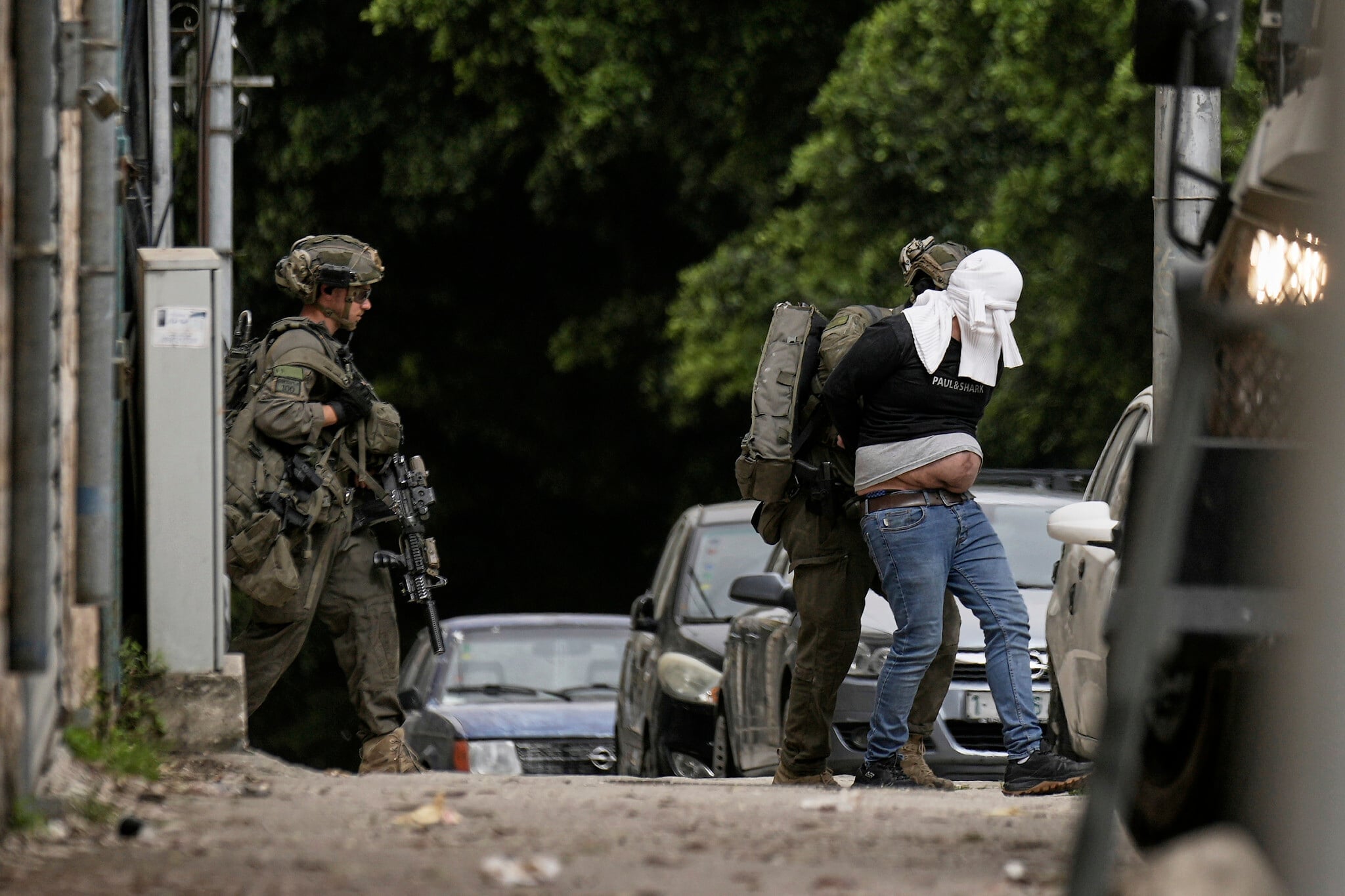
The incident occurred during Ramadan, but Awad says he did not have access to water or food to break his fast. According to him, he remained on the ground for hours while soldiers beat him whenever they wanted.
“I was blindfolded and they came to kick me and insult me,” he confides.
“I asked what I was being accused of, why they weren’t calling the police if I had done something illegal. I was told: ‘We are the ones in charge here. We do what we want.’ HAS”
Then, Awad was released without any charges and, according to him, without being informed of the slightest suspicion against him.
Beatings are a constant during every detention, he told the court.
“Each time, they punched me two or three times,” he testified.
Other complainants also testified to brutality, beatings and insults, often blindfolded and with their hands tied. It even happened that soldiers stubbed out cigarettes on the body of a Palestinian detainee.
One of the men said he was released after five hours in a mountainous area, far from his home. Another said he was held at a base inside a settlement for an entire day before being taken to a police station, where he was questioned for 15 minutes and then released.
Soldiers who behave like children
According to Me Sharon, lead lawyer for the plaintiffs in this case, who opened Times of Israelthe facts included in the appeal are contrary to military procedures.
“The detained Palestinians were not told that they were suspected of any crime, and they were not questioned,” she said.
“Furthermore, when people are arrested in accordance with the rules, they must be brought before an investigating authority as soon as possible – the police or the Shin Bet – which did not happen in these cases. HAS”
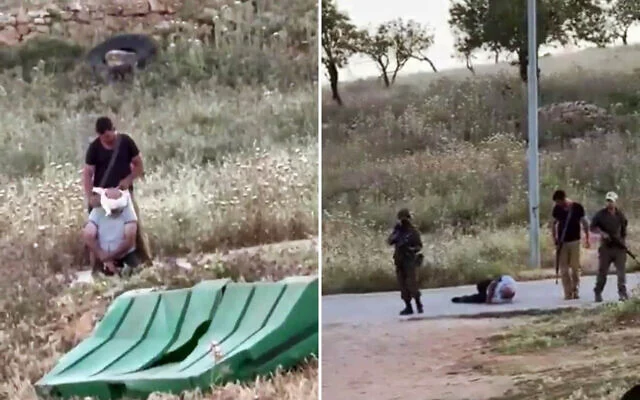
In 2019, the Supreme Court recalled, in response to an appeal filed by Palestinians, that soldiers in the West Bank were prohibited from blindfolding Palestinians during detentions.
However, in the cases documented by the current appeal, the detainees were allegedly handcuffed and blindfolded.
Omri Metzer, director of the HRDF, accuses the army of making people “disappear” for hours, without their loved ones knowing where they are.
“Soldiers come and take them away without knowing for how long, without telling them how long it will last,” he adds.
“They are taken to military bases without any presence of the police or the Shin Bet. It’s not like you can call a police station and ask if they’re there. There is no control, nothing is recorded anywhere. People disappear – for anywhere from three hours to two or three days.”
According to Ben David, the activist who helps families in the hills of south Hebron in real time find their detained loved ones, the army’s response is often contemptuous.
“Most of the time we call the army, the brigade operations room, and they usually hang up on us,” she said.
“There have also been absurd cases: they pretend to be children, say it’s a pizzeria, things like that. HAS”
Ben David makes the Times of Israel the recording of a telephone call dating from March 17, in which an HRDF activist asks the Hebron brigade where a Palestinian from south Hebron, arrested earlier in the evening, is being held.
In the recording, soldiers in the operations room can be heard pretending to be children for a minute before giggling and hanging up.
In response to the question Times of Israel sur In this telephone call, the army spokesperson’s office declared that “the soldiers in question had acted in an unprofessional manner and not in accordance with the values of the IDF, and that this incident would give rise to disciplinary sanctions.”
The army added that the brigade’s operations room was not intended to respond to requests from civilians, which should be directed to the Israeli police, who would then pass the information on to the appropriate military authorities.
Ben David explains that during her previous contacts with the police, she was told that the Palestinians she was looking for were not detained by the police, who could do nothing for her.
Not just settler residents
Certain facts described in this appeal involve collusion between soldiers and settlement residents.
Awad explains to Times of Israel that “as soon as a settlement resident arrives with the army, it is the resident who gives orders to the soldiers, and the soldiers follow his instructions.”
According to Awad and the human rights organizations involved in the appeal, some of these residents serve in reserve units of the regional defense, accused of fueling violence against the Palestinians.
These reserve forces, known as Hagmar units, are made up largely of residents tasked with defending their community, allowing them to act against neighboring Palestinian communities.
Over the past two years, the presence of Hagmar soldiers has been documented in numerous incidents of violence against Palestinians.
Metzer would like to emphasize that these alleged illegal detentions are not limited to reservist residents and vary by region.
“In the Jordan Valley, it is more of the Jordan Valley Brigade – regular soldiers on operational missions, not residents of settlements,†he specifies.
“In the South Hebron Hills, there is a greater involvement of resident settler soldiers, such as in the Hagmar units. HAS”
According to Mr. Sharon, it is highly unlikely that the military general staff in the broad sense is not aware of these practices.
“We are talking about people detained in military bases. The army cannot decently say that it is not aware,” she assures.
According to Mr. Sharon, in recent months, the ACRI submitted two complaints accompanied by testimony to the IDF legal advisor, the military prosecutor general as well as the head of the Central Command, without receiving a response, which led the organizations to file an appeal before the Supreme Court.
Awad explains that he is constantly on the alert because of the clearly arbitrary nature of these detentions.
“For months, we are constantly afraid, constantly afraid that they will come and arrest us and take us away, for no reason, while we are on our land, that they will come on purpose to cause problems to arrest you,” he concludes.
“We live in permanent distress. HAS”