Iran says differences with Washington remain ‘deep’
Iran has tempered hopes of an imminent agreement with the United States as Pakistani military leader and negotiator Asim Munir arrives in Tehran.
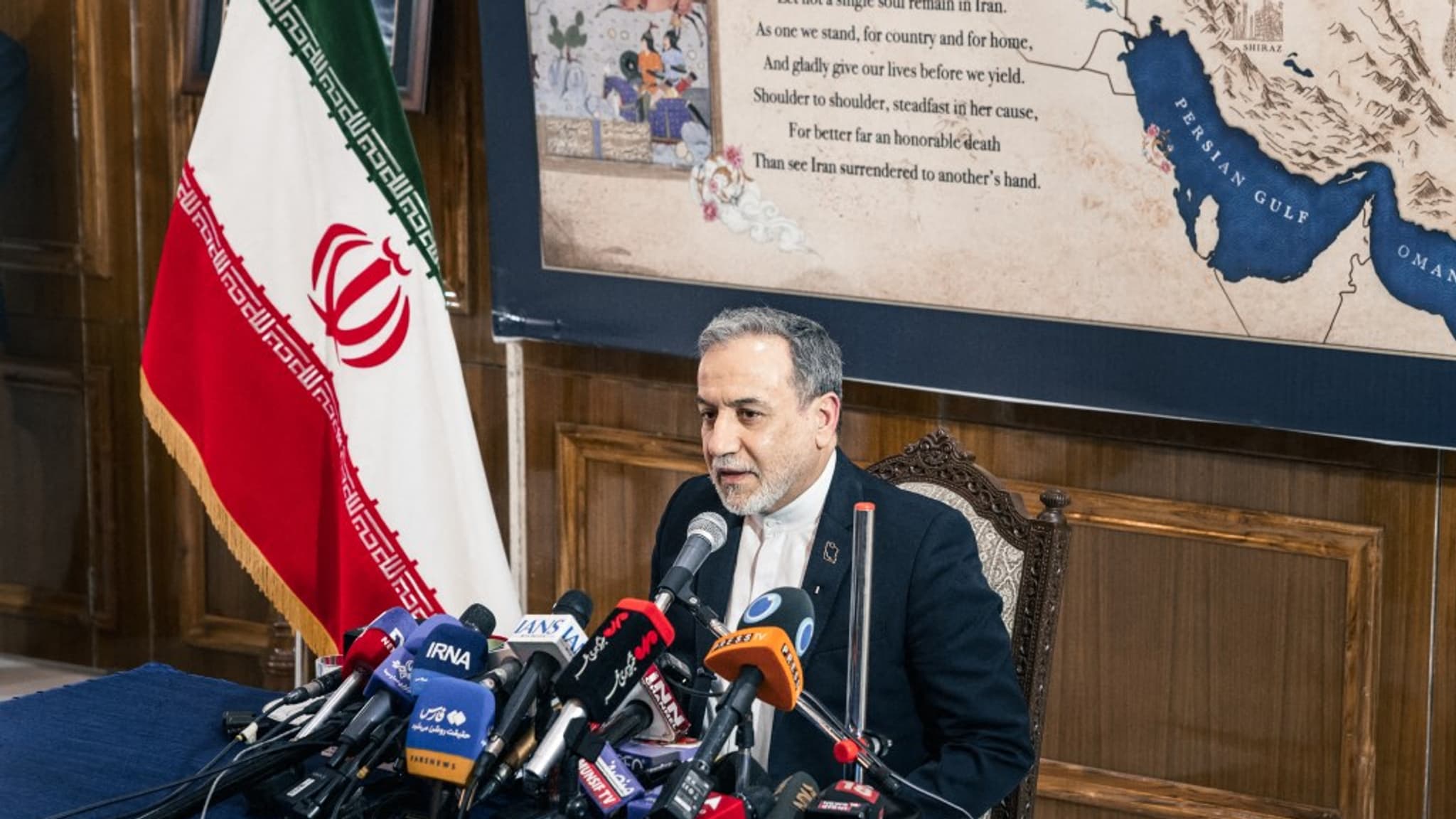
“This is the continuation of the diplomatic process. We cannot necessarily say that this means that we have reached a turning point or a decisive situation,” warned the spokesperson for the Iranian Ministry of Foreign Affairs, Esmaël Baghaï, on state television.
According to him, the differences remain “deep” and “important questions” pending: the end of the war on all fronts, including in Lebanon, the situation in the Strait of Hormuz and the American blockade of Iranian ports, he listed, this time quoted by the Isna news agency.
Pakistani army chief arrives in Tehran
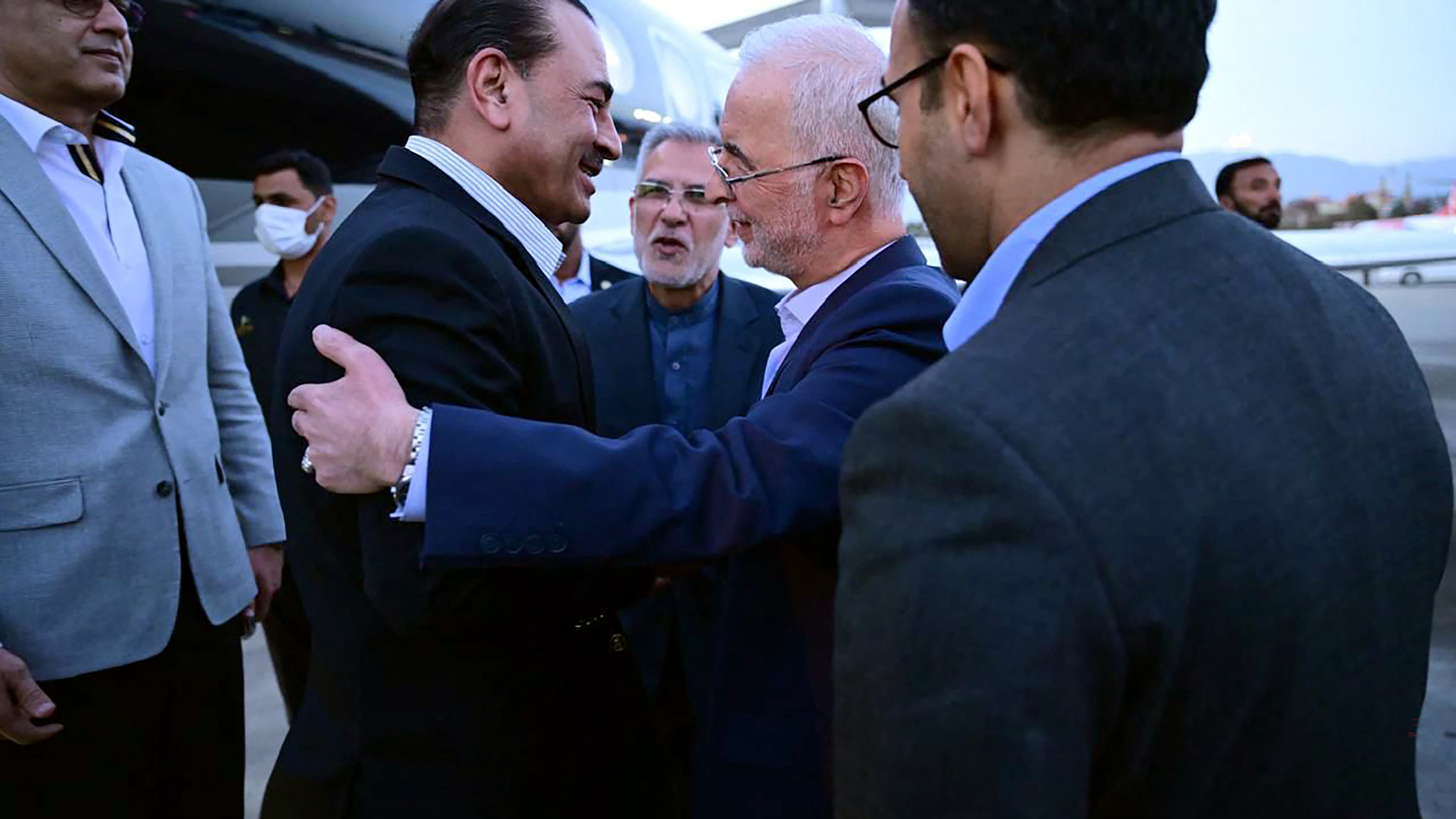
Pakistani army chief Asim Munir arrived in Tehran as part of his mediation efforts to reach an agreement between Iran and the United States.
The head of American intelligence leaves her post
Tulsi Gabbard, director of American national intelligence, announces that she will resign from her functions as of June 30.
In a letter published on X and addressed to Donald Trump, she explains that she wants to stand by her husband, who is suffering from a rare form of bone cancer.
3,111 dead in Lebanon since the resumption of the war
Israel’s offensive against Hezbollah in Lebanon has left 3,111 dead and 9,432 injured since March 2, 2026, according to the latest report from the Lebanese Ministry of Health.
Marco Rubio says he wants to prepare “a plan B” if Iran refuses to open the Strait of Hormuz
“We would all like to see an agreement with Iran, in which the strait would be opened and they would abandon their nuclear ambitions (…) But we must also have a plan B if Iran refuses to open the strait”, affirms the American secretary of state during a NATO meeting in Sweden.
Pakistani Chief of Staff en route to Iran
Pakistani Chief of Staff Asim Munir is on his way to Iran, indicate several media outlets including the American site Axios and the Saudi channel Al-Arabiya.
In recent days, Pakistan has intensified its mediation efforts to bring Iran and the United States to an agreement.
Since the entry into force of a fragile truce on April 8 after more than a month of conflict, only one unsuccessful negotiation session was held on April 11 in Islambad.
Since then, discussions have continued behind the scenes and on Thursday the American Secretary of State Marco Rubio said he hoped that this visit by Marshal Munir would “move things forward”, after that at the start of the week by the Pakistani Minister of the Interior.
35 ships passed the Strait of Hormuz in the last 24 hours
35 merchant ships, including oil tankers and container ships, have crossed the Strait of Hormuz “safely” over the past 24 hours, Iranian state radio indicates.
“Most of the ships that passed through the Strait of Hormuz with Iran’s permission were linked to Southeast Asian nations that maintain friendly relations with Iran,” the radio said.
Donald Trump’s former national security adviser believes that the American president “made a mistake by not consulting his allies”
Donald Trump’s former national security adviser believes that NATO should be “more involved in the war” against Iran.
But Donald Trump “made a mistake by not consulting his allies”, adds John Bolton, whether those of NATO, the Gulf countries or Asia such as Japan and South Korea.
John Bolton says US has ‘capability’ to reopen Strait of Hormuz
Former US national security adviser John Bolton says the United States has the “capability” to reopen the Strait of Hormuz.
“If we do not use force (to liberate the strait), Iran will take control of it,” he assures.
John Bolton, former national security adviser to Donald Trump, judges that the American president “does not know his main objectives”
“Donald Trump does not know his main objectives” in his war against Iran, assures former National Security Advisor John Bolton on BFMTV.
Having become an opponent of the American president after serving during his first term, the ex-advisor nevertheless supports an intervention against Iran: “regime change is the only way to ensure peace and security”, he believes.
Lebanese army defends its soldiers after US sanctions against an officer accused of collaborating with Hezbollah
The Lebanese army has affirmed that the loyalty of its soldiers goes “only to the institution”, after American sanctions targeting one of its officers for disclosing information to pro-Iranian Hezbollah.
All officers and soldiers “accomplish their national missions with exemplary professionalism (…) and discipline, in accordance with the decisions (…) of the army command”, indicated the military command in a press release.
This is the first official response to the American sanctions, which for the first time target two officers, including a member of the army.
Washington announced Thursday that it was placing nine individuals on its list of people and entities under sanctions, accused of being close to or members of the leadership of Hezbollah and of “obstructing peace and disarmament” of the pro-Iranian Lebanese group.
Among the targets of the US Treasury Department’s sanctions are Colonel Samir Hamadé of the Lebanese army and General Khattar Nassereddine of the Lebanese General Security.
Tehran condemns Washington’s “illegal” sanctions against Iranian ambassador to Lebanon
The Iranian Foreign Ministry condemns the US sanctions against Iran’s ambassador-designate to Lebanon, calling them “illegal”, according to a ministry statement.
“The ministry strongly condemned the illegal and unjustified action of the US Treasury Department sanctioning Mohammad Reza Raouf Sheibani, Ambassador-designate of Iran in Beirut,” the statement said.
Yesterday, the United States announced that it would place on its list of people and entities under sanctions Mohammad Reza Raouf Sheibani and eight other individuals, accused of being close to or members of the leadership of Hezbollah and of “obstructing peace and disarmament” of the pro-Iranian Lebanese movement.
Marco Rubio believes that “no country” should accept the “toll system” in the Strait of Hormuz
The American Secretary of State, Marco Rubio, believes that “no country in the world should accept” the conditions of passage imposed by Iran in the Strait of Hormuz.
“Iran is trying to create a toll system” in the strait. No country in the world should accept this,” he told the press.
Tehran has tightened its control by announcing the creation of a right of passage or even a tax on underwater internet cables in the Strait of Hormuz.
By allowing only limited traffic in this maritime passage since February 28, Iran has severely disrupted the delivery of 20% of the world’s oil and natural gas production, which usually passes through Hormuz.
Marco Rubio announces “slight progress” in negotiations with Iran
Traveling to Sweden for a NATO ministerial meeting, American Secretary of State Marco Rubio announced “slight progress” in discussions with Iran, without giving further details.
“We are waiting for news of the discussions that are underway. There has been some slight progress (…) but the fundamental points remain the same. Iran cannot acquire nuclear weapons,” he declared to journalists.
The 250 residents of Deir Mima, Lebanon, affected by a water shortage
The village of Deir Mima, in southern Lebanon, is suffering from a water shortage. Because of Israeli bombings, the 250 inhabitants no longer have access to drinking water.
Last week, the Israeli army bombed the well which is today on the yellow line separating Lebanon from the zone occupied by the IDF.
Surrounded, the inhabitants cannot rebuild it. They know they are being observed by the occupier who watches from the hills. “We are isolated, we cannot leave the village,” regrets Jouhayna, a resident, on BFMTV.
Emirati officials say chances of an agreement between Iran and the United States are “50-50”
A United Arab Emirates official estimates the chances for the United States and Iran to reach an agreement to unblock the Strait of Hormuz are “50-50”.
Iranian officials “have missed a lot of opportunities in recent years because of a tendency to overplay their cards”, adds the senior adviser to the Emirati president Anwar Gargash, traveling to Prague for the Globsec security conference. “I hope they don’t do it again this time.”
The Strait of Hormuz, a strategic maritime passage, is still paralyzed by the Iranian government which hopes to maintain pressure on the United States. The Emiratis also call on Iran “not to overplay its cards” in the negotiations.
Six dead, including two rescuers and a child, in Israeli strikes in Lebanon
An Israeli strike left at least six dead this morning, including two rescuers and a child in southern Lebanon, announced the Lebanese authorities.
How is Pakistan establishing itself as a preferred mediator between Iran and the United States?
A key player in mediation between the United States and Iran, the chief of staff of the Pakistani army Asim Munir embodies the hope of a ceasefire between Washington and Tehran.
“Pakistani Marshal Asim Munir has very good relations with the Islamic Revolutionary Guards and Donald Trump,” explains Adel Bakawan, director of the European Institute for Middle East and North African Studies, on BFMTV.
Pakistan’s place is all the more visible at the moment given the diplomatic campaign led today by the Pakistani Minister of the Interior. The latter must meet the President of the Iranian Republic Massoud Pezechkian, the Iranian Minister of Foreign Affairs, Abbas Araghch and the head of the Revolutionary Guards.
For what ? “Because there is no longer a single center of power with whom to negotiate,” underlines Adel Bakawan.
Marco Rubio asks for the answer to Donald Trump’s “inquiries”
American Secretary of State Marco Rubio calls on his NATO allies to “respond” to Donald Trump’s “concerns” about the Middle East.
“The president’s feelings – frankly, his concern about some of our NATO allies and their response to our operations in the Middle East – are well known; they will need to be addressed, but they will not be resolved or addressed today,” the secretary said. of State.
The American president has not let up since the Europeans refused to get involved with him in the war he launched with Israel against Iran.
>>> Read the full article
Pakistani Interior Minister meets his Iranian counterpart
Pakistani Interior Minister Mohsin Naqvi met once again with his Iranian Foreign Affairs counterpart, Abbas Araghch, to discuss a proposed truce between Tehran and Washington, announced the Iranian Tasnim news agency.
The Paris Stock Exchange climbs amid hopes of a Middle East agreement
The Paris Stock Exchange is moving in the green on Friday, buoyed by the hope that discussions for an agreement in the Middle East between Tehran and Washington will succeed.
Around 9:30 a.m. (Paris time), the CAC 40 gained 0.37% to 8,116.18 points, up 30.18 points. The day before, the flagship Parisian index had lost 0.39%.
“Hope remains high for the conclusion of an agreement between the United States and Iran, which supports market morale,” notes Kathleen Brooks, analyst for XTB.
Marine Le Pen believes that we must move away from NATO’s integrated command
Guest of BFMTV-RMC, Marine Le Pen believes that we must “leave the integrated command of NATO” but remain within NATO.
“Leaving integrated command does not prevent interoperability between the allied armies,” she judges.
Faced with rising costs, fuel consumption in France fell by 14% in May over one year
Fuel consumption in France decreased by 14% from May 1 to 20 compared to the same period last year due to the increase in their costs caused by the war in the Middle East, announced the Minister of the Economy Roland Lescure on Sud Radio.
“The French drive a little less, they carpool, maybe they telework a little more,” adds Roland Lescure.
Fuel consumption in France had already decreased by 11% in April, the government had previously announced.
>>> Read the full article
Marine Le Pen believes that the government’s targeted aid “is not up to par”
While Prime Minister Sébastien Lecornu announced yesterday 710 million additional targeted aid for fuel, Marine Le Pen believes that these announcements “do not measure up” to the difficulties of the French.
“We try to give the minimum, but it is not up to the difficulties of the French (…). The aid granted is not up to the increase that these sectors are facing”, launches the president of the RN group to the National Assembly on BFMTV-RMC.
Minister Édouard Geffray confirms the implementation of fuel assistance for certain teachers
The Minister of National Education, Édouard Geffray, confirms on RMC that substitute teachers, AESH, inspectors and examiners required to travel for the baccalaureate will benefit from fuel aid put in place by the government.
This compensation, increased to 0.20 euros per liter, will apply from June 1 until December 31. This aid only concerns the national education sectors already benefiting from “mileage allowances”.
The war will cost public finances more than 6 billion euros
The Minister of Public Accounts, David Amiel, estimates that the cost of the war for public finances will “most certainly” be higher than 6 billion euros, since “the conflict tends to flare up in the Strait of Hormuz”.
This strategic maritime passage is still almost paralyzed by the Iranian power which hopes to maintain pressure on the United States and the countries dependent on the region’s oil supplies.
The Minister of Public Accounts defends the government’s choice to limit aid to certain sectors
The Prime Minister, Sébastien Lecornu, yesterday announced 710 million euros in new targeted aid to deal with the rise in fuel prices while the energy crisis continues to impact the daily lives of the French. The sectors concerned are farmers, home help, the construction sector, but also civil servants.
“Why have we been providing targeted aid since the start of this crisis? Because it must be financed. Aid which would not be financed today would be bad checks. This would lead to an explosion in taxes tomorrow”, underlines David Amiel, Minister of Action and Public Accounts, on TF1.
In southern Lebanon, Israel accused of erasing villages from the map
The Lebanese authorities accuse Israel of committing a real “urbicide” in the south of the country, a military strategy aimed at obliterating towns.
They have identified more than 50,000 buildings destroyed or damaged since the start of the war between Israel and pro-Iranian Hezbollah on March 2, as well as some 56,000 hectares of agricultural land.
Schools, places of worship, vital infrastructure: the destruction has spared nothing, in the areas occupied by Israel as well as in those it shells intensively.
26 people killed in Israeli strikes in Lebanon
26 people were killed yesterday in Israeli strikes in southern Lebanon, announced the Lebanese Ministry of Health.
He also denounces the strike which “inflicted serious damage on the Tebnine government hospital” and left nine injured, including seven members of the hospital staff, including five women.
Israel says it killed two “armed” men near its border
The Israeli army announced this morning that it had killed two men in southern Lebanon, near its border.
These “armed individuals who were moving in a suspicious manner a few hundred meters from Israeli territory” were killed during an air strike, specifies this source on Telegram.
Despite a ceasefire that came into force on April 17, Israel continues its operations in Lebanon where it says it is fighting pro-Iranian Hezbollah.
Iran claims control of waters from Hormuz to south of an Emirati port
The new Iranian body managing the Strait of Hormuz has claimed a zone of control extending to the waters located south of the Emirati port of Fujairah, yesterday attracting the wrath of its Gulf neighbor.
Tehran has controlled navigation in this strategic sea lane for global hydrocarbon trade since the start of the war in the Middle East.
If a ceasefire came into effect on April 8, the authorities require that boats transiting the strait obtain authorizations from the Iranian armed forces.

“We’re going to take it”: Donald Trump assures that the United States will recover the enriched uranium in Iran
During a press conference given the day before, American President Donald Trump assured that the United States would recover enriched uranium from Iran.
“We’re going to take it. We don’t need it. We don’t want it. We’ll probably destroy it once we have it, but we’re not going to let them take it,” he said.
Iran says it is examining a new American proposal
Hello and welcome to this live broadcast dedicated to the 84th day of war in Iran and the Middle East.
Yesterday, Iran said it was “examining” a new peace proposal from the United States, after the visit of the Pakistani mediator to Tehran.
“We have received the views of the American side and we are currently examining them,” declared the Iranian Ministry of Foreign Affairs, while expressing its “great mistrust” of the United States.