
In the east of the DRC, emergencies are not weakening.
While the Ebola epidemic requires maximum vigilance, hospitals supported by the ICRC continue to face a growing influx of wounded linked to armed conflicts.
More than 300 patients admitted in one month, structures close to saturation, and humanitarian needs which remain immense. How can we manage this double health and safety pressure?
What are the challenges on the ground? Stephanie Eller, Head of ICRC Operations in the DRC, answers our questions.
DW: While the Ebola epidemic is strongly mobilizing health responses, how can we prevent it from relegating to the background the urgent medical needs linked to the armed conflicts in the DRC?
Stéphanie Eller : We draw attention to the fact that from mid-May to mid-June, we witnessed an increase of more than 30% in the number of injuries from weapons received in the different structures where we have surgical teams. This demonstrates an obvious intensification of clashes in the Kivus, with all the serious humanitarian consequences that this implies for civilian populations: injuries, deaths, displacements, difficulties in accessing essential services, in addition to the additional pressures due to the appearance of Ebola.
We therefore try to constantly remind, raise awareness and mobilize opinions and decision-makers on the humanitarian consequences, because the Ebola epidemic has in no way put a stop to the clashes. At the same time, the ICRC remains fully mobilized to provide humanitarian assistance to populations affected by conflicts, whether through our surgical programs, emergency support in terms of food or access to water.
And then, of course, we continue to maintain a permanent dialogue with the parties to the conflict in order to raise their awareness of the plight of the civilian populations, remind them of their obligations towards this civilian population, of their obligations of protection and also to facilitate the work of humanitarians to also guarantee that medical care for the sick and injured is maintained.
DW: Your surgical teams remain under great pressure with a constant influx of injuries, particularly from explosive weapons: how do you manage to respond simultaneously to this emergency and the current epidemic context?
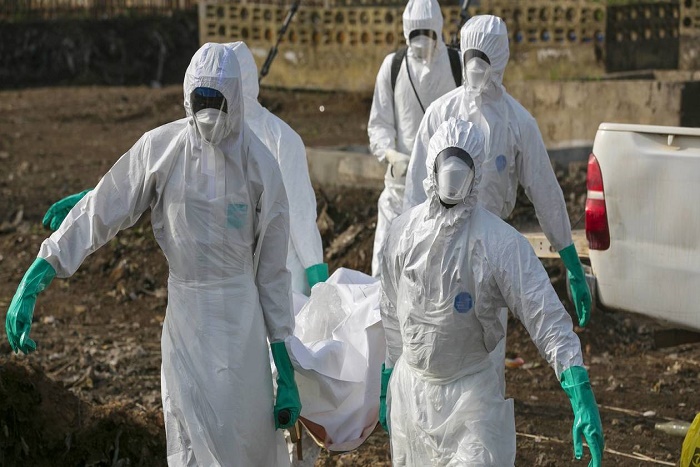
Stephanie Eller : It is important to emphasize that the ICRC as such is not a first responder with regard to the Ebola epidemic, as our mandate focuses on armed conflicts. On the other hand, we are providing support to the response by supporting the efforts of the DRC Red Cross in coordination with the International Federation of the Red Cross and Red Crescent who have the mandate to respond to health crisis situations such as the Ebola epidemic. The DRC Red Cross plays a key role in the response, its action is truly decisive in terms of community engagement, risk prevention, but also in the crucial aspect of dignified and safe burials on which the organization has long expertise.
As a neutral intermediary and of course with the agreement of all parties, the ICRC always stands ready to facilitate the transport of inputs and medicines for the Ebola response to areas affected by conflicts. Otherwise, on our side, the ICRC, we focus on responding to the humanitarian consequences of armed conflicts. This is where our added value really lies. Â Moreover, and as I mentioned to you, it is particularly important in view of the increase in clashes. This is particularly the case in South Kivu, with the increase in fighting in the Itombwe massif in recent days in the Fizi highlands.
This is reflected in the number of gun-wounded people we receive in the Bukavu Uvira and Fizi hospitals. So, really, maintaining this action in response to conflicts is fundamental while few organizations have the capacity to access areas affected by clashes and the epidemic. The Ebola outbreak poses additional challenges of access, resources and coordination.



/2026/06/03/6a2092c91ab6d907570381.jpg "TEMOIGNAGES. \"J'ai moins peur de mourir\" : le soulagement de ces Iraniens après l'accord de paix conclu avec les États-Unis")

