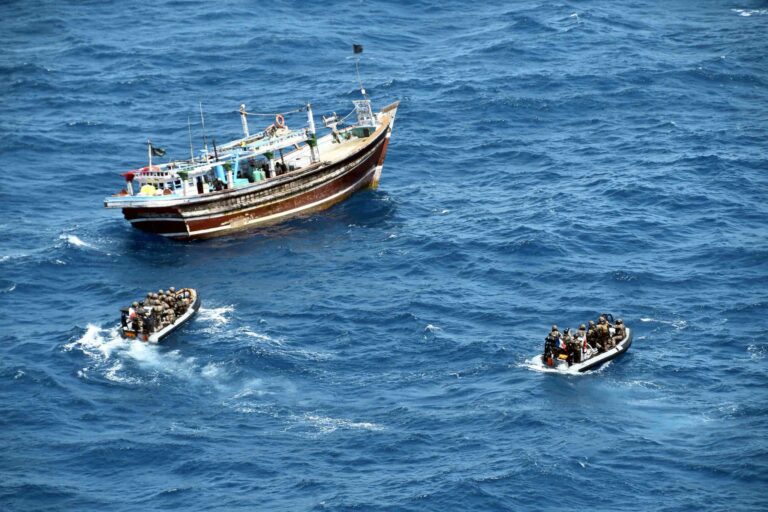
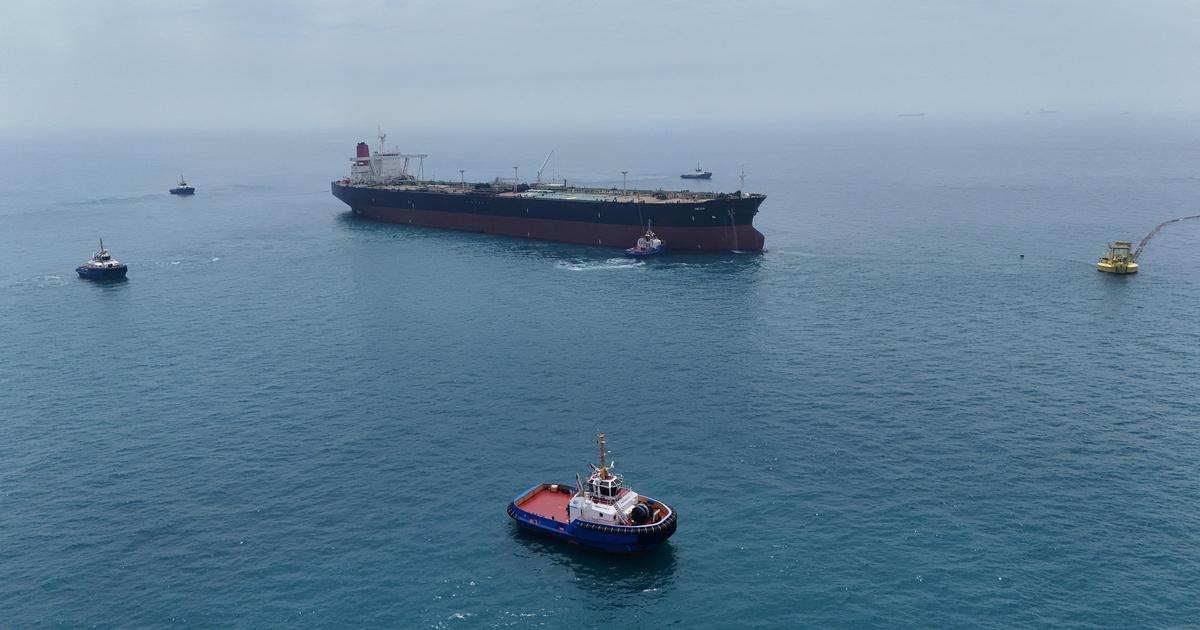
Struggling with the situation in the strategic zone for hydrocarbon traffic, Saudi Arabia, the United Arab Emirates, and Qatar are trying to rethink their oil and commercial routes. However, this imperative faces a number of constraints.
The days go by and the Strait of Hormuz remains paralyzed. Negotiations between Iran and the United States appear to be at a standstill, although Tehran has presented a new offer for the resumption of discussions, as announced by the official Iranian agency Irna on Friday, May 1st. The situation is like a headache for the Gulf countries, for whom hydrocarbon exports represent an indispensable economic pillar. Nearly 20 million barrels of oil and petroleum products passed through the maritime passage every day in 2025, according to the International Energy Agency (IEA).
Saudi Arabia, the United Arab Emirates, and Qatar are trying to rethink their oil and commercial routes. However, this strategic imperative faces a number of constraints. Franceinfo explains why the other options are almost nonexistent.
Because pipelines have limited capacities
If Kuwait, Qatar, and Bahrain, lacking other maritime access, remain entirely dependent on this passage, Saudi Arabia and the UAE have partial outlets thanks to pipelines connecting the Red Sea and the Gulf of Oman. But these infrastructures, already in service before the conflict, offer limited additional capacities, evaluated by the IEA at between 3.5 and 5 million barrels per day. “The reality is that alternative export routes (…) will take time to materialize,” emphasizes Robert Mogielnicki from the Gulf States Institute in Washington, USA, but diversification “will be crucial in the years to come.”
Liquefied natural gas (LNG), mainly produced by Qatar, is also affected. For Doha, “there is no alternative but to use existing liquefaction facilities. Qatar supplies gas through pipelines to the UAE and Oman via the Dolphin gas pipeline (nearly 20.5 billion cubic meters in 2025),” explains the IEA on its website. However, “the excess capacity of this gas pipeline is limited, while LNG export terminals in Oman showed a utilization rate close to 100%.”
Furthermore, the idea of a trans-Arabian gas pipeline, which has been discussed several times, has never materialized. “Distances, political complexity, and costs make these projects less competitive compared to tankers under normal circumstances,” observes Frederic Schneider from the Middle East Council on Global Affairs, a research institute based in Qatar.
The use of Iranian drones complicates the situation even further. Saudi Arabia acknowledged on April 10th the damage caused by recent attacks by Tehran on the kingdom’s energy infrastructure. The east-west oil pipeline in the country, on its part, was “restored to operation” after the attacks, Saudi authorities announced on Sunday. According to the Energy Minister, the infrastructure’s capacity has been “fully restored” to reach “around 7 million barrels per day.” Iranian offensives had reduced this flow by “about 700,000 barrels per day.”
Because railway and road options are costly
Most of the major Gulf ports located south of the strait, notably Jebel Ali (United Arab Emirates), now being inaccessible, container ships are diverting to ports in Oman or the west coast of Saudi Arabia on the Red Sea. Even Neom, a futuristic city project with an uncertain future, has been called upon.
The goods are then transported by land to other countries. Iraq has turned to Syria in this regard, as reported by France Télévisions. Saudi Arabia, which aims to become a regional logistics center, has recently launched commercial corridors combining roads and railways to connect the Gulf to the Red Sea and the Jordanian border.
“But capacities are not unlimited, and the costs of land transport remain significantly higher than maritime transport,” emphasizes Frederic Schneider. “It takes a minimum of 10,000 trucks to fill a standard tanker,” details geographer Sylvain Domergue, a maritime security specialist, to France Télévisions.
Moreover, the railway project of the Gulf Cooperation Council, intended to connect the six member states by 2030, is facing delays. The crisis may also bring back into question the India-Middle East-Europe economic corridor, launched in 2023, which partly bypasses the Strait of Hormuz and the Suez Canal by combining rail connections through the Arabian Peninsula and maritime connections to India and Europe. However, it “remains fragile, even hypothetical at this stage,” affirms Frederic Schneider. The planned route includes a segment between Saudi Arabia and Israel, while normalization between the two countries seems more distant than ever.
Because regional rivalries remain strong
The countries in the region have intensified their logistical cooperation and established alternative routes since the start of the Middle East conflict on February 28th. Nevertheless, “regional integration projects will have to deal with economic headwinds and governments focused on national priorities,” says Robert Mogielnicki.
The loss of oil revenues, the need for reconstruction after Iranian attacks, and the rise in military spending will create a budgetary pressure that could even accentuate “economic rivalries,” says Frederic Schneider. The surprising decision of the United Arab Emirates, announced on Tuesday, to withdraw from OPEC (Organization of the Petroleum Exporting Countries) in the name of “national interest” is the most striking example of these tensions, especially between Abu Dhabi and Riyadh.
Previous crises, from the invasion of Kuwait in 1990 to the blockade of Qatar, have never led to the “multilateral, institutionalized, and sustainable cooperation required by large infrastructure projects,” recalls Frederic Schneider. According to the analyst, even though it represents a major geopolitical shock, the crisis around the Strait of Hormuz does not seem likely to generate the “political will” that has been lacking so far.