The International Monetary Fund (IMF) has significantly revised downward its growth forecasts for the Middle East and North Africa region on Tuesday, following the war between Iran, the United States, and Israel that has escalated in the Gulf.
In its latest report on the global economy, the institution anticipates a growth of 1.1% in 2026, compared to 3.2% in 2025, with the region being the “most directly impacted by the conflict.”
The IMF had previously projected +3.9% growth in its previous estimate published in January.
After the Israeli-American offensive against Iran launched on February 28, Tehran retaliated by targeting American bases in the Gulf, as well as energy infrastructure – oil refineries, gas complexes, and petrochemical plants.
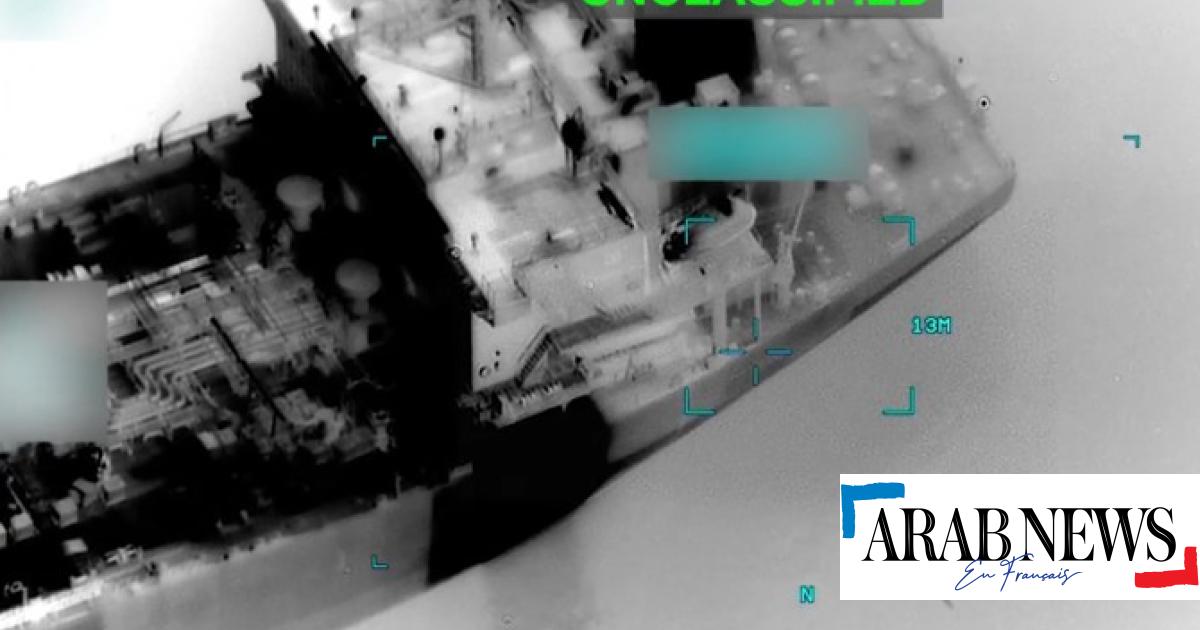
The blockade of the Strait of Hormuz, a vital maritime route for hydrocarbon exports, also deprives the region’s monarchies of essential revenues.
The expected slowdown in these countries varies “depending on the extent of damage to energy and transportation infrastructure, as well as the degree of dependence on the Strait of Hormuz and the availability of alternative export routes,” highlights the IMF.
The slowdown is expected to be “more pronounced for Bahrain, Iran, Iraq, Kuwait, and Qatar, and less significant for Oman, Saudi Arabia, and the United Arab Emirates,” it adds.
Iran, which has endured weeks of intensive bombing, is expected to see its Gross Domestic Product (GDP) contract by 6.1% this year (compared to a previous growth estimate of 1.1%), while in Qatar, where the primary site of natural gas production has been heavily damaged, economic activity is expected to plummet by 8.6% in 2026.
Iraq’s GDP is also expected to decline by 6.8% this year.
Saudi Arabia, the world’s leading oil exporter, is weathering the storm better thanks to its access to the Red Sea, allowing it to bypass the Strait of Hormuz. The growth of the largest economy in the region is expected to be 3.1% in 2026, down from the previously anticipated +4.5%.
After this tough year, a rebound is projected for the entire region in 2027, “assuming that energy production and transport normalize in the coming months,” according to the IMF, as a ceasefire took effect on April 8.
But this optimistic scenario could be revised “if the duration of the conflict prolongs and the extent of damage is reassessed,” it warns.
Importing countries in the region are indirectly affected, particularly by the rise in energy prices and other basic products, according to the organization based in Washington. In Egypt, growth is expected to be around 4.2% in 2026 (instead of the previously expected +4.7%).
Context: The IMF has adjusted its growth forecasts for the Middle East and North Africa region due to the impact of the conflict involving Iran, the United States, and Israel.
Fact Check: The specific details mentioned about the countries, their expected GDP contractions, and the potential implications of the conflict on energy production and exports are accurate as reported by the IMF.
/2026/06/11/6a2adcc83a0a9970169772.jpg "Strikes in the Middle East: the CGT of merchant navy officers denounces facts \"extremely serious\" and does not exclude an evacuation of French sailors")

/2026/06/03/6a1fe03069270315959679.jpg "Programme Coupe du monde 2026 : Mexique-Afrique du Sud, Corée du Sud-Tchéquie… A quelle heure et sur quelles chaînes suivre les matchs du jour et de la nuit de jeudi à vendredi")