
According to a study of approximately 1,000 adults in Japan, in 2025, more than 60% of them purchased capsule toys or other random items at least once a month.
Comment résister à ce sentiment d’excitation ?
Bandai Spirits, a Tokyo-based manufacturer of collectible gadgets and leisure-related products, conducted a survey of men and women aged between 18 and 59 on “random objects”, such as capsule toys, for example, or lottery-type products “kuji” in the form of small collectible characters. These objects have the particularity of adding an element of surprise when purchasing. In total, 1,032 responses were collected.
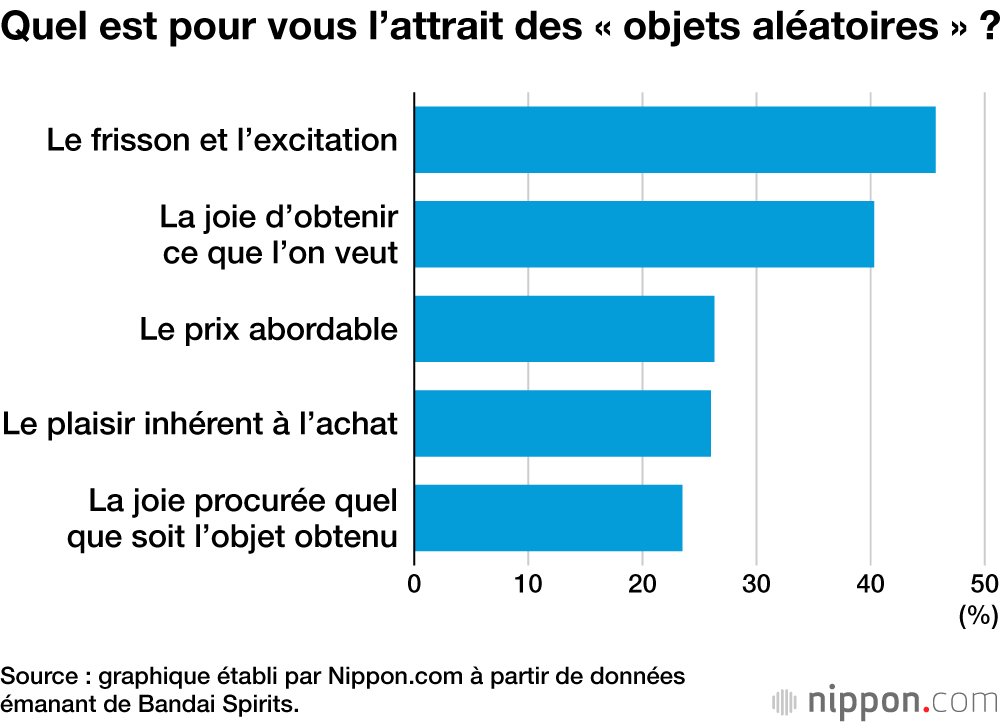
According to the survey, the main appeal of random objects is the “thrill and excitement” they bring, as answered by 45.7% of respondents. The “joy of getting what you want” (40.3%), “affordability” (26.3%) and “the pleasure inherent in the purchase” (26%) are other aspects cited by respondents. Furthermore, 23.5% of those questioned said they were satisfied whatever the object obtained. We therefore understand that the emotional experience provided by the purchase is as important as the product ultimately obtained.
When it came to the intention or reason behind purchasing random items, the most frequently given answer (47.3%) was that “favorite characters were just released.” Furthermore, the responses “I saw objects in a store by chance”, “I wanted to try my luck” and “I wanted to give myself a reward” were each cited by more than 20% of those questioned. Consumers therefore seem to be divided into two groups: those who seek information in advance and intentionally purchase objects bearing the image of their favorite characters and those who purchase them more occasionally, randomly or more spontaneously.
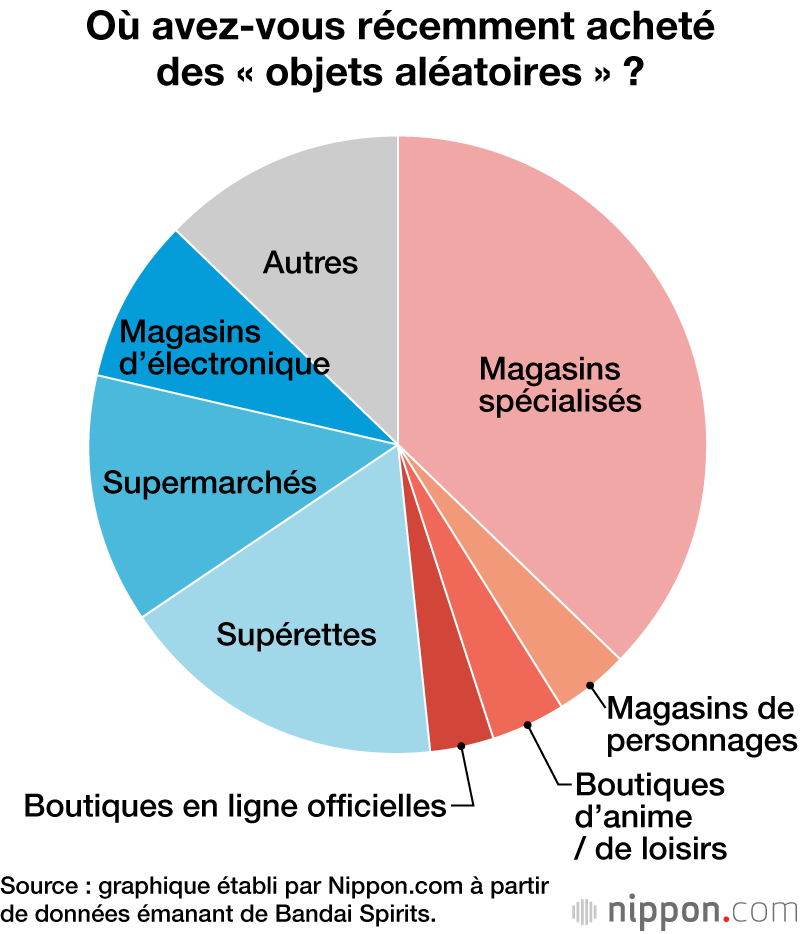
When it comes to points of sale, the most frequently given answer was “specialized stores”. These stores, as well as other places intended for otakusuch as character stores, anime or hobby merchandise stores, and official online stores, account for almost half of all purchases. Furthermore, 40% of sales come from convenience stores, supermarkets and electronics stores. The choice of point of sale therefore seems to be different between thoughtful consumers with a specific objective in mind and those who buy spontaneously while doing their shopping for example.
Capsule toys are the most successful item
In 2025, 63.3% of those surveyed purchased at least one random product per month. The purchase frequency also shows that random items are not only for children, but on the contrary have also become a new form of entertainment among adults.
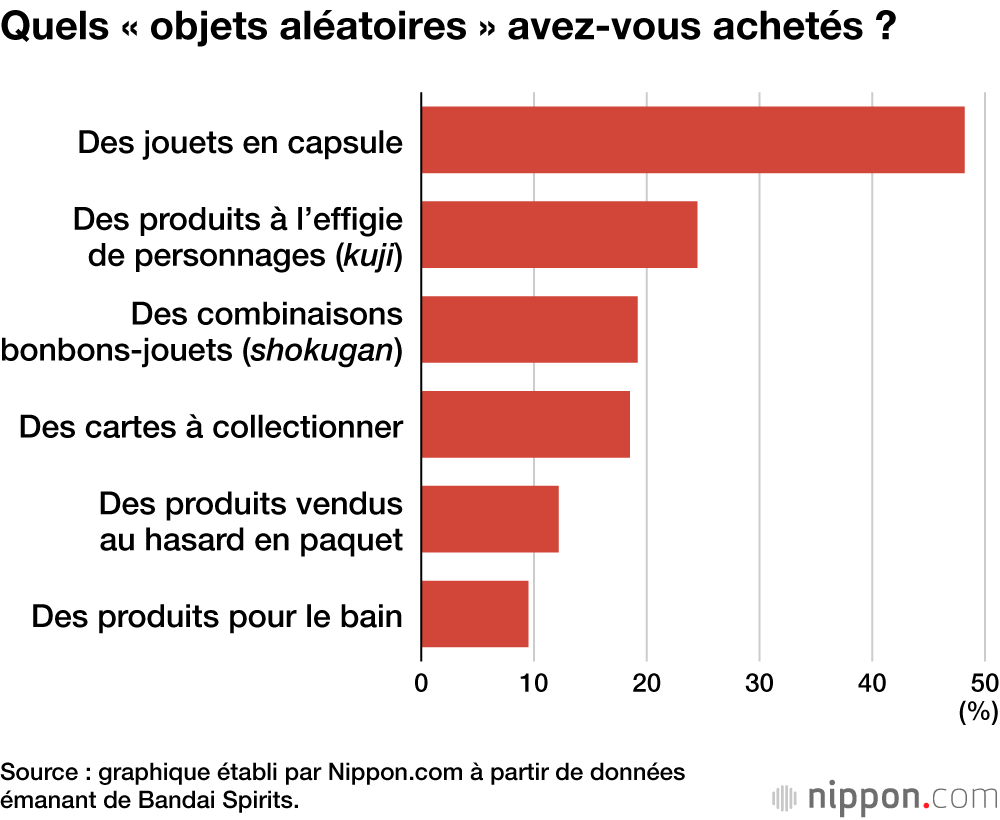
Capsule toys were by far the most successful category of random products. Next came the characters obtained by drawing lots (you) with the likeness of characters, candy-toy combinations (shokugan), trading cards, other products sold randomly in packs, and bath products that reveal a gift once in the water.
Regarding the number of products purchased at once, while just under 20% of those surveyed purchased only one item, more than 20% of them purchased two or three and 35% purchased at least four. Most consumers therefore seem ready to purchase several products at once.
When it comes to how they purchase products, more than half of those surveyed said they display them in their bedroom. Next come those who answered that they collect them and keep them preciously and those who hang them on a bag or a mobile phone. Even after the initial thrill of purchase, consumers continue to enjoy these products by viewing them at home or taking them with them, demonstrating that purchasing random products is an important part of lifestyle oshikatsu (which consists of supporting your favorite star or character).
Données utilisées
(Photo de titre : Pixta)


