On the screens, the face of a famous person reassures almost instantly. It gives an impression of seriousness, like a signature or implicit proof. However, artificial intelligence now knows how to create this trust from scratch. The deepfake scam relies precisely on this reflex. She borrows a familiar face, then makes him say or sell what the scammer wants to impose.
A fake loan presented by a presenter who did not exist
The journalist Safiria Leccese, face of Mediaset and presenter of the political show Super partes on Canale 5 and Retequattro, appeared in a video where, from her reconstituted studio, she praised an “easy” personal loan. It was not her who spoke, but an image generated by artificial intelligence. She discovered the trap thanks to the report of a parliamentarian, a regular guest on the show, who came across the false profile.
The crooks had stolen both his image and footage of his broadcast to build an account impersonating him and demanding money. In just one hour, several people had already fallen into the trap. The presenter turned to the Italian postal police, whose experts spotted two other fake profiles exploiting her face. Everything has been blocked, but the identity of the fraudsters remains unknown for the moment.
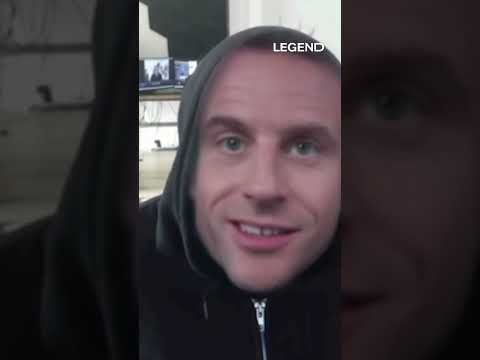
How a deepfake video clones a face
The term deepfake comes from deep learning, these artificial neural networks which partly imitate the functioning of the brain. Trained on photos and videos available online, such a system learns a person’s features, expressions and voice. From a few seconds of images, he then knows how to reconstruct a face that moves and speaks in a credible way, by synchronizing the movement of the lips with a voice that has also been reconstructed.
In this case, a simple capture of the broadcast was enough as raw material, especially since the familiar setting of a television set reinforces the illusion. Detection becomes all the more delicate as the quality of these tricks progresses quickly. The clues remain, such as an abnormal blinking of the eyes, blurred teeth or a somewhat flat intonation, but they are reduced with each new generation of tools, to the point of deceiving an audience which recognizes a familiar face and lets down its guard.
A deepfake scam gone industrial
The phenomenon has taken on a worrying scale. Italian state police have closed 473 sites linked to scams set up with doctored videos. According to the Italian economic press, scams combining deepfakes and false financial investments have cost Italians 143 million euros in eight months. The scenario varies little, whether it is a miracle loan or an investment with a guaranteed return, and it always plays on urgency to push the victim to act quickly. The principle remains the same: the trust placed in a known face, coupled with ultra-rapid distribution on the networks.
Faced with these thefts, Safiria Leccese has filed a complaint and is pleading to make a verified digital identity mandatory when opening any account, an avenue now discussed to curb this type of fraud.

/t:r(unknown)/filters:format(jpeg)/medias/CuRqpISqIC/image/fete_de_la_musique1771065271425.jpg "RADIO INTENSITY | ABLIS (78) – Music festival")