Â
Â
Museums are getting into football time
The second city in the world with the largest offer of museums after London, Mexico City prides itself on being able to present a program on the theme of football entitled by the government of Mexico City the “Globalist Cultural Corridor”. Mexico City’s museums are joining the World Cup celebrations to present various exhibitions that explore football from an angle specific to each person’s theme, and make us aware of the extent to which this ball game, so simple, started from so little, impacts our society as well as various sectors of activity.
Â
Franz Mayer Museum “Football: designing a passion”
Exhibition dedicated to the history of football and design since the very first World Cup in Uruguay in 1930. Each space tells us about the significant events experienced in each of the host countries of the American continent, as well as the progress made during these World Cups. You can follow the evolution of the design of balls, shoes, jerseys, sports bags, posters and view photos and videos. We learn that in 1950 the imposing Maracana stadium in Rio, intended to accommodate 200,000 people, was built by 7 Brazilian architects in order to show the world a modern image of Brazil. However, the Brazilian national team did not reach the final and then changed its white jersey with a blue collar for the yellow and green colors that we know today. In 1962, it was Chile’s turn to host the World Cup despite the worst earthquake in its history in 1960. Then came Mexico in 1970, two years after receiving the Olympic Games. It was this year that the design of the topography and the logo changed to make the Mondial a real brand.
Â
Â
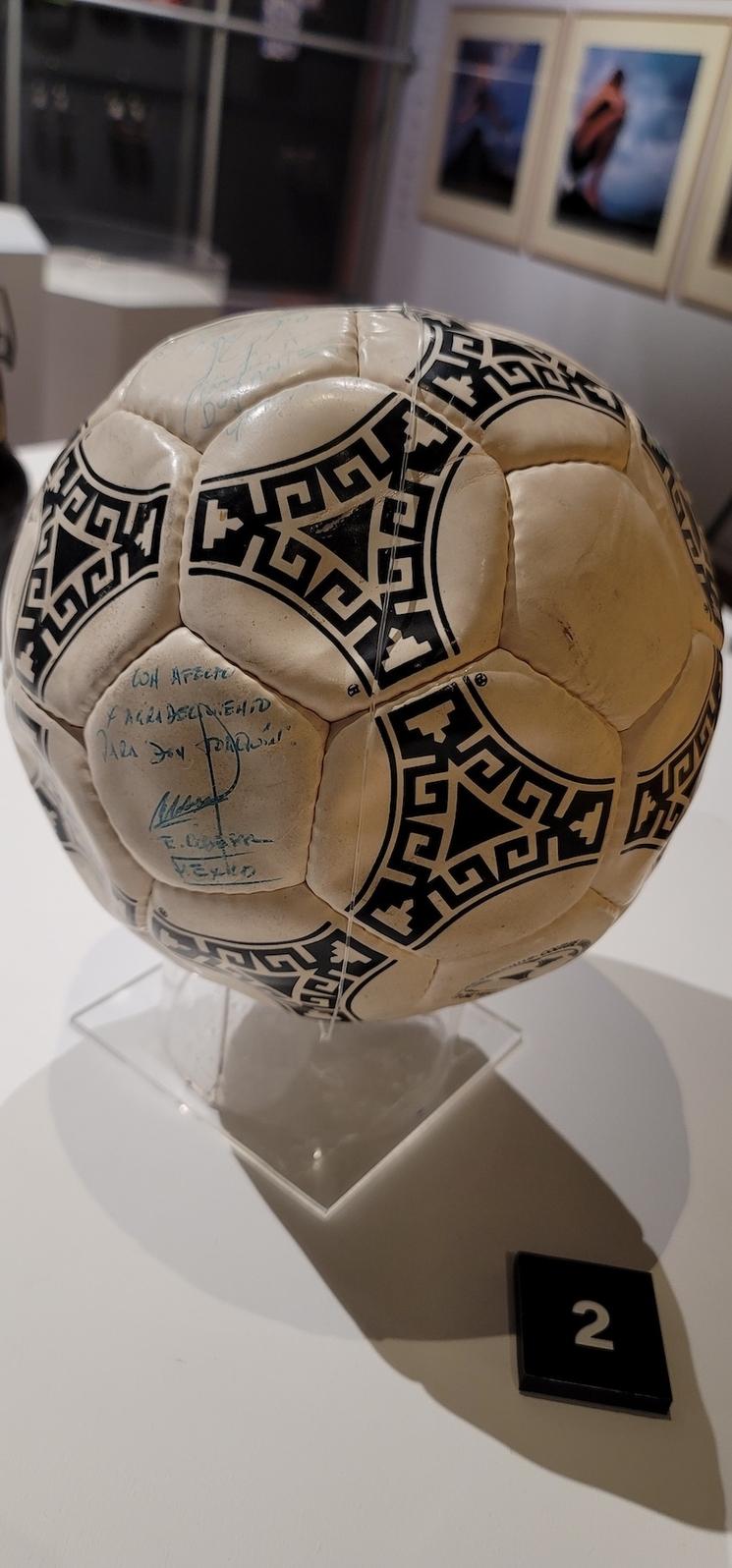
The very first Adidas ball with 32 hexagonal panels was selected. The very first live transmission by satellite and in color to Europe could be made. In 1978, it was Argentina who hosted and the voices of opponents of the Argentine military regime became louder than the cries of the supporters. They are taking advantage of the event to demonstrate against the lie of the propaganda posters distributed by this government. 1986, the coronation of Maradona. Mexico hosts the World Cup at home for the second time following the withdrawal of Colombia and despite a devastating earthquake in 1985. The popular Mexican mascot “Pique†becomes the opportunity to develop numerous commercial derivative products and Adidas creates an Aztec version of the official ball. 1994, the World Cup took place in the USA in 9 different cities with adaptable computer monitoring.
Â
Â
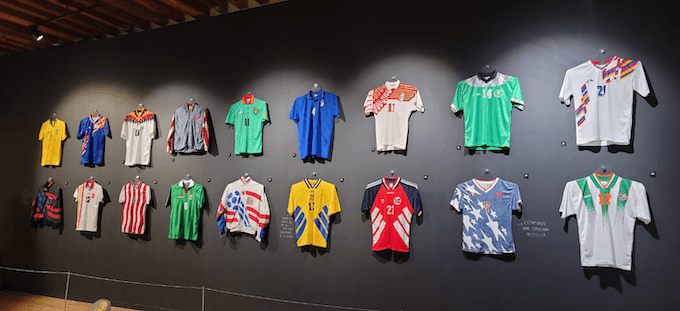
Numerous innovations in textile materials, new graphic visuals on jerseys are initiating a form of fashion for football jerseys with the participation of sports brands. 2014, Brazil once again displays its modernity to the world by building 7 new stadiums and renovating 5 others, resulting in notable popular demonstrations. It was during this world championship that Goal-line technology (GLT) and the ground marking spray that the referee will use appeared. 2011, Mexico, once again, organizes the 17/20 year old World Cup. And finally, in 2026, 3 organizing countries and another technological and financial level, unprecedented means of communication, relationships between sport and major brands on innovations in materials, components and shoe designs, among other things, continue to make the world of football an ever more successful business.
Â
Musée Jumex : Art et Football
Upon arrival, we are greeted by a recording of powerful and fiery shouts coming, no doubt, from the jubilation of a football match. This is the match between Mexico and Portugal preceding the 2026 World Cup. We are immersed in the spectacle, the communion of supporters and the power released by a football stadium as an identity event. Then we go directly to an earthen floor which reminds us that this game, which has become the most popular in the world, is also played in the street. The exhibition then refocuses football around what it is at its core, a popular, simple, community game, which is played in the most deprived neighborhoods. Through photographs, paintings, videos, recordings and objects representing football, in this exhibition, art intercepts a visual, auditory and bodily language which is invited into our daily lives and is sometimes even practiced in religion or as a form of expression.
Â
Â
Musée Yancuic: Album épique (Epic Album)
An album is distributed upon arrival in this large museum in order to fill it during the visit where you can see the chronological progression of the soccer jerseys of the Mexican teams, as well as the cups that Mexico has won, not counting the shoes and the balls. There is also the replica of this year’s World Cup.
Â
Museum of Memory and Tolerance: Own game (Juego Limpio)
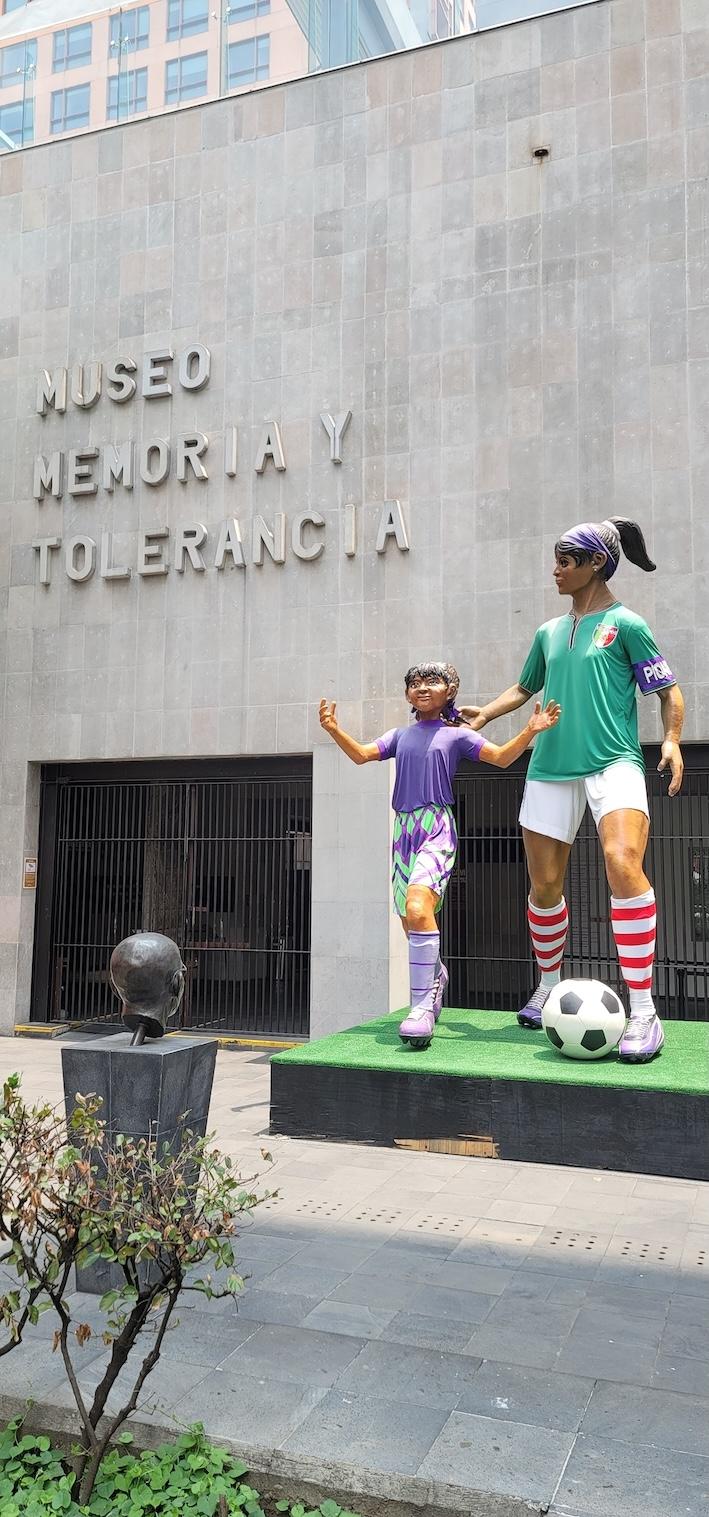
Unifying football, football as a meeting space, inclusive and peace-building. This exhibition aims to show football as a sport-phenomenon that has become key in the history and culture of Mexico and the world. Crossing 6 rooms, we find objects from collectors, great football figures and match commentators. 6 rooms and 6 themes. The birth of football from its most ancient origins on all continents, the innovations and progressive rules of the game that we know today since its beginnings at the end of the 19th century, Mexico and its love of football since its introduction in 1825 by the English, the presentation of the highlights of each world championship, but also the dark side of football (violence, sexism, homophobia, racism, the exploitation of children at work for sports brands…) and to conclude the important values of sport (fair play, equality, tolerance, solidarity…).
Â
Â
Universum: Science is in the field (La ciencia està en la cancha)
The UNAM Science Museum approaches football in the form of a scientific experiment through interactive activities and participatory challenges. The exhibition explains how players’ movements and actions can be deciphered by physics. Goals, headers, shots, decision-making inside and outside the field. Activities are also planned so that visitors can test these physical phenomena themselves. The entire history of the ball is studied: its materials, designs, technology and geometry explained.
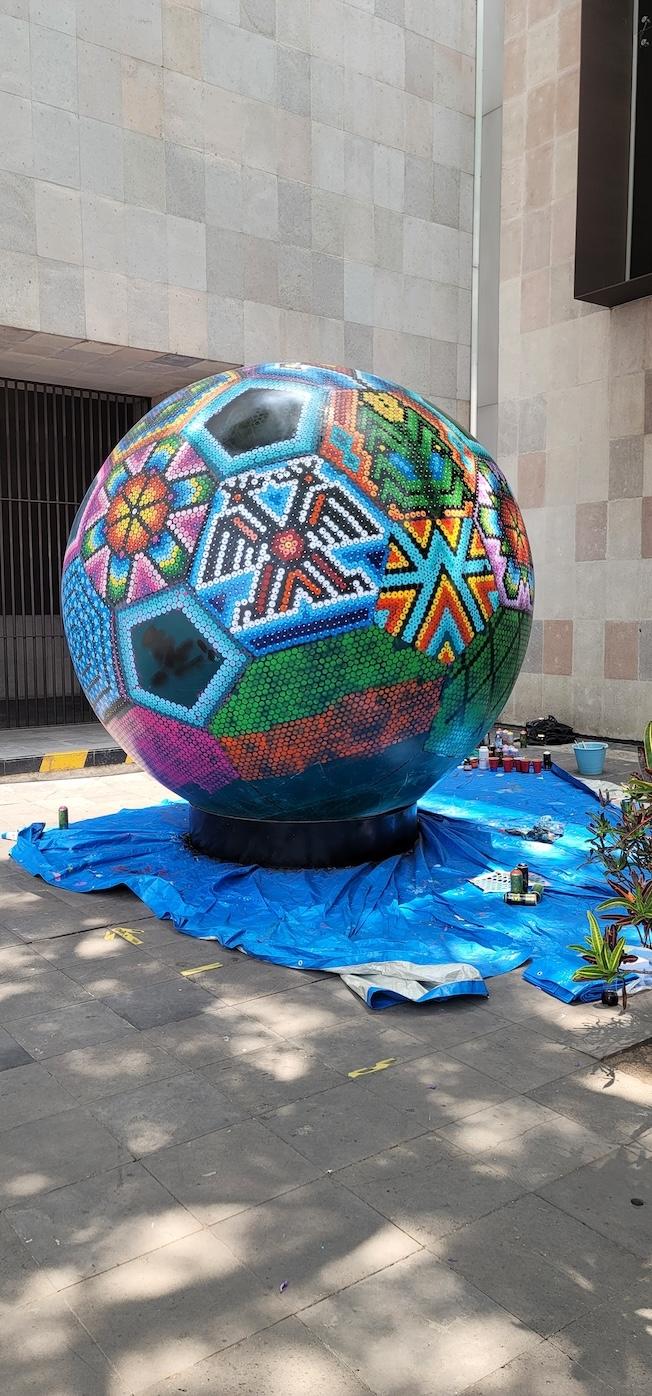
The Natural History Museum also presents an exhibition that merges science, life and football by presenting balloons modeled in their own way by different artists and even the museum domes seen from the sky decorated in the style of Mexican balloons. The MIDE, Museum of the Economy, also offers interactive activities on football.
Â
Legends : The ultimate football experience
The new private space INSPACE has just opened its doors in Polanco and, in collaboration with LALIGA, presents an immersive exhibition on football in the spirit of the great Legends museum in Madrid. Unique pieces of football star jerseys since 1916, and 8 rooms tell the history of football. Lovers of this sport will be able to experience the emotion and spectacle experienced in a stadium thanks to 3D cinema. Here technology allows the visitor to experience football to the fullest.
Â
Reforma, open-air exhibition
They finally arrived at Paseo de la Reforma and Zona Rosa! Created by the creative workshop Zion Art, 19 sculptures 5 meters high representing giant footballers in action with the jersey of a country discreetly written on the crest took place on either side of Reforma Avenue. A fusion of sport, art and culture is gradually taking hold on the capital’s most famous avenue. Passers-by can walk there while seeing these giant statues parading here and there announcing the approach of the World Cup.
Â
Â
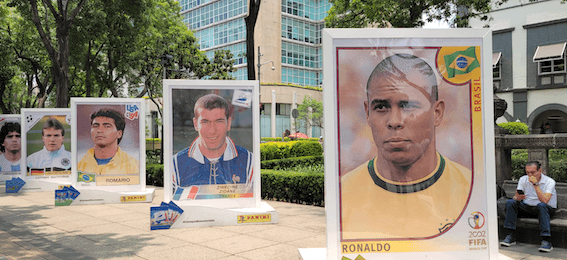
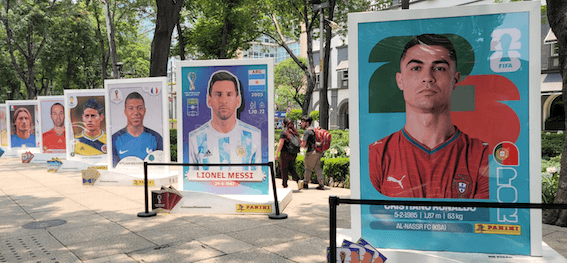
For the pleasure of Panini fans, the famous and unmissable sticker card album also displays giant Panini cards at the height of the Four Seasons Hotel. We can see, on one side, the cards of cult players from the years they marked with their exploits, and on the other, the posters of the World Cups. Nostalgic passers-by cannot help but stop in front of the photos of Zidane, Maradona, Pelé or Messi.
Â
Â
And from June 11, the day of the launch of the World Cup in Mexico, giant balloons created by Mexican and international plastic artists are expected, as well as an exhibition of photos taken by photojournalists over several decades, testimonies of the explosions of emotions triggered by the World Cups will also be soon visible.
Â