I subscribe to the “Info” newsletter
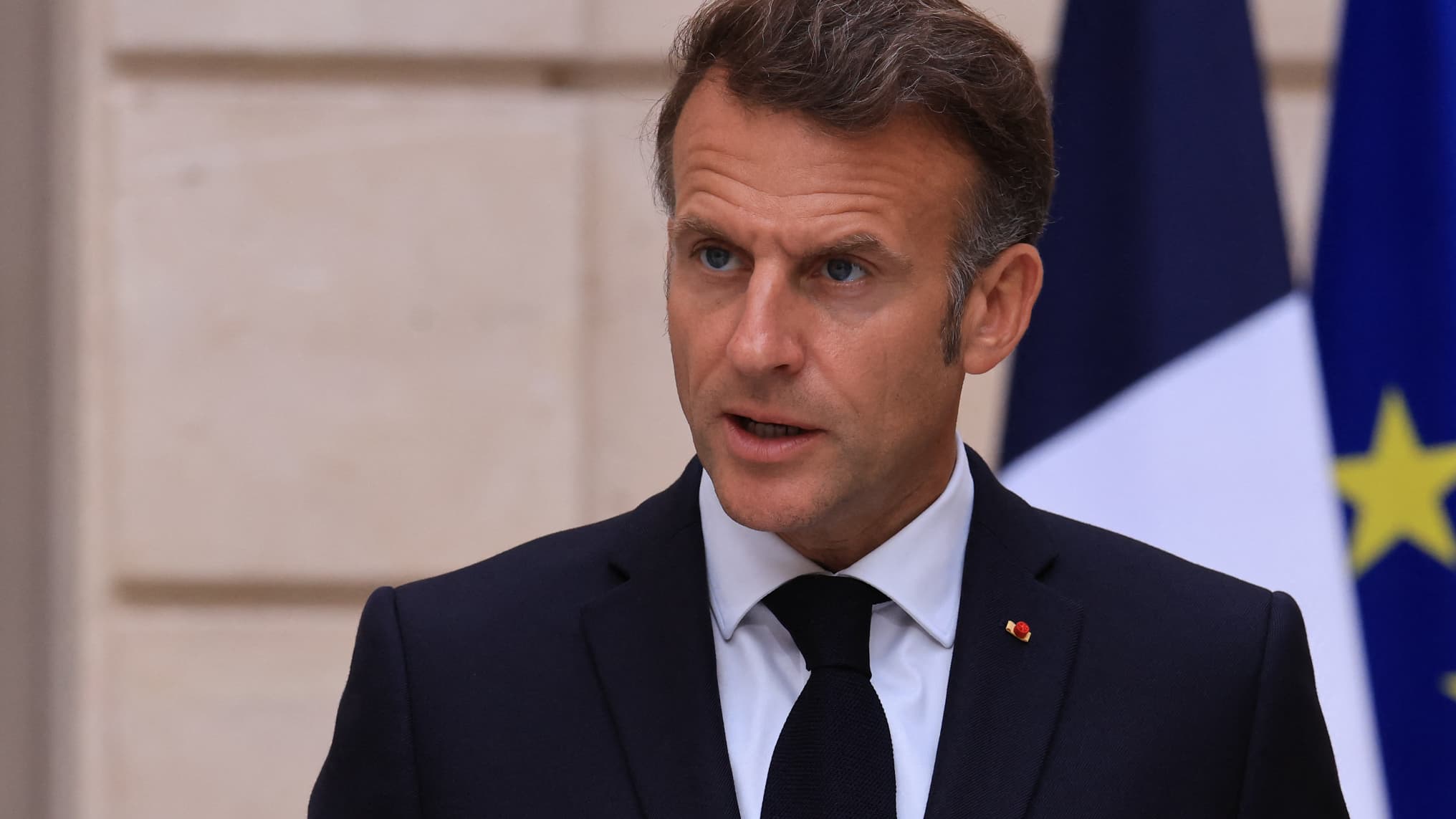
A signature in Versailles. The United States and Iran signed an agreement to end the war in the Middle East on Wednesday June 18. According to an American official, the signing took place during a dinner with Emmanuel Macron organized in the wake of the G7 in Évian, in Versailles.
>> LIVE – War in the Middle East: Donald Trump signed an agreement with Iran to end the conflict, follow developments in the situation
“I can confirm the signing,” said the official, when asked about the information according to which the American president had personally signed a copy of the agreement during a dinner with the French president, at the Palace of Versailles.
Iran also confirmed having signed this agreement with the United States. “The text of the Islamabad memorandum of understanding was finalized by the signature of the presidents. It is now time to put the implementation of this agreement to the test,” declared the spokesperson for the ministry, Esmaïl Baghaï, quoted by the Irna agency. He added that this signing was done electronically and that a signing ceremony “doesn’t really have its place.”
“This agreement demonstrates the failure of the United States” against Iran
The formal signing ceremony by US Vice President JD Vance and the Speaker of the Iranian Parliament, Mohammad Bagher Ghalibaf, initially planned in Switzerland on Friday, therefore now appears moot, he stressed.
“This agreement demonstrates the failure of the United States” against Iran, Mohammad Bagher Ghalibaf declared on state television. The general secretary of pro-Tehran Lebanese Shiite Hezbollah, Naïm Kassem, described this agreement as a “great victory” for Iran, which he thanked for having insisted on including the Lebanese front.
In a televised message, he called for “taking advantage” of this agreement to “expel Israel” from Lebanon. Lebanon was drawn into the conflict when Hezbollah fired rockets into Israel on March 2 in support of Iran.
The leader of Hezbollah also called on the Lebanese government to stop direct negotiations with Israel initiated since April under the aegis of Washington. Lebanese President Joseph Aoun had previously assured that the process was “independent” of the US-Iranian agreement.
What the agreement contains
The text of the memorandum of understanding, read by a senior American official to journalists, provides that the United States will suspend, upon signature, its sanctions on the sale of Iranian oil. They also undertake to lift all of their sanctions against Tehran in the event of the conclusion of a final agreement, at the end of a 60-day negotiation period.
During these two months, the two countries will discuss a mechanism to deal with Iranian stocks “using, at a minimum, an on-site dilution method under the supervision of the IAEA (International Atomic Energy Agency)”, underlined this official, wanting to see it as a “major victory” for Washington.
For its part, according to the same source, Iran must allow, within 30 days, the full restoration of maritime traffic in the strategic Strait of Hormuz, whose persistent blockage weighs on the world economy.
The United States also undertakes, in the event of a final agreement, to facilitate “with their regional partners”, particularly from the Gulf, the release of a fund of 300 billion dollars for the reconstruction and economic development of Iran, without this implying any American financial participation.
Oil prices ended slightly higher
Iran, for its part, published the text of the agreement, via the government press agency Irna. The G7 member countries, meeting in France for a summit, welcomed in a joint declaration “a historic opportunity to prevent Iran from acquiring any nuclear weapons and to tackle the threats linked to its regional and ballistic activities”.
China, for its part, considered it “essential” that “all parties” scrupulously apply this agreement and avoid external “interferences”, during a telephone conversation between its Minister of Foreign Affairs, Wang Yi, and his Iranian counterpart, Abbas Araghchi, according to Beijing.Â
The head of Chinese diplomacy, whose country is largely dependent on oil imports from the Gulf, insisted on the need for navigation in the Strait of Hormuz to be “properly managed, responding prudently to the serious concerns of the international community”.
Oil prices ended slightly higher, with operators being cautious about signing the memorandum of understanding, with Brent, the world benchmark for crude, rising 0.75% to $79.55 per barrel.
News from the RTL editorial team in your inbox.
Thanks to your RTL account, subscribe to the RTL info newsletter to follow all the daily news
S’abonner à la Newsletter RTL Info
Don’t let Google decide your sources.
Add RTL as preferred source