1. The Bank of Japan raises its interest rates to a level not seen in 31 years: On June 16, the Bank of Japan (BoJ) raised its key rate to 1%, its highest level in 31 years, in order to counter the risk of inflation exceeding its target of 2%, due to the rise in oil prices and the depreciation of the yen to around 160 yen to the dollar. This decision is accompanied by an increase in short-term interest rates, from 0.75% to 1% for the first time since the end of 2025, with the aim of stabilizing financial conditions in the face of ongoing conflicts in the Middle East. Although this increase in rates could slow growth due to the increase in the cost of credit, the BoJ favors price control, the risk of recession having diminished thanks to the efforts made to secure the supply of materials first alternatives.
2. The ban on software of Chinese origin in the United States affects many automakers: several major automobile manufacturers are urgently seeking to obtain licenses from the American government in order to maintain their activities before the entry into force, scheduled for 2027, of the ban on software of Chinese origin in connected vehicles. Ford has filed a license application for its Lincoln Nautilus SUV, while GM plans to shift production of its Buick Envision to the United States and require its suppliers to remove Chinese components by 2027 to comply with regulations. These initiatives show that the automotive industry is bearing significant costs to restructure its supply chain, while facing increased challenges linked to the entry into force, from 2030, of material restrictions.
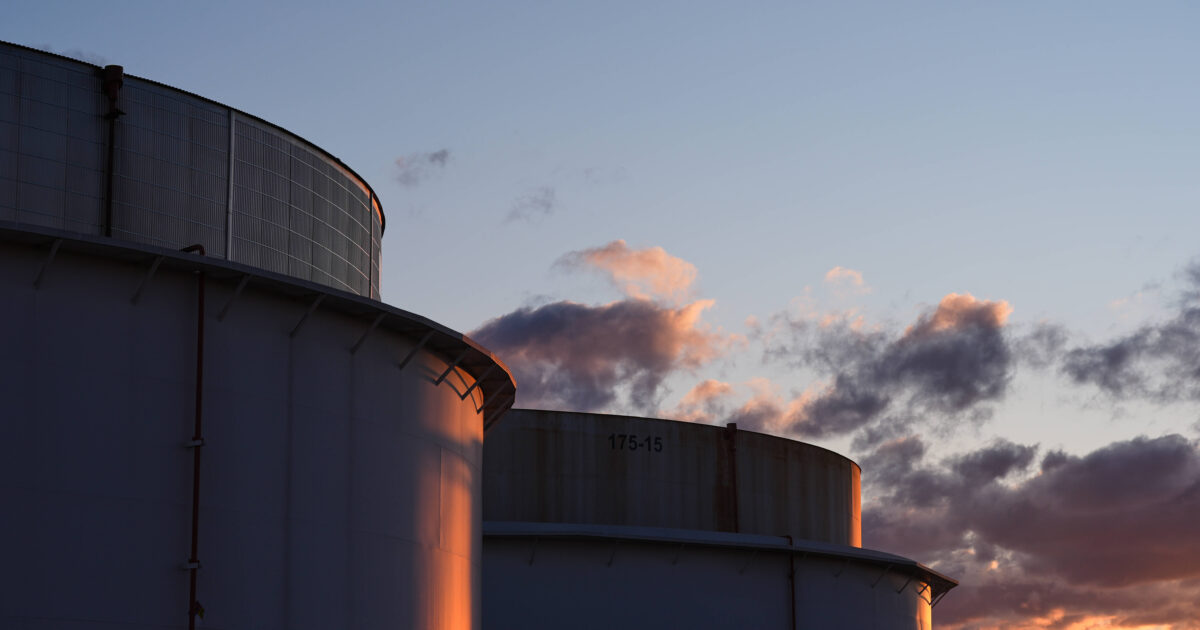
3. American strategic oil reserves at their lowest level in more than forty years: The United States’ Strategic Petroleum Reserves (SPR) fell to 340.3 million barrels, their lowest level in more than four decades, due to supply shortages caused by the conflict between the United States and Iran. The US government has implemented a business loan program totaling 172 million barrels of oil in order to contain fuel prices, while the storage capacities of the Cushing site have also declined sharply to reach 21.6 million barrels, thus approaching their minimum operational capacity. Despite the mixed reactions sparked by this withdrawal of oil, the American Department of Energy affirms that the mechanism of compensating oil through additional royalties will help stabilize the energy market without burdening the national budget.

4. The United States says the Strait of Hormuz will be free of navigation under the new peace agreement: President Donald Trump’s administration has said ships will be able to pass through the Strait of Hormuz free of charge under the peace memorandum signed with Iran on June 14, aimed at restoring 20% of the world’s oil supply. The agreement opens a 60-day negotiation period to develop a comprehensive document, in which the United States emphasizes that Iran will only receive economic benefits and a $300 billion reconstruction fund after fully fulfilling its practical commitments. Although the two sides still differ on the issue of maritime charges, the immediate priority is mine clearance to ensure the absolute security of this strategic shipping corridor.
5. In the United States, the price of gasoline falls below $4 per gallon for the first time since mid-April 2026: On June 14, the average price of gasoline at the pump in the United States fell to $3.997 per gallon, falling below this threshold for the first time since mid-April 2026. This drop is explained by the hope of a resumption of maritime traffic in the Strait of Hormuz. It follows the signing of the peace memorandum between the United States and Iran, which helped lower global crude oil prices by more than $4 per barrel and provided crucial political support to the Trump administration ahead of the November 2026 election. However, experts warn of the risks involved to a further drop in prices, given the historically low level of gasoline stocks in the United States (215.1 million barrels) and the fact that the restoration of normal maritime traffic could take several weeks.
6. India becomes a new growth engine for the global steel industry: Faced with slowing demand in China, large mining companies such as BHP and Rio Tinto are reorienting their strategy towards India, a market set to become the new global center of steel production and consumption. The Indian government has set an ambitious target: to increase steel production to 500 million tonnes by 2047, a significant increase from the 165 million tonnes forecast in 2025, in order to support urbanization and infrastructure development. According to Rio Tinto’s forecast, the world will need an additional 950 million tonnes of iron ore processing capacity over the next decade to meet growing demand from emerging economies, with India playing a key role in this process.

7. Microsoft sued by shareholders for alleged concealment of financial information: Microsoft faces a class action brought by shareholders, led by an American pension fund. The latter accuse the company of having artificially inflated its share price and concealed the slowdown in the growth of its Azure cloud platform. The complaint alleges that Microsoft’s failure to disclose its $37.5 billion investment requirements for artificial intelligence (AI) infrastructure caused its stock price to plummet on January 29, causing a record loss of $357 billion in market capitalization. Although Microsoft says these allegations are unfounded, the case is nonetheless shocking because it comes shortly after the company entered into a veritable technological arms race with competitors such as Google and OpenAI.
8. The fortunes of the 500 richest people in the world saw a record increase in a single day: according to the Bloomberg Billionaires Index, the total fortune of the 500 richest people in the world increased by $336 billion in a single trading session on June 15, setting a new record at $13.3 trillion. Billionaire Elon Musk consolidated his leadership position, his fortune jumping by $164 billion to $1.27 trillion, mainly thanks to a 20% rise in SpaceX’s stock value following its successful IPO. Market optimism following the agreement to reopen the Strait of Hormuz has propelled major stock indices to historic highs, while raising the minimum wealth threshold to be among the world’s 500 richest people to an unprecedented level of $7.9 billion.
Source : https://baotintuc.vn/kinh-te/diem-tin-kinh-te-the-gioi-noi-bat-ngay-1662026-20260616205031466.htm
/2026/06/16/6a3112b5d2c75225250508.jpg "Moscow refinery hit in Ukrainian drone strike, kyiv demands response \"just\" to the Russian strikes of the day before")