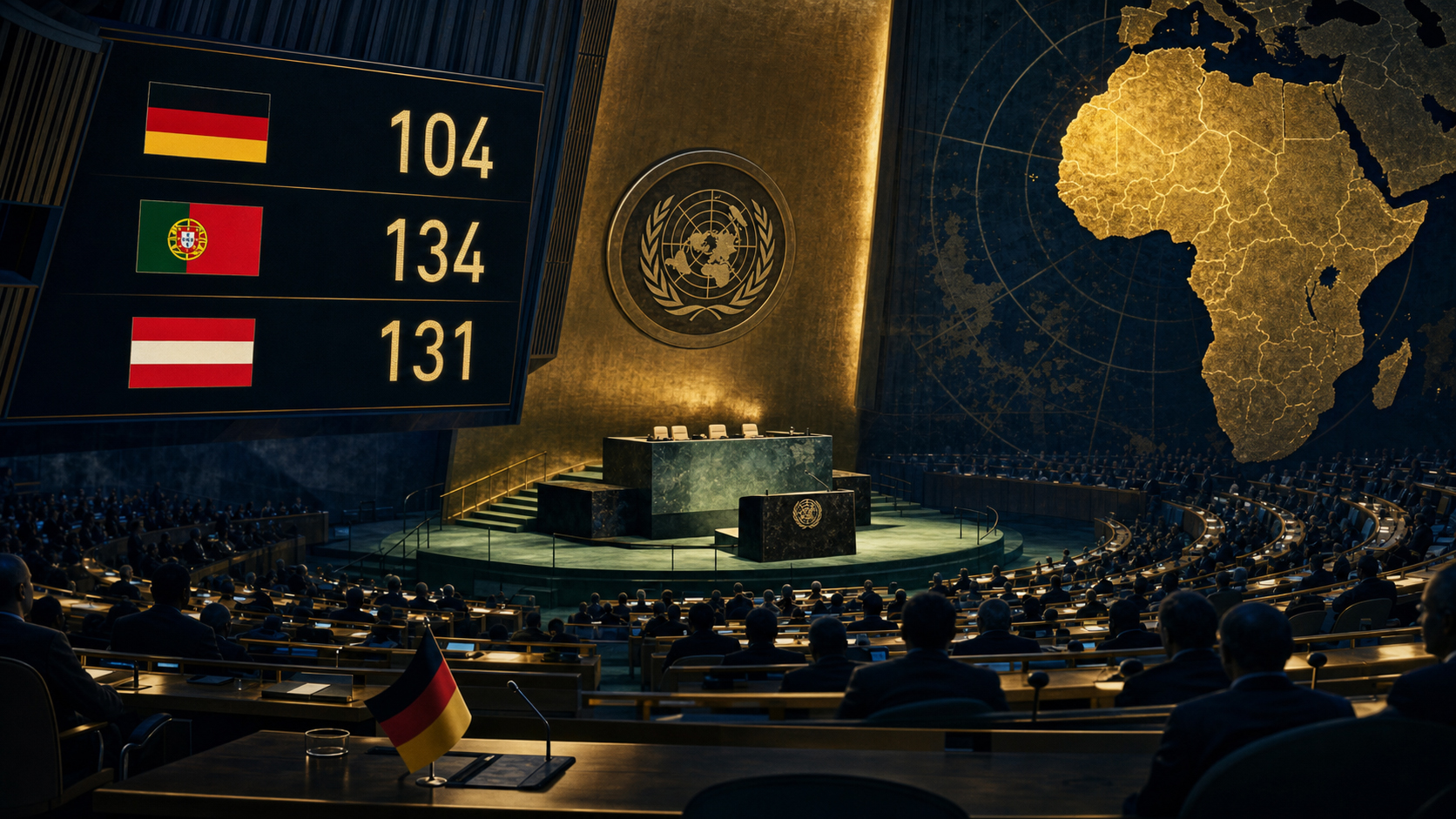
Can a successful run by the Blues boost the French economy? If hope is reborn with each Football World Cup, several economists interviewed by AFP believe that the effect on growth remains, at best, marginal.
At each edition of the World Cup, the International Association Football Federation (FIFA), the organizers and various consulting firms publish studies quantifying the expected benefits.
In 2025, FIFA and the World Trade Organization (WTO) estimated the contribution of the 2026 World Cup to global gross domestic product (GDP) at more than $40 billion.
Could France benefit from it? On paper, the idea is attractive, at a time when household morale is faltering, consumption is falling in the face of inflation and recession looms.
“It’s an urban legend,” says Luc Arrondel, sports economist at the CNRS.
“We now know with hindsight that even hosting a sporting event has very little impact on the economies of the countries that organize them,” underlines the researcher, author of “Foot business: Les Trente Glorieuses” (Ed. Odile Jacob).
During the Blues’ first coronation at home in 1998, “INSEE noted only a very slight increase in household confidence”, in an already favorable economic context, Hadrien Camatte, economist for Natixis, reminds AFP.
An observation which applies to the other recent major sporting events hosted in France.
After the Paris Olympic Games, the Court of Auditors estimated their contribution to French annual growth in 2024 at 1.9 billion euros, or… 0.07 points of GDP.
Euro 2016 football in France generated 1.2 billion euros in economic benefits, according to a study by the Center for Sports Law and Economics (CDES), or 0.05% of French GDP this year.
– Crowding out effects –
So, what can we expect from a competition organized between the United States, Canada and Mexico?
“Even if France reaches the final or wins the competition, it is very difficult to say that there will be an impact on GDP,” indicates Hadrien Camatte.
After its second star, during the 2018 World Cup in Russia, household confidence remained almost stable, reports a note from Natixis.
Yet crowded bars, robbed shelves of beers and frozen pizzas and XXL flat screens sold by the thousands fuel the collective belief.
All this spending “remains concentrated on certain sectors and there are fairly significant crowding out effects”, explains Hadrien Camatte. “If you went out on a Thursday night to watch the World Cup, maybe you wouldn’t go to a restaurant on Saturday night.”