
Since October 2023, Russia has been steadily gaining ground month after month. This movement was stopped in April.
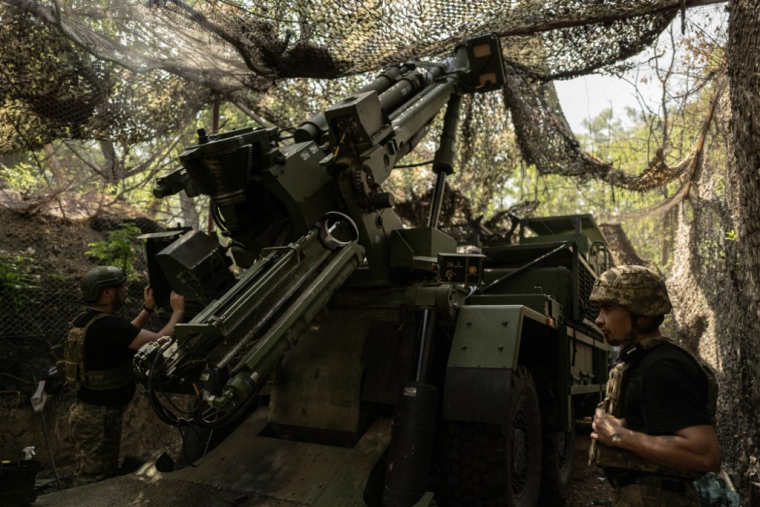
Ukrainian soldiers in Ukraine, June 9, 2025. (illustration) (AFP / FLORENT VERGNES)
After more than two years of retreat, Ukraine took back some 282 km2 from the Russians in May, reducing for the second month in a row the area of its territory controlled by Moscow, according to analysis by the
AFP
data from the Institute for the Study of War (ISW). These gains remain tiny, but demonstrate a change in the dynamics of the conflict.
Since October 2023, Russia had been steadily gaining ground month after month, but its progress had begun to stall at the end of 2025, going from an increase of 579 km2 in November to only 23 km2 in March. In April, the area controlled by Moscow had decreased for the first time in two and a half years, by around 120 km2.
The decline of Moscow’s forces reported by the ISW is, however, not total:
Russian soldiers remain infiltrated
in most areas where Ukraine has regained ground. The Russian army constantly sends small groups of soldiers to take up positions in parts of the front and hide there to then encourage the advance of the main body of troops.
“Successful drone strike campaigns”
Ukrainian gains in April and May are, moreover, marginal on the scale of the country (0.07% of Ukrainian territory, Crimea and Donbass included) and on the scale of the territories controlled by Russia (0.4%).
However, they reflect a positive trend for the Ukrainian camp.
The ISW reported last week on “successful medium-range drone strike campaigns” launched this spring by Ukraine.
These operations made it possible to
“limit Russia’s ability to transport personnel”
towards the front and to “support its front line positions”.
In May, the Ukrainian army advanced mainly in the Donetsk and Zaporizhia regions.
The ISW’s estimates exclude advances claimed on the Russian side but neither confirmed nor denied by this institute which works with the Critical Threats Project (an offshoot of the American Enterprise Institute or AEI), another American think tank specializing in the study of conflicts.
More than four years after the start of the Russian invasion of Ukraine, Russia occupies a little more than 19% of the country, including 7% in Crimea and in areas of the Donbass industrial basin, already under Russian control or pro-Russian separatists before the February 2022 invasion. Russian advances were made during the first weeks of the conflict.


