In the windowless corridors of the Rayburn House Office Building and in the hushed briefing rooms of Foggy Bottom, Washington’s long-standing consensus on Lebanon is eroding.
For years, US policy toward the Lebanese Armed Forces (LAF) was treated as a “sacred cow”: a modest investment intended to prevent the collapse of a fragile state. But in May 2026, this consensus turned into growing skepticism, now threatening the continuity of American funding.
“The FAL remain the glue that held Lebanon together during a period of great instability,” said MP Darin LaHood to Ici Beirut.
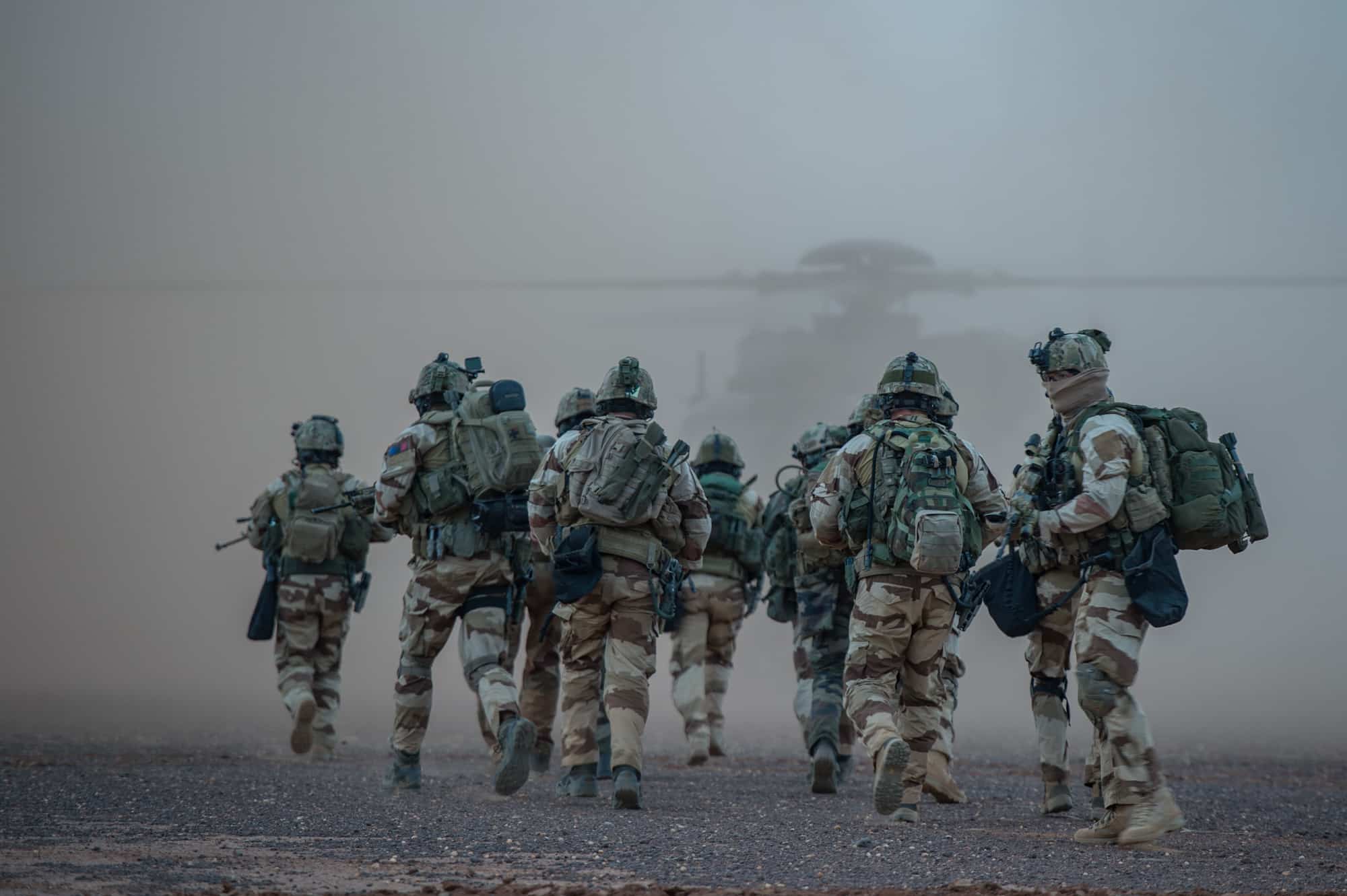
In Washington, however, a hardened Congress and an impatient White House increasingly see the FAL as a mere subsidized spectator: an army too hesitant, too compromised to oppose Hezbollah, despite government decrees ordering its disarmament.
David Schenker, former deputy secretary of state, sums up: “The United States is asking a lot of the LAF, but we also know that Lebanon is unlikely to obtain concrete results. There are real limits to what we can expect.”
As Lebanese and Israeli representatives meet this week in Washington, the issue of Hezbollah’s weapons and Beirut’s efforts to disarm the organization has become a central focus of discussions.
Growing pressure
Pressure has intensified since the May 2 meeting between American General Joseph Clearfield, Washington’s senior military representative in Lebanon, and the commander-in-chief of the Lebanese army, General Rodolphe Haykal. The United States has demanded that the Lebanese army play a central role in implementing the disarmament of Hezbollah, alongside diplomatic negotiations and ceasefire mechanisms.
Washington is no longer prepared to sign blank checks. According to several reports, American aid would be conditional on measurable progress against Hezbollah.
At the same time, Israeli officials believe that Lebanon’s inability to deal with the issue of Hezbollah’s weapons justifies the continuation of military operations on its territory, despite the ceasefire negotiated under American mediation, and which came into force on April 17.
“It is important to continue to recognize the need to support and train the LAF as it continues its efforts to fully disarm Hezbollah and protect the sovereignty and stability of Lebanon,” LaHood said, adding that “this support will go coupled with significant oversight and strict accountability requirements.
Mr. Schenker, for his part, indicated that the Congress was already moving towards increased conditionality of future aid to Lebanon, linked to tangible results.
“If there is no tangible effort against Hezbollah, support will erode,” he said.
No illusion
In Washington, no one has any illusions about the capacity or willingness of the Lebanese authorities to act.
“The government in Beirut has made it clear that it will not take any action that could trigger a civil war, particularly on the issue of Hezbollah’s weapons,” Schenker said.
“If Lebanon continues to offer only vague promises and no concrete action, American interest will wane. We have seen this before: after a period of hope, attention shifted elsewhere when promises were not kept,” he added.
Some figures in Donald Trump’s administration believe that direct contacts between Lebanon and Israel constitute an encouraging development. But, according to Mr. Schenker, “the simple fact of negotiating does not guarantee a lasting ceasefire.”
“All progress ultimately depends on real results, not promises,” he insists.
American frustration is not new, but it is exacerbated in a context of fragile ceasefire and almost daily exchanges of fire between Hezbollah and Israel, against a backdrop of broader regional confrontation between Washington and Tehran.
“Many in Lebanon, including within the government, feel powerless in the face of Iranian influence. The government can make decisions, but it cannot implement them when it comes to Hezbollah or the presence of Iran,” added Mr. Schenker.
“The Lebanese, whether or not they want peace with Israel, do not want Iran to continue to decide issues of war and peace for Lebanon.”
Paralysis and justifications
After the Lebanese government’s unprecedented decision on March 2 to ban Hezbollah’s military activities, the FAL was reluctant to apply the order, citing the need to preserve civil peace.
Retired general Khalil Gemayel believes that the scars of the Lebanese civil war had locked the army into the political status quo, making it institutionally reluctant to any internal confrontation.
“The FAL has already been confronted with the issue of militia weapons, and when there is no political consensus to remove them, they have no power to do so,” he explains. “These weapons are of a community nature, and the army can only disarm on the basis of a political agreement.”
In Washington, the diagnosis is even more severe: the FAL is perceived as an institution emptied of its substance by the state that they are supposed to serve. Matthew Levitt, a senior researcher at the Washington Institute, quips: “Eight thousand FAL troops are deployed to the south, but half of them drive Ubers or work in restaurants because they don’t get paid.” A situation which now, according to him, reduces Lebanese sovereignty to its simplest expression. The United States is, in fact, financing an army that has become a survival economy.
Senator Roger Wicker, chairman of the US Senate Armed Services Committee, says: “Congress should not support the FAL if they do not act to completely and immediately disarm Hezbollah.”
The FAL is especially criticized not only for their lack of capacity to confront Hezbollah, but for their reluctance to challenge it, while Washington considers it to be the driving force behind the Lebanese crises.
A narrow window
Hezbollah, which has long presented itself as protector of the Shiite community, is now seen as a factor in its weakening. Since the opening of the front against Israel on October 8, 2023, its military power has been considerably weakened. The death of its historic leader Hassan Nasrallah, killed by Israel in September 2024, left the Shiite community in search of bearings and called into question the very justification of the movement.
On paper, a window for change, although fragile, exists. Even Parliament Speaker Nabih Berry, Hezbollah’s historic ally and sometimes rival, has begun to quietly align with the Lebanese state’s plans to reassert its sovereignty as the regional balance shifts against Iran.
For MP LaHood, “this is a generational opportunity for Lebanon to eliminate the malevolent cancer of Hezbollah and move toward normalization and peace with Israel.”
However, the FAL remains wait-and-see, hoping for a “tipping point” that Secretary of State Marco Rubio and other hawks in the Trump administration believe has already been passed for several months.
“All political and diplomatic options must remain on the table as discussions continue between Israel and Lebanon, but the common goals of stability and peace must form the basis of these exchanges,” LaHood said.
But time is running out, and the American message is unequivocal: the window is closing.
Â