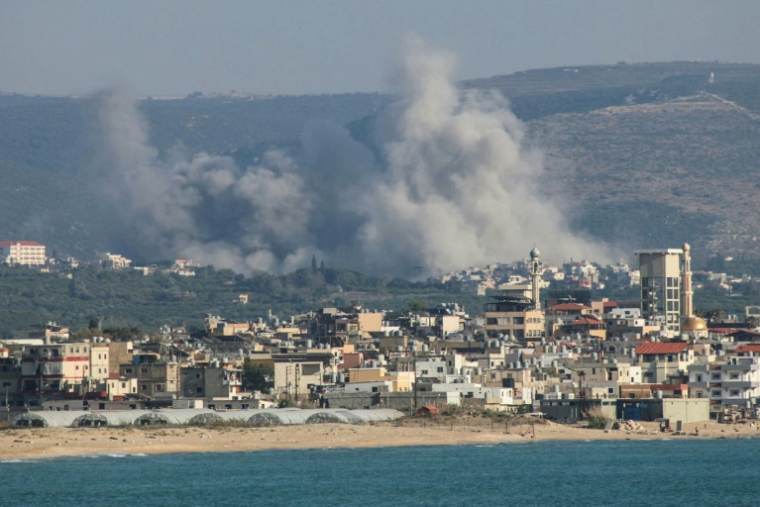
What a powder keg. On Monday, April 13, 2026, Fatih Birol, the executive director of the International Energy Agency (IEA), declared that April “should be even worse than March” for the energy sector, even if the war in Iran were to quickly reach a conclusion. These last few days have been particularly anxiety-inducing.
This statement comes just hours after the announcement of an American blockade of Iranian ports that drove up oil prices. By raising tensions, Donald Trump didn’t help matters, even though the ceasefire had not allowed ships to freely cross the Strait of Hormuz and thus did not have the expected effect at the pump. The government had hoped for price reductions “of at least 10 cents” at the pump. These reductions did not happen.
So, how could the already troubling situation worsen in the coming weeks, as implied by the head of the IEA? It all boils down to timing, as explained by Nicolas Goldberg, the head of the Energy department at Terra Nova and an associate at Colombus Consulting, contacted by RTL.fr.
Empty Ships
When the war erupted at the end of February, resulting in the closure of the Strait of Hormuz – which is highly talked about today – supply flows did not come to an immediate halt. Indeed, some ships managed to cross it before things escalated and reached their destination with fuel cargo. The last loaded ships arrived at their destination at the end of March.
Since then, the situation has changed significantly. “Nothing has been loaded” this month in the Gulf, stated Fatih Birol at a press conference on Monday, April 13, 2026. In other words, countries have not received a barrel from the Strait of Hormuz since the end of March. This is why April is expected to be worse than March. For some continents, this is a major issue, especially in Asia, heavily reliant on Gulf countries, where shortages are already a concern.
A Kerosene and Diesel Issue
In Europe, it’s more of a pricing than a supply issue. In France, there is reportedly a reserve of 120 days, much more than the three months recommended by the IEA. However, the risk of shortages should not be dismissed, according to Nicolas Goldberg. But here, we are not talking about gasoline. These supply tensions might affect heavy fuels like kerosene or diesel more.
With 8 refineries operating at full capacity, France is not reliant on the Middle East, which only accounts for 12% of our national supply. However, it’s a different story for diesel and kerosene. The country does not refine enough of these products and imports half of what is consumed from the Middle East. This is why the price of diesel is currently higher than unleaded gasoline at the pump.
No Improvement in Sight
If our expert doesn’t rule out the risk of shortages, it’s because he fears the situation might persist. Apart from ships currently being empty, the entire ecosystem has come to a halt. Production in the Gulf has stopped, with an 80% decrease in Iraq, and crews have been repatriated. “If the strait is reopened, there will be a restart time,” says Nicolas Goldberg. This restart could take “several weeks,” he adds.
As a result, price reductions are not on the horizon. “If we have a barrel at $100, I don’t think it will go back to $60 anytime soon,” he explained on air on Monday, before urging people to consider “alternatives,” such as electric cars. It’s good for the planet and now good for your wallet. It’s clearer why the head of the IEA described the current energy crisis as the “most significant in history.”
/2026/06/10/6a29bb5ed6751787079179.jpg "Greeted by jubilant crowds in Barcelona, Pope Leo XIV says Christians cannot \"promote war\"")