
Geopolitics, the dominant fundamental factor of the moment
The military operations of the United States and Israel against Iran since Saturday, February 28, have had a strong impact on international financial markets. Volatility is particularly high in the global stock market, which experienced a 10% sell-off before recovering since early April. As for the price of Bitcoin, it shows remarkable resilience, being the only major risky asset in the stock market to be on the rise since the start of the conflict.
But overall, risky assets in the stock market are experiencing volatility because geopolitical news evolves every day between optimism and pessimism, leaving most investors wondering when to confidently return to buying. Ceasefires, negotiations, breakdown of negotiations, peace agreements, normalization of the Strait of Hormuz, and more—the fundamental “newsflow” is even more erratic than market volatility.
The barometers of geopolitical stress and its impact on global economic growth are the decisive fundamental factors. The price of oil, natural gas, uranium prices, market interest rates, inflation expectations, energy supply of major Asian economic powers, and more—there are numerous parameters of global macro risk, making it challenging to determine what to prioritize before resuming buying.
Oil prices and maritime traffic via Ormuz, two decisive indicators
I suggest closely monitoring the following two crucial barometers:
- Technical signals of oil prices in the stock market, with a minimum legal bearish technical signal that must be given before a massive repositioning for buying
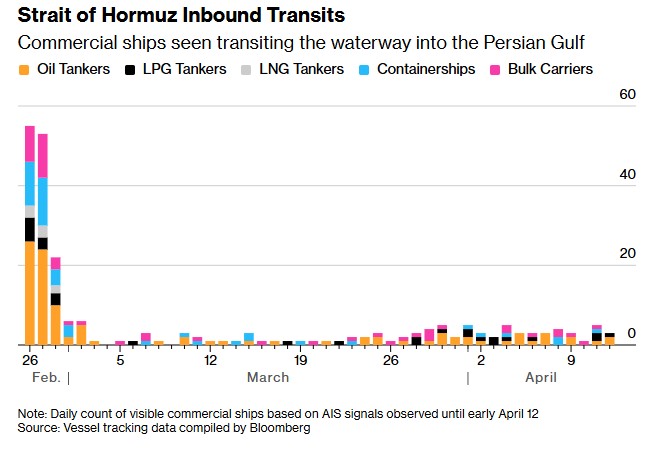
- Evolution of the number of oil and gas tankers effectively crossing the Strait of Hormuz
I believe these two indicators are the most tangible for evaluating whether the geopolitical and macroeconomic situation is calming down or remains very complicated. The graph below displays Japanese candles in weekly data of US crude oil (WTI).
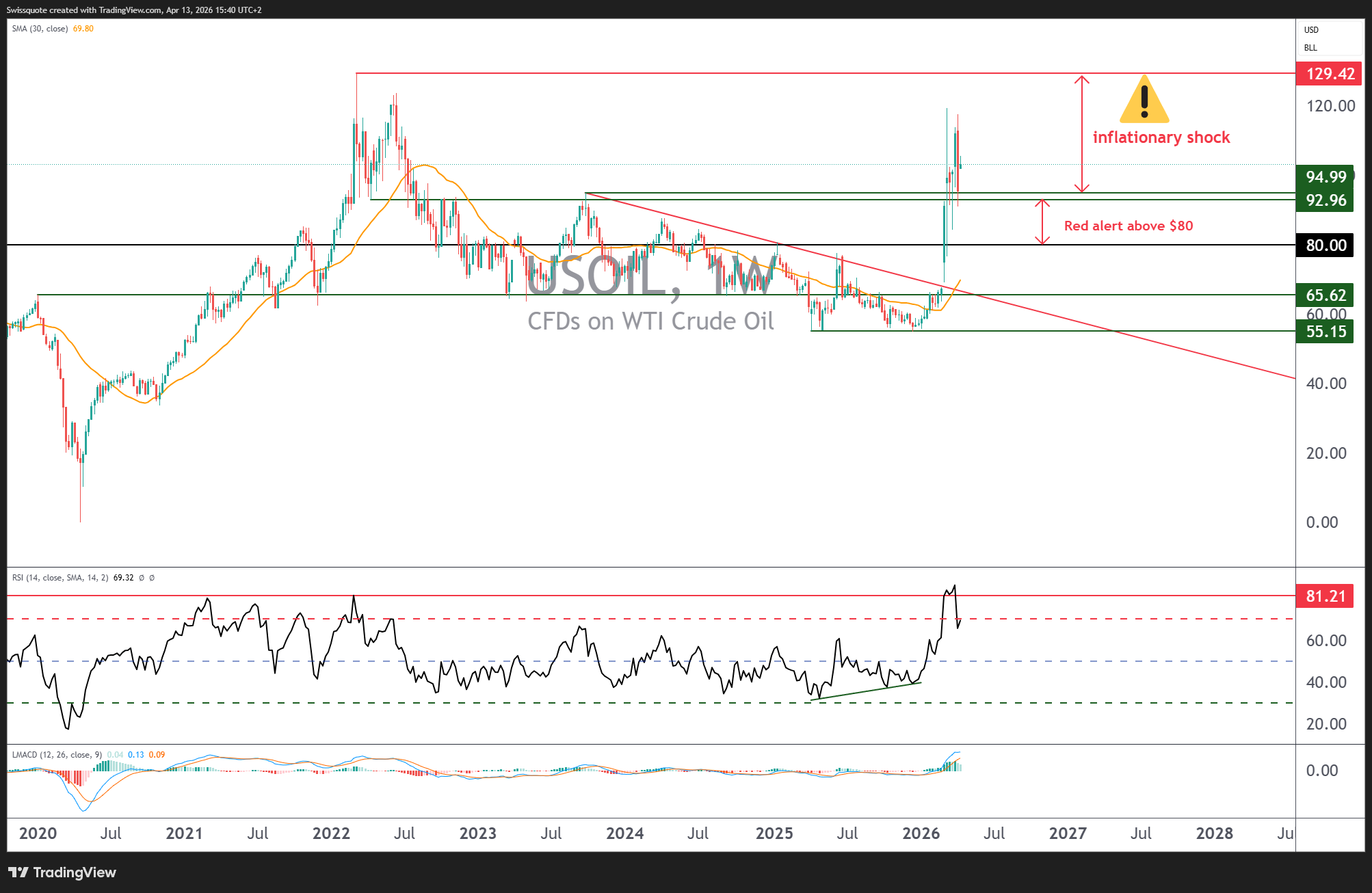
Currently, neither oil nor maritime traffic via Ormuz signal true geopolitical easing. At a minimum, we need to see oil prices drop below the technical threshold of $95 and ideally retrace towards $80.
Regarding maritime transit through the Strait of Hormuz, there were 50 ships per day before last Saturday, February 28. This number is currently between zero and 5. We need to at least observe the resumption of the upward trend in this maritime transit indicator to confidently return to buying risky assets in the stock market. If maritime traffic via the Strait of Hormuz resumes, it is the most concrete sign of entering a phase of geopolitical relaxation.
Trade oil 24/7 with eToro
Advertisement – 61% of individual investor accounts lose money trading CFDs with this provider. You should consider whether you can afford the high risk of losing your money. You will never lose more than the amount invested in each position.
Some content or links in this article may be advertising or affiliate. Investing in digital assets carries a risk of total or partial loss of capital. Past performance is not indicative of future performance. Only invest what you are willing to lose.




:fill(black)/2026/06/11/6a2b172f45738257218801.png "Extra Time : les infos du Mondial vues dAmérique, JOUR 1")
