In a context where foreign affairs are increasingly intertwined with the economic and social life of the country and its integration process, it is more urgent than ever to bring foreign policy orientations and strategies closer to citizens and businesses. In this process, the press is called upon to play an increasingly crucial role in linking politics and social life.
Beyond simply reflecting foreign policy activities, the press also contributes to bringing initiatives and directions of international cooperation closer to the public, while creating a channel for the exchange of information between political decision-makers, citizens and businesses.
This reality is also one of the questions that have preoccupied many delegates at recent multilateral forums, including the ASEAN Future Forum 2026. One question raised is how initiatives, visions and directions for cooperation can not only remain at the stage of high-level discussions, but also be widely distributed to the business world and the general public.
According to Dr. Nguyen Hung Son, Head of the ASEAN Future Forum 2026 Organizing Committee and Director of the Diplomatic Academy, the press plays an important role in this process by bringing foreign policy guidelines and policies closer to the public, while conveying the voice of practice to decision-making bodies.
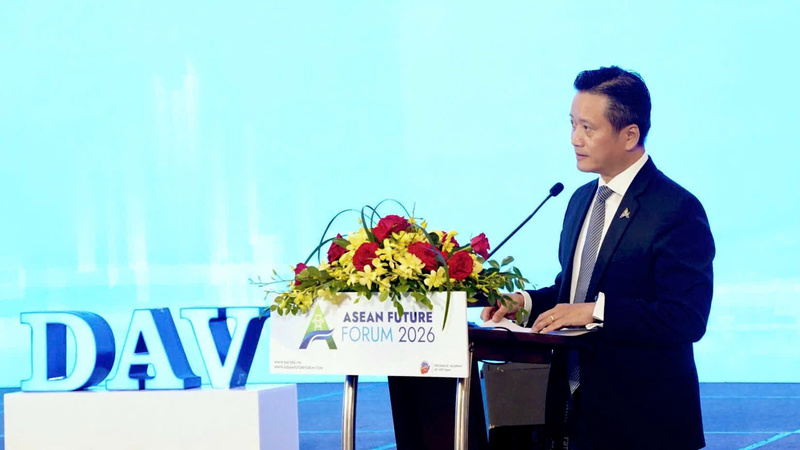
Dr Nguyen Hung Son, director of the Diplomatic Academy. Photo: Dieu Linh
According to Dr. Nguyen Hung Son, the current process of international integration requires the participation of the whole of society. However, a certain gap persists between cooperation initiatives at the government level and the awareness of the population. This gap prevents the full realization of many political ideas and development visions, or their obtaining by the final beneficiaries.
“Awareness of citizens and businesses about cooperation processes between countries is a prerequisite for the successful achievement of common cooperation goals,†emphasized Dr Nguyen Hung Son.
Disseminate information in both directions.
In the integration process, the value of journalism lies not only in the transmission of information, but also in its capacity to create a dialogue between policies and practices. According to Dr. Nguyen Hung Son, journalism contributes to the establishment of a two-way flow of information, allowing a wide dissemination of policies and development directions, while bringing the voices of citizens closer to political decision-makers.
“The role of the press is essential to disseminate information and knowledge in both directions,” declared Dr Nguyen Hung Son.
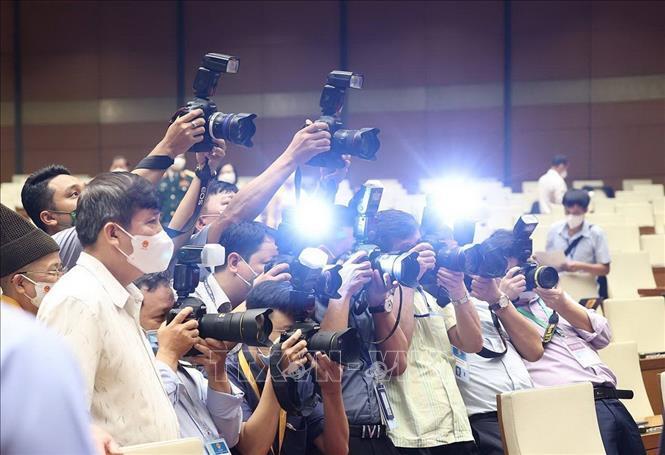
Photo d’illustration : VNA
On the one hand, the press helps to disseminate policies, orientations, initiatives and visions of development to the public. Topics that would normally be covered in conferences, forums or as part of the policy-making process are explained in a more accessible way, allowing citizens and businesses to better understand the meaning and impact of policy decisions on socio-economic life.
In the field of foreign affairs, this role becomes even more important as many issues of international cooperation, economic integration and regional links have an increasingly direct impact on production, commercial activities and the lives of populations.
Conversely, the press also serves as a channel to reflect aspirations, resources and ideas from practice, thereby enabling policy makers to capture them during the process of policy making and refinement.
“It is about disseminating visions, policies and directives to the population, but also about making known the aspirations, resources and ideas of the people so that policy makers can grasp them,” Dr Nguyen Hung Son explained.
According to him, when citizens understand policies better and lessons learned from practical experience are more taken into account, the decisions taken are more feasible and enjoy greater support from society.
According to Dr Nguyen Hung Son, one of the fundamental objectives of the international integration process is to ensure the participation of the whole of society, from management bodies to citizens, local authorities and businesses. Therefore, better informing the public on foreign policy issues is essential for effective policy implementation.
He argued that in the digital age, citizens have more and more access to information and can participate in debates on the future of the country and the region. This implies that the press not only reports the news, but also creates the conditions for increased public participation in policy-making processes.
“I think that the active and direct participation of citizens in these discussions is essential. Therefore, the press must create the necessary technical and social conditions to allow everyone to participate in these forums,” emphasized Dr Nguyen Hung Son.
In a context of ever greater integration, the press is not only a vector of information, but also a link between foreign policy and social life. From the dissemination of policies and development guidelines to the reflection of aspirations anchored in reality, the press helps to reduce the gap between policies and daily life, so that decisions are not only in line with the objectives set, but also closer to citizens, businesses and other actors involved in the process integration of the country.