“There is no opposition between an international university and a hyper-local university. HAS”
This conviction held by Hélène Boulanger, president of the University of Lorraine and vice-president of France Universities, served as a common thread for the discussions at the Euraxess National Days organized in Metz on June 15 and 16, 2026.
Dedicated to welcoming and supporting international researchers, these days brought together the 53 centers of the Euraxess France network around a central question: what makes territories attractive today for international research and talent?
The university draws its strength from its territories
For Hélène Boulanger, the university has a particular responsibility in the development of the territories in which it is located: to train, research and innovate.
This ambition is based on an ongoing dialogue with communities, economic players and research organizations in order to identify local specificities and support their development.
The example of the wood industry in Épinal illustrates this approach. Training, research, businesses and innovation are closely associated to meet the needs of the region while developing expertise recognized well beyond its borders.
A local anchor that nourishes international openness
One of the main lessons of the round table is that territorial anchoring and international influence are not opposed.
The scientific specialties of universities often find their origin in the history, resources or know-how of their territory. This local expertise then becomes a factor of attractiveness for researchers, students and international partners.
For the University of Lorraine, located at the heart of a cross-border area, this articulation between proximity and openness constitutes an essential lever for development and cooperation.
Values, an asset for scientific attractiveness
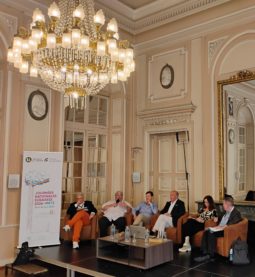 The discussions also highlighted the evolution of the international research context.
For Hélène Boulanger, scientific attractiveness no longer rests solely on the quality of equipment or funding. It is also based on the values held by European universities: academic freedom, scientific openness, international cooperation and contribution to a more just and sustainable society.
“The subject of values has become the major attractiveness argument for universities in France today,” she underlined.
In Metz, the Euraxess Days reminded us that scientific attractiveness is built as much by the quality of research as by the capacity of universities to combine territorial anchoring, international openness and defense of academic values.


/2026/06/17/6a3292eaed38f603254388.jpg "DIRECT. 2026 World Cup: Cristiano Ronaldo’s Portugal enters the competition against the DRC, four matches on the program from 7 p.m.")