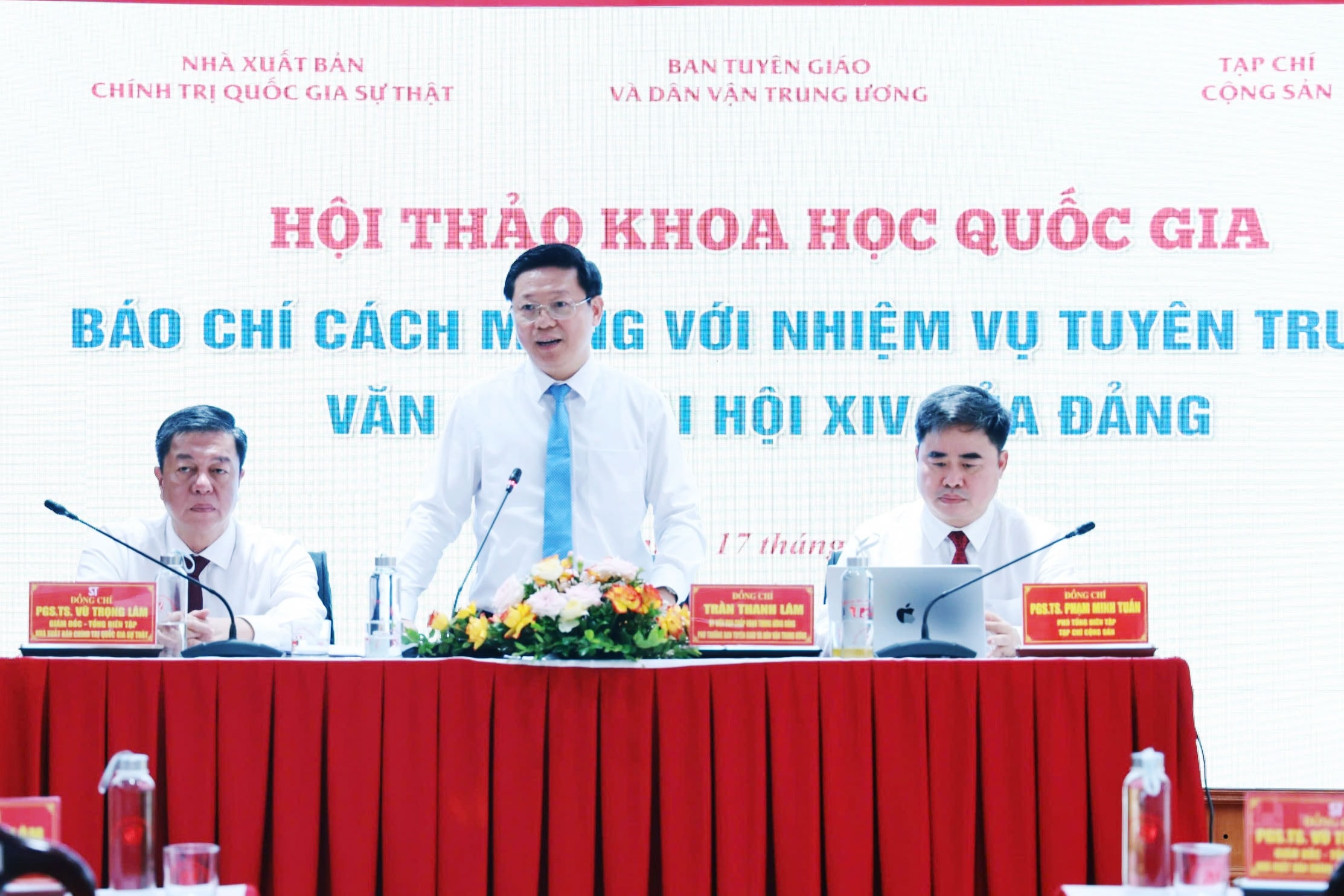
Evaluating the importance of Resolution 06 for realizing Vietnam’s development goals in the coming years, Dr. Phan Cao Nhat Anh, Deputy Director of the Institute of South Asia, West Asia and Africa Studies (Vietnam Academy of Social Sciences), said that Resolution 06 was promulgated promptly, as an emergency measure, clearly reflecting the Party’s foreign policy immediately after the 14th National Congress. The latter had in fact identified the strengthening of external relations and international integration as a “crucial and permanent” task. International integration is not only a key driver of development, but also one of the main means of achieving the country’s strategic objectives. The promulgation of Resolution 06 also testifies to Vietnam’s proactivity in the face of unpredictable developments in the global context.
Mr. Phan Cao Nhat Anh noted that Vietnam is entering a new era of development. Transformations are underway in all areas and in all aspects. This requires that external relations evolve in harmony with the country’s overall development system.
In a fragmented and fiercely competitive world, the documents of the 14th National Congress established the concept of “strategic autonomy.” According to Mr. Phan Cao Nhat Anh, this is a new concept, with a broader scope than the traditional concept of “independence and self-sufficiency.” Strategic autonomy, as defined by the 14th National Congress, involves proactive creation: we proactively choose our development path, we proactively design our external relations, and we resolutely master key resources and technologies such as AI and semiconductors.
Modern diplomatic art has also been revalued, with the Party advocating a flexible approach based on the principle “in the adversary hides the partner, and in the partner hides the adversary”, using national interests as the absolute measure of cooperation and struggle, thus guaranteeing integration without “dissolution”. This proactive integration has allowed Vietnam to more clearly define its strategic “position” in international relations, affirming its character as an autonomous and independent nation and a responsible member of the international community.
Commenting on the major direction set out in the resolution, namely “opening new development spaces for the country”, Mr. Phan Cao Nhat Anh said that, fundamentally, integration is a method allowing Vietnam to mobilize maximum external resources, combined to its national assets, in order to energize productive forces and optimize production relations according to the realities of the country. Expanding development spaces to South Asia, West Asia and Africa is a strategic step that helps Vietnam reduce its dependence on traditional markets and diversify risks related to geopolitical shocks and channel disruptions. global supply chains.
“Given the significant development potential of South Asia, West Asia and Africa in the areas of trade, energy and ecological transition, Vietnam needs concrete solutions to realize this potential, with emphasis on perfecting the legal framework and strengthening the constructive role of diplomacy, particularly diplomacy between peoples,” declared Mr. Phan Cao Nhat Anh.
Attract resources for the sustainable development of the country.

Concerned about the direction aimed at making foreign business a powerful engine for opening new development spaces and attracting resources for the rapid and sustainable development of the country, Ms. Nguyen Thi Thanh Huyen, Deputy Director of the Department of Science and International Cooperation of the Vietnam Union of Scientific and Technological Associations (Vietnam Union of Associations), believes that this is a strategically important direction in a global context marked by increasingly fierce competition in the areas of science, technology, innovation and the quality of human resources.
According to Ms. Nguyen Thi Thanh Huyen, this orientation offers many opportunities to intellectuals and scientists who are members of the Union of Vietnamese Associations and allows member associations and affiliated scientific and technological organizations to strengthen their links with international scientific networks. Thus, Vietnamese scientists can access the latest advances, new trends and modern management models from around the world. At the same time, the development of international relations creates a favorable environment for the mobilization of the intellectual resources of Vietnamese abroad, allowing them to participate in the resolution of common problems and actively contribute to the socio-economic development of the country.
For external relations to constitute a real engine for attracting capital, high technologies and knowledge from main international partners to Vietnam, Ms. Nguyen Thi Thanh Huyen believes that a set of global solutions is necessary. First, organizations must participate more actively and in greater depth in international scientific networks, joint research programs and global initiatives in science, technology and sustainable development. Through these cooperation mechanisms, Vietnam will not only be able to access new knowledge, but also create opportunities to attract research capital, investments in high technologies and innovative projects. Furthermore, it is essential to actively promote the bridging role of overseas Vietnamese intellectual organizations, professional associations, research institutes, universities and expert community, considering them as effective vehicles of people-to-people diplomacy to connect partners, showcase the potential for cooperation and promote specific projects.
For the Union of Associations of Vietnam, its main asset lies in the large number of scientific and technological intellectuals present throughout the country, as well as in its vast international cooperation network covering all fields. Well exploited, this asset will constitute an essential engine for mobilizing knowledge, technologies, experts and international resources for the development of the country.
Source : https://baotintuc.vn/thoi-su/nghi-quyet-06nqtw-mo-khong-gian-phat-trien-moi-tu-cong-tac-doi-ngoai-20260617120450145.htm