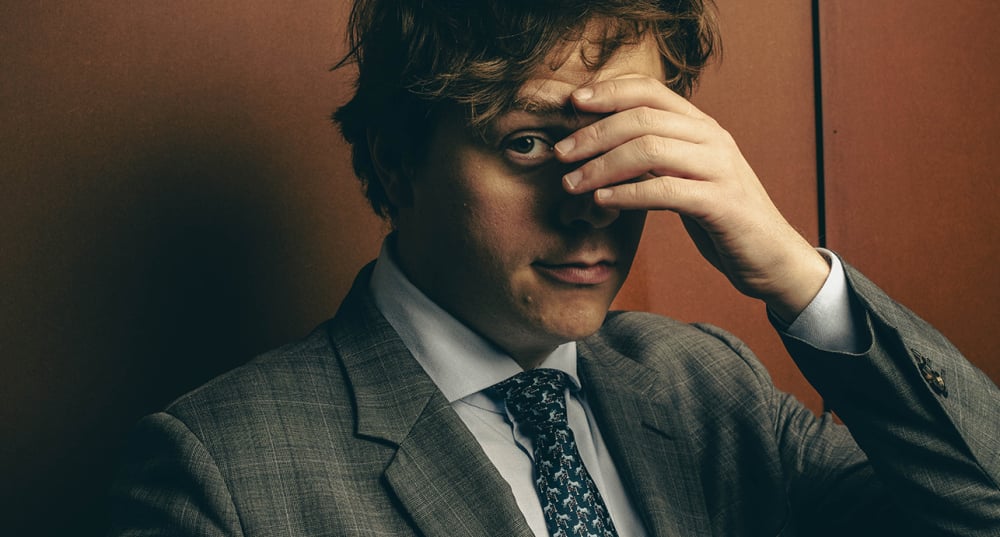
Pierre Verluise, doctor of geopolitics Photo DR
How are Europeans approaching this summit, which takes place in an unprecedented context of international tensions?
“Europeans are in a very uncomfortable situation, for which they are partly responsible. They faced a threat in the East during the Cold War. Since Trump 1 (2017-2021), and even more so Trump 2, they have also had to face very harsh pressure from the West. The Europeans made several mistakes. The first, in the 1990s, was to want to reap the dividends from the end of the Cold War, that is to say, to make savings in terms of defense thinking that Russia represented no risk and that the United States would constitute to eternal life a kind of life insurance.
Their second, more recent error was their relief at the time of Joe Biden’s entry into the White House (2021) which led Europeans to imagine that Donald Trump would not come back to shake up the transatlantic relationship again. Not only has he returned to 2025, but he has turned up the pressure several notches on those who are supposed to be his allies. Trump is tougher on his allies than on his competitors. I am thinking in particular of China, which is doing better. Why? Because she resisted. The Europeans are in an extremely difficult situation, with little room for maneuver and public opinion weakened by political and digital interference from Russia, the United States and China. This G7 is a moment of encounter, of which no one can know in advance how it will happen. »
“We have collectively been worryingly lazy.”
You say that the Europeans are partly responsible for their weakness. That is to say?
“All those who have had, directly or indirectly, responsibilities in the European Union (EU) since the 1990s should examine their conscience. Have we been up to the task? Did we see the Russian risk coming? In France, many have been factually mediocre on this subject. Did we see the risk of an American default coming? In the enlarged EU, what efforts have we made in terms of defence? Have we rested comfortably on a privileged transatlantic relationship? Have we heard the explicit calls from the United States telling us: “you must take charge of yourselves”? Everyone will have their own idea, but I think that, overall, we have been collectively worryingly lazy. We now see that history remains tragic and that it is written by the victors. It’s up to us to see individually, collectively, what fate we want. What is certain is that we must stop believing that “others” will do the job for us. It worked for a long time, but it’s over. Particularly in digital matters, where we are in the hands of the Americans. »
What can we expect from this summit?
“It’s a moment of meeting, where no one can know in advance how it will happen. Certainly, the diplomats worked in advance on draft declarations. The G7 is a stage, and therefore a staging. These summits are above all places of final arbitration. This summit will have its share of unforeseen events, pretenses, possibly humiliations, of which we will not necessarily be aware. The Europeans will seek to save face, to gain time as they sought to do during Trump 1. The question is whether they will be able to find, not only at the level of political leaders, but also of their societies, the resources necessary to provide effective responses and form intelligent synergies.”
Is the G7 framework still adapted to the current context?
“It’s a structure that dates from another era. The world has changed, but states still need to talk to each other. The G7 has also changed a lot. Russia was invited, then excluded. The United States has been benevolent, sometimes less so. The economies of the other members of the G7 have evolved: their relative weight has decreased significantly. The G7 are countries trying to maintain places and channels for conversation, with uneven results. It’s insufficient, most certainly, otherwise we wouldn’t be here, but if anyone has another solution to pull out of their hat, let them put it on the table. Multilateralism is forced to reinvent itself.”
The G7 is often criticized by Southern countries as being a “rich man’s club”. But are there alternatives?
“For those who are not part of a club to criticize him is banal. Most countries in the world do not participate in the G7, or even the G20. Now, what is the capacity of the competitors to do better? To be guarantors, for example, of security? I have the impression that the Russians are not succeeding as well as they imagined in Africa. What is extraordinary is that Russia has managed to be perceived as not being a colonial power, whereas it is enough to know a little history and to have seen a map of the USSR to understand that it was a colonial empire – and ultra-violent, like all colonial empires. But the Russians are no longer in the G8, and that is their responsibility. responsibility. In truth, Russia has not been able to grasp the many challenges thrown at it since 1985, and has preferred to be in rupture and confrontation. In Russian political culture, the balance of power poses no problem. (Chechnya, Georgia, Ukraine), it is political fuel. It is a way of structuring society, of silencing opposition, of relaunching the economy in particular sectors. Of course, this impoverishes other sectors and several hundred thousand Russians preferred to leave Russia. How many of them are moles? It’s an interesting subject, which we never talk about. See you when Moscow wakes up these illegal immigrants.