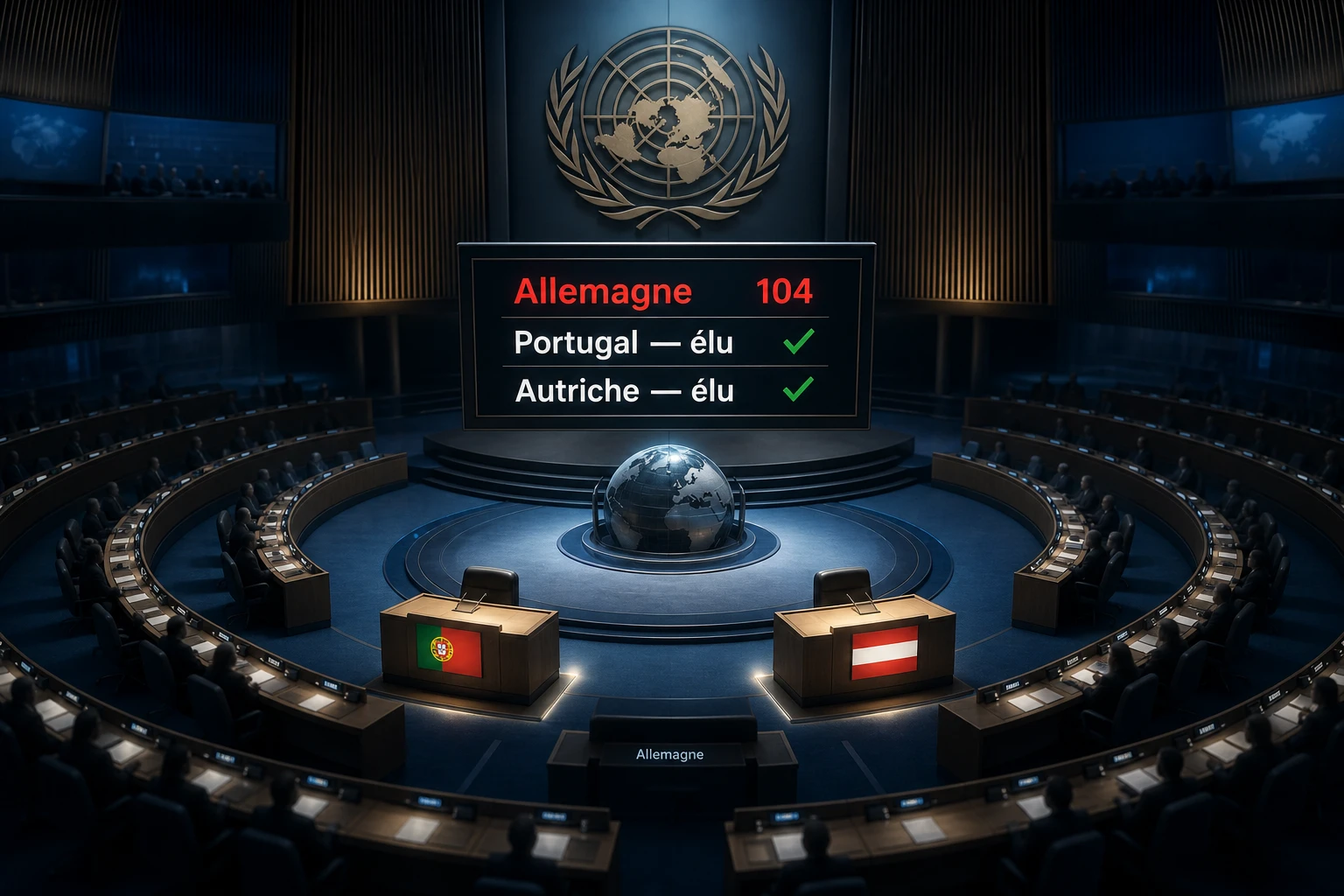
After the vote, Helga Zepp-LaRouche, the president of the German Bueso party, made this comment:
Germany’s snub at the UN, an opportunity for change to cooperate with the countries of the South
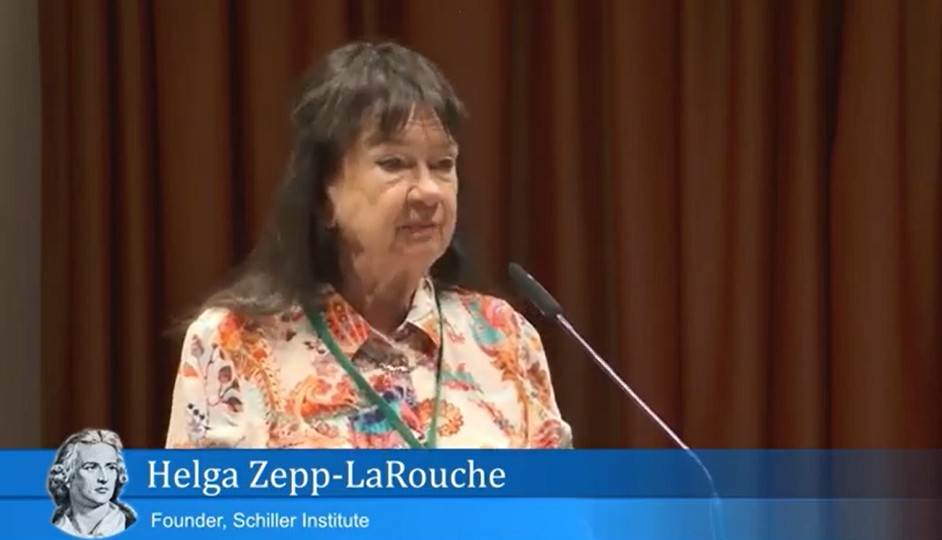
In a broader historical perspective, Germany’s failure to secure a rotating seat on the UN Security Council presents it with a crucial opportunity to reorient its foreign policy. I have always argued that, in the face of the continuing geopolitical impasse between NATO, on the one hand, and Russia and China, on the other, the countries of the South needed to make themselves heard more forcefully in the international debate, and that is precisely what they did by rejecting the German candidacy. Our institutions should use this result to honestly analyze a foreign policy that has proven to be a total failure, and redefine another that corresponds to Germany’s true interests.
Unfortunately, the initial reaction of the Minister of Foreign Affairs Wadephul and most media commentary remains anchored in the same recurring pattern of self-deception: Russia is responsible, then bureaucracy, late filing of the application, etc. Others, like the FAZ, point out that the UN is not that important anyway, and the Hessian Minister of European and International Affairs, Manfred Pentz (CDU), even called on Germany to reduce its financial contribution to the Organization.
The only thing that could really help Germany would be to carefully examine the causes of this “bitter disappointment”, which could only surprise those who remain perched on their Eurocentric pedestal.
The international perception of German politics has evolved over several years. The generally positive image of Germany that once prevailed around the world – that of country of Bach and Beethoven, of Goethe, Schiller and Humboldta nation of engineers and inventors – is long gone.
The de facto unconditional support for Israel’s actions in Gaza, for which the International Criminal Court issued arrest warrants against the Israeli Prime Minister Benyamin Netanyahou and the former Minister of Defense Yoav Gallanthas damaged Germany’s reputation, and this damage will only worsen as long as the Berlin authorities maintain their position.
Indeed, if the Nazi crimes were not fully known and understood by the general public until after the Second World War, Israel’s crimes in Gaza, and increasingly in the West Bank and Lebanon, are under the international spotlight. The fact that, under pressure from Israel, Germany did not approve the extension of the mandate of the United Nations Relief and Works Agency for Palestine Refugees (UNRWA)in December 2025, and that it brutally repressed pro-Palestinian demonstrations on its territory, further tarnished its image.
We are talking everywhere about the double standards that prevail in this country. Berlin constantly prides itself on being the champion of international law, but the Chancellor Merz judged the kidnapping of an elected head of state in Venezuela too “complex” to take a position, calling for “times” to evaluate it. Five months have passed since then, and he still hasn’t made a decision.
During the first unprovoked war of aggression, led by Israel and the United States against Iran in June 2025, Merz uttered these unspeakable words: “Israel does the dirty work for all of usâ€.
During the second attack of the same type carried out by the United States and Israel, the consequences of which threatened to sink the world economy, he remained reserved, contenting himself with declaring that it was not our war.
Virtually no one in the Global South subscribes to the endlessly repeated mantra that Russia attacked Ukraine in an unprovoked war. These countries saw, in a glaring manner, the similarities between NATO’s actions and their own oppression by the colonial powers. They also remember very precisely those who came to their aid in their struggle for independence: the Soviet Union and China.
But what is clearly lacking in Berlin is an understanding of the tectonic and historical upheaval taking place on a global scale. At the time of German reunification and the end of the Cold War, Germany undoubtedly benefited from the sympathy of so-called developing countries. But this sympathy gradually eroded, as Germany and Western countries attempted to impose a unipolar world order through methods such as color revolutions, regime changes, unilateral sanctions, and wars of intervention.
The combination of all aspects of this imperial and neocolonial policy has generated a considerable boomerang effect, pushing these countries to move further and further away from Western influence.
China’s economic rise, unprecedented in history, and its policy of mutually beneficial cooperation offer the nations of the South the opportunity to definitively turn the page on five centuries of colonialism.
The defeat in the UN vote is the long-awaited shock for Germany, which must finally free itself from its deplorable status as a colony of the English-speaking world (the whole world ridicules our lack of reaction to the sabotage announced by Biden of the gazoducs Nord Stream) to get on the right side of history. This necessarily implies cooperation on an equal footing with the countries of the world majority, i.e. 85% of humanity. Instead of spreading racist fantasies, like the fantasized vision of Joseph Borrell of a European garden surrounded by the jungle, we should help Africa, Asia and Latin America to create their own areas of prosperity. Furthermore, we could also ensure that our own infrastructure is repaired quickly, that our industry recovers and that our students can learn again.
Thus, although involuntarily, Annalena Baerbock will have made a positive contribution to German politics thanks to her usurpatory presidency of the UN General Assembly, a position from which she had to announce Germany’s defeat during this vote.