Information to remember
How are the largest multinationals on the planet adapting to the brutal return of war and trade barriers?
-
American companies own 73% of the value of the world’s Top 100 and impose a vision focused on national security.
-
The technology sector is no longer seeking to avoid fragmentation into blocks, but is accelerating its transition to take advantage of it.
-
Chipmakers are taking advantage of local subsidies to transform the constraint of reshoring into a new, highly profitable business argument.
The security of global supplies has just been shattered. At the end of February 2026, the outbreak of war in Iran and the immediate blockage of the Strait of Hormuz threw the markets into unprecedented distress. On March 20, 2026, the head of the International Energy Agency, Fatih Birol, issued a historic warning, calling the situation the greatest threat to global energy security in history. This shift validates the central concern of the business world: geopolitical risk has become the first parameter of the strategy of the giants of finance and industry.
ALSO READ
Political risk has become the first brake on the global economy in 2025
To understand the scale of this earthquake, the French Institute of International Relations (Ifri) has just published a study carried out by Thomas Gomart and Lucie Mielle, entitled “What do businesses fear?” New geography of geopolitical risk.” By sifting through the annual reports of the 100 largest companies on the planet using artificial intelligence tools, researchers have exposed the real anxieties of management staffs. The first observation is mathematical: the global discourse is deeply dictated by the interests of Washington. American firms alone now represent 73% of the total capitalization of this Top 100, driven by the rise of champions like Nvidia, Apple and Microsoft.
Why is the world economy divided into four blocks?
Ifri demonstrates that geopolitical risk for companies is not perceived in the same way depending on the location of a group’s head office. American multinationals assimilate this danger to a frontal attack against their economic hegemony and the national security of their country, while European companies adopt a normative reading, centered on the erosion of the rule of law, the decline of multilateralism and the weakening of regulatory predictability. Caught between Washington and Beijing, they formulate their main vulnerability around the transatlantic relationship, described as both central and as a source of growing uncertainties.
“We face the most perilous and complex geopolitical and economic environment since World War II.”
Extract from the annual report of the American banking giant JP Morgan.
The break is becoming even more pronounced in Asia. Chinese groups display total and explicit alignment with the Party’s political line, establishing ideological discipline as an essential risk management tool. For their part, Indian firms display radical optimism. Thanks to New Delhi’s policy of diplomatic multi-alignment, they see the reorganization of globalization as a unique chance to capture industrial investments fleeing Chinese territory.
How are the energy and technology sectors responding to the chaos?
On the ground, the consequences vary drastically from one industry to another. In the energy sector, the threat is physical, violent and measurable. Operators fear above all the destruction of their infrastructure, like Shell which notes that 81% of oil leaks from its installations in Nigeria result from criminal acts and sabotage. In the technological world, the situation has changed: companies no longer wonder whether the digital world will divide into watertight blocks, but measure the speed at which this separation occurs.
The Tribune Alert
Real-time alerts on major economic information.

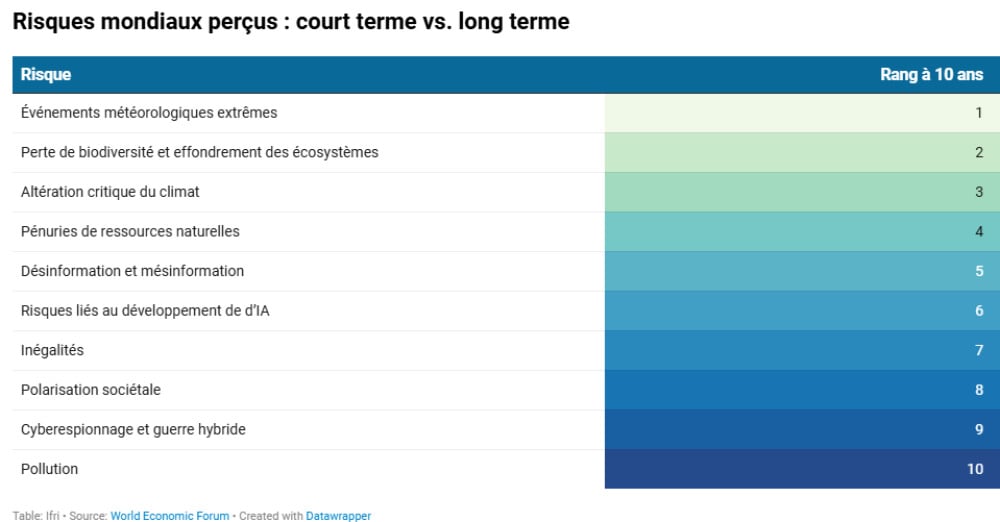
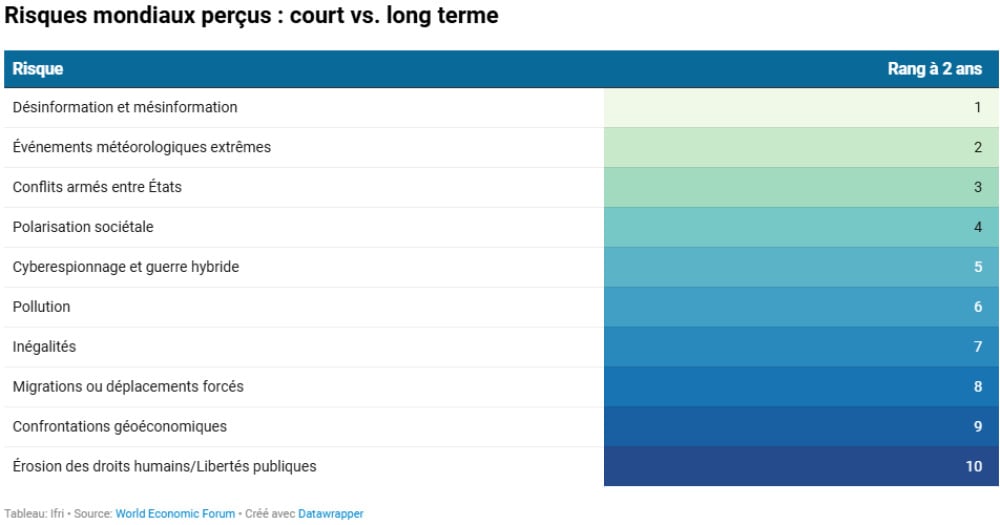
This digital fragmentation is accompanied by an invisible war around strategic technologies. Groups like Alibaba are directly suffering from restrictions imposed by the US government on the export of cutting-edge electronic chips, a major obstacle to the deployment of their artificial intelligence programs. To continue to sell their electric vehicles in the West despite the increase in customs taxes, the Chinese manufacturer BYD is getting around the problem by directly installing factories in Europe, particularly in Hungary and Turkey.
Can we make money from global fragmentation?
The most surprising lesson from the Ifri survey lies in the fact that the current crisis creates tremendous growth opportunities. Several technology leaders openly monetize their customers’ need for security. The Dutch manufacturer ASML is taking full advantage of the trade war between the United States and China. Massive subsidies from American and European recovery plans are encouraging chipmakers to build new local factories, which is boosting orders for ASML’s lithography machines.
ALSO READ
Risk management: data and AI now essential for 86% of decision-makers
The American firm Texas Instruments applies the same aggressive commercial recipe. By producing the majority of its electronic components on United States soil, the group now uses this national anchorage as a selling point to attract Western buyers obsessed with the reliability of their supplies. The great return of economic borders is no longer just a major industrial constraint, it is establishing itself as the new business model for successful multinationals.