Olivier Da Lage, associate researcher at FMES
Like many other nations, India was taken by surprise by the Israeli-American offensive against Iran launched on February 28, 2026, but its vulnerability to events in the Arab-Persian Gulf is much greater than that of of the majority of states on the planet. This crisis constitutes a life-size test for the Indian doctrine of “multi-alignment”, based on the capacity to simultaneously maintain functional relations with antagonistic actors.
The security of immigrants remains a central axis of Indian foreign policy, particularly since the coming to power of Narendra Modi in 2014 who, during each of his trips (and he has made many to the Gulf countries) makes sure to meet representatives of the diaspora, like during his first trip to the United Arab Emirates in August 2015 when he brought together 50,000 compatriots at the Dubai Cricket Stadium.
The fate of the Indian diaspora in the Gulf
The outbreak of conflict in Iran immediately brought to mind for Indians two previous crises in this same region: after Iraq’s invasion of Kuwait in 1990, the government repatriated 170,000 of its nationals and 2015, 6,688 people (including 4,741 Indians) were evacuated from Yemen in the grip of civil war (Operation Rahat). The repatriation operation launched on February 28 is even more impressive and is taking place mainly via commercial flights: from 1is From March to April 2, 624,000 citizens were evacuated from the Arabian Peninsula, with two concerns: their reintegration if hostilities continue and the end of financial transfers from these returnees. Around 9 million Indian nationals live and work in the monarchies of the Arabian Peninsula, especially in Saudi Arabia and the United Arab Emirates, and their financial transfers ($50 billion each year) represent 40% of transfers from the Indian diaspora to the motherland. It is especially the states of Kerala, Uttar Pradesh and Rajasthan which provide the bulk of migrant workers in the Peninsula, and which risk being affected by a drop in income.
Threat to energy supplies
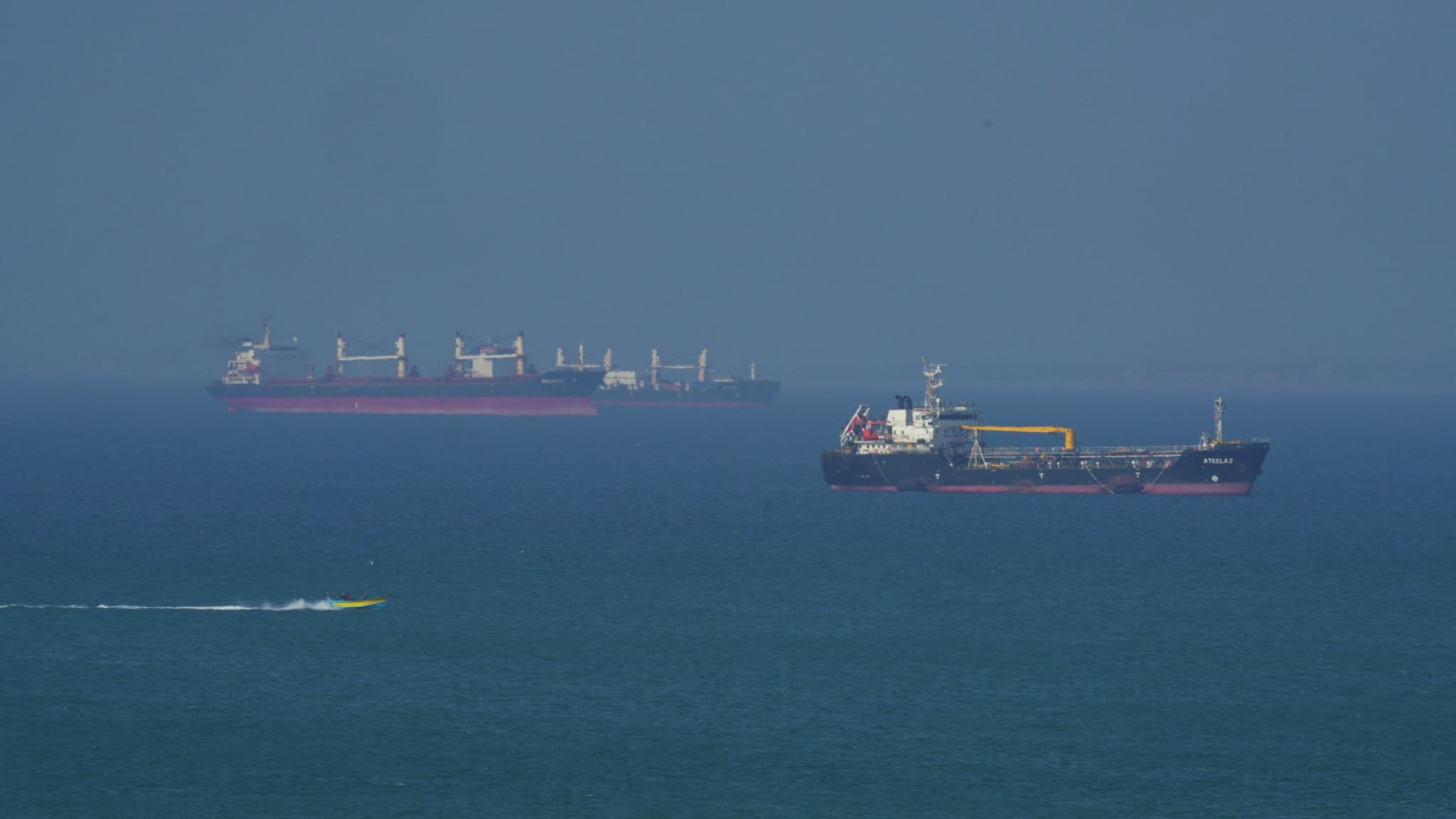
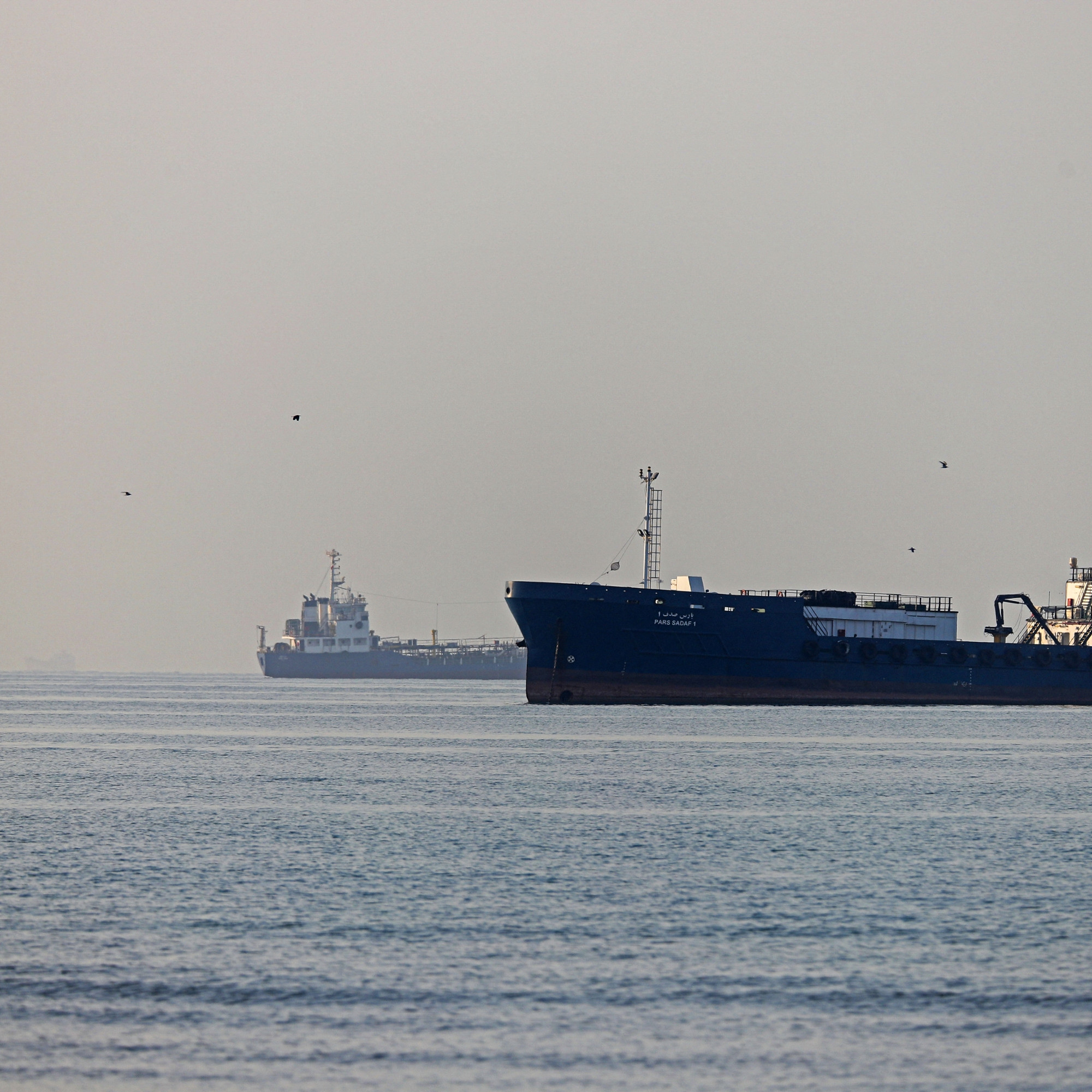
For the Indian population, the consequences were soon to be perceptible: India, the world’s third largest importer of oil, is in fact heavily dependent on hydrocarbons from the Gulf: before February 28, around 3 million barrels per day intended for the country transited through the strait of Hormuz. Gulf oil represented almost half of national consumption but dependence was much stronger with regard to liquid gas (around 60% of LNG and LPG requirements were met by imports from Gulf countries, mainly Qatar), but also fertilizers (60% of urea imports). and almost 80% of ammonia came from the Gulf). As for Russian oil, purchased at bargain prices and which represented up to 40% of imports until, under American pressure, its share was reduced to a few percent, it is once again massively purchased by India which has received “authorization” » from the American administration, but now at market prices. Before the outbreak of war, strategic reserves were estimated at two months of normal consumption[1].
Nearly three weeks after the start of hostilities, many restaurants reduced their activity and some closed altogether, due to a lack of gas supplies for cooking dishes. The price of the gas cylinder, an essential element in any kitchen in India, practically doubled several times between the end of February and the beginning of April, becoming unaffordable for the most disadvantaged groups who had to resort to wood, and many immigrants from the interior working in the metropolises which are returned “to the village”, unable to cope with food inflation and gas shortages.
More generally, Indian growth should suffer the repercussions of these headwinds: it is currently estimated by the IMF at 6.5% for 2026, which indicates a certain resilience, but the duration of the conflict and its medium-term impact could not be reasonably known at the date of publication of these estimates. For its part, the World Bank estimates that the conflict penalizes Indian growth by 0.6% of a percentage point compared to what it would have been in its absence.[2]. In addition, the rupee, which had already lost 6.5% of its value against the dollar in 2025, fell by an additional 4% between February 28 and the beginning of May 2026, making the cost of imports even more expensive, without exports benefiting from it. really, given the geopolitical environment.
A hard blow for Indian diplomacy
Two days before the launch of the Israeli-American attack, the Indian Prime Minister was on an official visit to Israel where he was received at the Knesset, expressing to parliamentarians his support for the Jewish state, assuring in particular that “India stands firmly alongside Israel, with total conviction.” When the bombings began, India remained silent, with the Ministry of Foreign Relations contenting itself with expressing its “deep concern” on the evening of February 28. On the other hand, after the Iranian response hitting Israel and the United Arab Emirates on the night of February 28 to 1is March, Narendra Modi telephones Benjamin Netanyahu and Mohammed bin Zayed to give them his support and makes no comment on the announcement of the death of Ayatollah Khamenei killed in the bombings. It was only twelve days later that the first bilateral contact at the highest level took place during a telephone conversation between Modi and Iranian President Pezeshkian, largely devoted to Indian concerns about freedom of navigation in the Strait of Hormuz, New Delhi being careful not to condemn the strikes on Iran, although by calling for a diplomatic solution.
Ties are weakening with Tehran
Until then, India had managed to maintain a form of balance allowing it to have good relations with all the countries in the region, despite the hostility between them, despite a significant rapprochement with Israel over the past ten years. Nevertheless, the Indian Union continued to import Iranian crude until the first Trump administration ended the waiver of American sanctions in 2019, forcing New Delhi to interrupt all its imports of Iranian oil. Likewise, the Iranian port of Chabahar, which competes with the Pakistani port of Gwadar in the Arabian Sea, was developed by India which has invested 370 million dollars there since 2016, including more than 120 million committed to port infrastructure. This project, vital for the Delhi government, ensured a rail and land link with Central Asia, the route from Pakistan being closed to India. But on April 26, 2026, Washington ended the exemption which allowed the Indians to operate in Iran despite the sanctions and the latter were forced to withdraw from the project. It is striking that the Hindu nationalist government of Narendra Modi has maintained good relations with the Islamic Republic of Iran despite the fact that the two regimes’ ideologies are opposed. The clear Indian bias in favor of Israel and the UAE has obviously not gone unnoticed in Tehran. The same goes for New Delhi’s reluctance to upset Washington, which forced it to stop its purchases of Iranian crude, or even the absence of official condolences after the death of Khamenei. In fact, everything is happening as if, faced with a difficult choice imposed on it by the United States, India was forced to relegate its historical relationship with Iran to the background.
New Delhi trapped by divisions within the CCG
One of the priorities of the Indian Prime Minister, after coming to power in 2014, was to consolidate ties with the monarchies of the Arabian Peninsula to which he has visited eighteen times since 2014. With traditional objectives – guaranteeing the security of the 9 million of Indian immigrants spread across these six monarchies[3] and the supply of hydrocarbons – Narendra Modi added a call to invest in his country to develop local production (campaign Make in India), with a view to cooperation in new information technologies with an emphasis on physical and digital connectivity between India and the Gulf countries and the marginalization of Pakistan, long very close to the petromonarchies. Just four days before the strikes against Iran, New Delhi and the six countries of the Gulf Cooperation Council (GCC) officially launched negotiations for a free trade agreement, interrupted after the outbreak of fighting.
The Indian authorities, who see themselves as a “net security provider” in the Indian Ocean region, have only been able to helplessly watch the prolongation of the clashes and their extension to the world economy, including that of their country. If no official statement has come to comment on the torpedoing in early March by an American submarine of the Iranian frigate IRIS Dena who had just participated in naval exercises at the invitation of the Indian Navy, a strong feeling of humiliation ran through the country’s opinion, especially since the drama played out in the immediate vicinity of its territorial waters. Under these conditions, it would be illusory to think that the Indian Navy could contribute to guaranteeing freedom of navigation in the Strait of Hormuz.
India’s desire to show its solidarity with the GCC monarchies comes up against an obstacle over which it has no control: the growing dissensions between Riyadh and Abu Dhabi. These disagreements, notorious for almost a decade, had publicly erupted at the end of December 2025 when the Saudi leaders, angered by the strategy followed by Emirati President Mohammed ben Zayed (MbZ), had bombed southern Yemen allied units from Abu Dhabi. One would have thought that faced with Iranian bombings, the Arab monarchies would have closed ranks, the opposite happened, Abu Dhabi criticizing the lack of solidarity from other Arab countries – and the GCC – withdrew from OPEC+ and benefited from Israel’s anti-aircraft protection, while the other GCC countries, apart from Bahrain, chose an attitude of restraint so as not to cut ties with Iran, despite the damage caused by missile and drone strikes. For India, which hates to arbitrate between friendly countries, this division between Gulf Arabs represents a terrible dilemma. It is doing its best not to cut ties with Saudi Arabia, so important to it, but the fault lines have already been drawn and are deepening: in September 2025, Riyadh and Islamabad concluded a strategic pact including a Pakistani “nuclear umbrella” and on January 19, 2026, Mohammed Ben Zayed, when of a lightning visit to New Delhi, concluded a framework agreement with Modi for a defense partnership. In other words, in everyone’s eyes, India has chosen the Arab Emirates in the standoff between the latter and Saudi Arabia, even if it is reluctantly.
The foundations of the Indian doctrine in question
This polarization in the Middle East coincides with another major setback for Indian diplomacy: the rehabilitation of its historic rival thanks to regional crises.
Pakistan’s strong return to the international arena
One of the greatest successes of the first ten years of the Modi government was to have marginalized Pakistan on the international scene by decoupling the relations of its partners from those they could have with its dangerous neighbor, accused in all instances of supporting cross-border terrorism, particularly in India. Trips by foreign leaders linking a stop in New Delhi with another in Islamabad were definitely a thing of the past. However, the Four Day War which pitted India and Pakistan against each other between May 7 and 10, 2025, brutally called this achievement into question: the ceasefire was announced by American President Trump before the belligerents did so and he took advantage of the role of mediator that the Indians have always denied it. What’s more, the Pakistanis played their part finely after the war, praising Donald Trump and nominating him for the Nobel Peace Prize. The latter, who is not insensitive to flattery, described the head of the Pakistani army Asim Munir as his “favorite marshal” and multiplied the positive remarks towards Pakistan and its Prime Minister Shebhaz Sharif.
Suffice it to say that the announcement that Pakistan was offering itself as mediator between the Islamic Republic of Iran and the United States, and that it was accepted as such by the two belligerents, was poorly received in New Delhi. However, we were careful not to say it publicly so as not to irritate the host of the White House, known for his unpredictable reactions and whose favors India strives to maintain. This bad mood, failing to be expressed officially, has resulted in scathing articles criticizing both Pakistan and the countries which offer it a certificate of good repute. But the limit of this posture is that India itself is notoriously absent from the global negotiating market, and has been for a long time, even though its good relations with Iran, the United States and the Gulf monarchies should allow it to play such a role. But this would be contrary to its diplomatic DNA, which consists of avoiding taking positions so as not to annoy any of its interlocutors.
The Trump factor destabilizes New Delhi
Since Donald Trump’s return to the White House, nothing has happened as hoped for the Indian authorities. After a year of tariff threats at the end of which India ended up essentially giving up buying Russian oil at concessionary prices, the waiver granted for one month by Washington to ease the pressure on world crude prices only offers a temporary respite. As for the negotiations on a customs agreement, they are dragging on despite optimistic declarations from both sides. Just like the other leaders of the planet, the Indian government has been faced with a fait accompli by the United States and its concerns, both economic and strategic, enter nowhere in the equation of the American president.
In the Middle East, an unequal multi-alignment
If the foundations of diplomacy in West Asia (Middle East) are theoretically unchanged, the war showed that for Narendra Modi, certain partners mattered more than others. His closeness to Benjamin Netanyahu, demonstrated during the visit to Jerusalem on February 25 and 26, was criticized by the Congress party as moving away from the policy of balance between Arab countries and Israel which was a constant of India’s diplomacy for three decades. The heavy support for Israel and the United Arab Emirates after the Iranian retaliation, and the delay in contacts with Iran after the outbreak of war, also raised eyebrows among a number of retired Indian diplomats, presumably speaking on behalf of colleagues still in power. activity but bound by the duty of reserve. These former diplomats and academics even venture to question the merits of Narendra Modi’s strategy which seems to move away from “multi-alignment”, the central pillar of Indian diplomacy theorized by the Minister of External Relations S. Jaishankar, a concept which had taken over from non-alignment advocated since independence.
Ultimately, the renewed communication with Tehran allowed the passage of LNG tankers and other vessels bound for India, but this is far from a demonstration of diplomatic efficiency from New Delhi.
La connectivité menacée
What is commonly called “connectivity” is a priority of Indian foreign policy, particularly since China launched its “New Silk Roads” program in 2013 (Belt and Road Initiative, BRI). Two emblematic projects of this connectivity are now seriously compromised: the Iranian port of Chabahar and the India–Middle East-Europe corridor (known by its English acronym IMEC).
Chabahar, which overlooks the Arabian Sea, competes directly with the Pakistani port of Gwadar, 170 km further east, developed with the help of China and a key element of the Chinese BRI. In 2016, India committed to developing Chabahar. This Iranian port, partially managed by an Indian company, was seen as an essential link in Indian connectivity towards Afghanistan and, beyond, towards Central Asia. Washington put an end to it by removing the exemption from sanctions at the end of April 2026. This withdrawal from Chabahar suits Beijing, whose competing port of Gwadar is now asserting itself as the only viable alternative for Central Asia’s access to the Arabian Sea. The Iranian war also offers China the opportunity to consolidate its purchases of Iranian crude at preferential prices, widening an additional strategic gap with India forced to buy at market prices.
As for the IMEC, barely announced at the G20 summit in Delhi in September 2023, it was put on hold due to the Gaza war which broke out a few weeks later, compromising the western sector of the corridor (Israel-Europe). With the Iranian war, it is now the eastern segment of IMEC (India-United Arab Emirates) which is at a standstill. Of course, conflicts only last for a while. But the uncertainty they produce impacts investments over a longer period.
BRICS reveals the contradictions of the Global South
While India chairs BRICS+[4] in 2026, her government is very discreet on this subject, unlike its posture in 2023, even though it sees itself as the spokesperson for the Global South. The divisions between the members of the group and its refusal to resolve disagreements publicly largely explain this. These divisions were manifested during the ministerial meeting held in New Delhi on May 14 and 15, 2026, in particular by the head-on opposition between two recent members of the club, protagonists in the ongoing conflict since February 28, Iran and the UAE.
Iran objected to two paragraphs of the draft communiqué, one recognizing the Palestinian Authority as the legitimate authority in Palestine and the other on freedom of navigation in the Red Sea. India, for its part, refused to name Israel in the outbreak of the war. In the absence of a common communiqué meeting the consensus of the BRICS+ members as had been the case the previous year under the Brazilian presidency, India published a “presidency declaration” of 63 paragraphs mentioning “the reservations of a member” on the two disputed paragraphs. There is currently no indication that these disagreements will be resolved before the next summit which should be held in September in the Indian capital, which thwarts the country’s ambitions to present itself as leader of emerging countries.
Conclusion
Three months after the start of the strikes on Iran, the government of Narendra Modi is faced with choices that it has long sought to postpone. The priority is not to emerge weakened from the current sequence and to rebuild the country’s resources. On the economic front, the Prime Minister launched a call for austerity, ordering his compatriots to reduce gasoline consumption, foreign travel and the purchase of gold. During his brief stop in Abu Dhabi on May 15, he obtained from the United Arab Emirates an expansion of the storage of Emirati crude oil in India’s strategic oil reserves (Strategic Petroleum Reserves) and a long-term LPG (liquefied petroleum gas) supply agreement.
At the diplomatic level, it is now a question for India of deciding on the one hand between multi-alignment favoring strategic autonomy (which remains the official policy until now) and on the other a questioning of this by publicly assuming choices between different actors, with a marked preference for Israel and the United Arab Emirates. The first option is preferred by the diplomatic establishment, as expressed by Prime Minister Manmohan Singh’s former national security adviser Shivshankar Menon[5]the second is articulated by the influential foreign policy analyst C Raja Mohan[6] which calls on Indian diplomacy to move away from its ambiguities and clearly assume its choices.
In any case, the debate on the two pillars of Indian strategy (multi-alignment and strategic autonomy) is no longer a taboo. Because it is China which, silently, is reaping the benefits of the current sequence: consolidation of its purchases of Iranian crude at preferential prices, affirmation of Gwadar as the only alternative to Chabahar for Central Asia’s access to the Arabian Sea, and weakening of the posture of “net supplier of security” that New Delhi claimed in the Indian Ocean. The response to this debate will have to take into account a crucial parameter: ensuring that China is not the only winner to the detriment of India.
[1] The International Energy Agency (IEA) recommends that States maintain three months of hydrocarbon consumption at all times.
[2] World Bank Group, India development Updateavril 2026.
[3] Indians represent more than a third of the population of the United Arab Emirates.
[4] The BRICS+ currently have 10 full members, spread across four continents, since enlargement in January 2024 and the accession of Indonesia at the start of 2025. The five historic members constitute the base of the group: Brazil, Russia, India, China, South Africa (since 2011). Four countries officially joined the group in January 2024: Iran, Egypt, United Arab Emirates, Ethiopia. Indonesia completed the group by joining BRICS+ in early 2025.
[5] « Rather than getting involved in others’ quarrels or engage in mediation, the greatest contribution that India can make at this time is to continue to manage its own development and security well », in « India’s Role in a Disordered World », Foreign PolicyMay 13, 2026.
[6] « In a shifting world order, five principles should guide India’s diplomacy », C Raja Mohan, Indian ExpressMay 13, 2026.