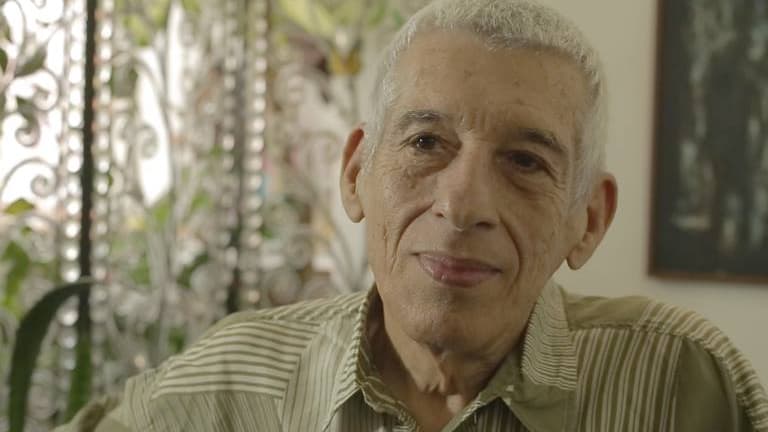
Djilali Benchabane, geopolitical analyst and director of CEOS Stratégie & Conseil, was interviewed by franceinfo. He discussed the fragile ceasefire in Lebanon due to reported violations, as well as the diplomatic balance between Israel, Lebanon, and the United States. He also analyzed the ongoing negotiations involving Iran, the role of Hezbollah in the region, and the political implications surrounding U.S. President Donald Trump.
France Télévisions: A ceasefire came into effect last night at midnight. It was officially announced by the Americans, but already violated according to Lebanon by the Israeli army. Can we really speak of a ceasefire this morning?
Djilali Benchabane: Unfortunately, in this type of ceasefire, military operations can still continue on both sides. We are almost in a state of constant disruption, with the idea of lingering tension. This tension is actually part of the negotiation process, but for now, the framework still holds. The goal is not to violate it. It is important to note that the American sponsor is keen on maintaining a sense of credibility. Therefore, there will likely be more clashes, but hopefully the overall ceasefire will hold.
Does this mean that the tension does not affect the upcoming meeting in a few days in the United States between Donald Trump, the Lebanese president, and the Israeli Prime Minister?
In my opinion, not at this stage. It is worth mentioning that for President Trump, there is also a question of credibility in his actions, including with his partners. Given the criticisms that have been made, particularly about the suggestion that the war between Iran and the United States was led by Israel, any complete break that challenges the diplomatic framework could also have political consequences for President Trump.
Anthony Bellanger: One striking aspect, observing the ten-day ceasefire obtained yesterday followed by serious and direct negotiations, is how this diplomatic setup resembles the one achieved by the United States and Iran in their conflict, or at least the ceasefire concluded on the other side, in the Strait of Hormuz region. This similarity is likely not a coincidence: it shows the interconnectedness of the two conflicts. This is what Iran sought to achieve, and what they have achieved. Can we then speak of a symbolic victory for Iran?
There could indeed be a symbolic victory for Iran, or at least an integration of its parameters. There also seems to be a pragmatic approach on the part of the United States, as the Lebanese equation could not be excluded from a comprehensive resolution. Looking at the complexity of the overall equation, it is crucial to acknowledge that stabilizing the Middle East also relies on integrating peripheral dimensions, notably Lebanon and Hezbollah, and to a lesser extent, the pro-Iranian Shiite proxies in Iraq. In this sense, there is a level of seriousness: despite challenges or attempts to sideline them, this dimension remains structurally indispensable.
The conflict between Hezbollah and Israel has always existed independently from that between Israel and Iran. Can we truly envision a lasting peace, a historic peace, as Netanyahu claims?
I would be more cautious about the idea of a “historic peace.” It should be noted that negotiations are ongoing, but without the main actor: Hezbollah. However, Hezbollah cannot be ignored, as it plays multiple roles—not just militarily but also socially by addressing the failures of the Lebanese state towards the Shiite community, and as a major political player. Hence, imagining peace without their involvement would, in my view, be utopian.
But is Hezbollah truly abandoned by Iran, given that it depends on Iranian decisions and that this was among the conditions Tehran set for peace talks?
In my view, they are not abandoned. The entire balance is being built alongside negotiations between Tehran and Washington. In any diplomatic negotiation, there is always a symbolic dimension. Lebanon and Israel are engaged in discussions. Subsequently, different steps will lead, in any case, to reintegrating the Hezbollah issue into the stabilization logic.
Anthony Bellanger: Nonetheless, the question of “unleashing” Hezbollah is central to all the stakes. This was evident when Lebanon agreed to negotiate for the first time in thirty years with Israel, disregarding Hezbollah’s opposition. This was also seen in Iran’s response to the expulsion of its ambassador in Beirut, perceived as the beginning of a rupture between the Lebanese state and Iran, as well as between the Lebanese state and Hezbollah. Could Hezbollah ultimately become a secondary negotiating point between the United States and Iran, contributing partly to resolving the issue of its disarmament?
There are several levels of analysis on this subject. Negotiations could indeed take place, wholly or in part, to the detriment of Hezbollah. But can we imagine Iran completely abandoning them, especially since they are a crucial lever of their influence in the Middle East, particularly after the loss of Syria? I do not think so. However, the disarmament issue remains central. Here again, I remain cautious, as the Lebanese state remains inherently fragile. This fragility does not allow them, in the short and medium term, to challenge Hezbollah’s influence and power.
Note: Djilali Benchabane is a geopolitical analyst.
Fact Check: The interview discussed ongoing diplomatic negotiations involving various countries in the Middle East, particularly focusing on the fragile ceasefire in Lebanon and the role of Hezbollah in the region.