The ECB raised its rates on Thursday, signaling that it does not intend to sustainably tolerate inflation fueled by the conflict in the Middle East, while judging growth in the euro zone to be resilient after this first turn of the screw since 2023.
The deposit rate, which is a benchmark, was increased by a quarter of a point, to 2.25%, after having remained unchanged since July 2025, in the face of inflation which started to rise again to reach 3.2% in May in the euro zone, significantly above the 2% target.
The surge in energy prices, linked to the war between the United States and Israel with Iran and the closure of the Strait of Hormuz, is the main cause.
If this decision was expected, some economists considered it a priori risky in a context of slowed growth and the absence, at this stage, of widespread diffusion of price increases.
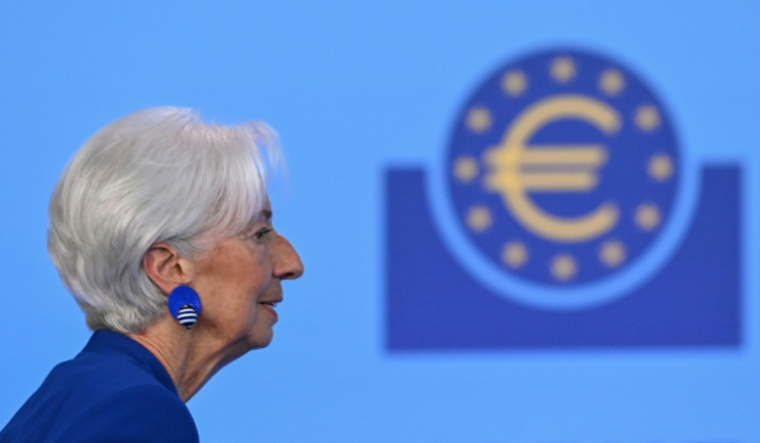
The President of the ECB, Christine Lagarde, brushed aside these criticisms in front of the press.
This increase of 25 basis points, decided “unanimously” by the members of the board of governors, is “clearly a signal” and is “necessary” in the face of uncertainty and the outlook for inflation, she insisted.
– Resilient growth –
The ECB raised its inflation projections for 2026 and 2027, respectively to 3.0% and 2.3%, before seeing the aggregate fall back to 2.0% in 2028.
The euro zone economy is expected to grow by 0.8% this year, compared to 0.9% previously forecast, and remain above 1% in the following two years.
This is a little more pessimistic than the forecast published Thursday by the International Monetary Fund (IMF), which now expects growth of 0.9% this year, compared to 1.1% anticipated in April.
“It’s not as if we are in an environment where growth is absent or seriously threatened,” assured Christine Lagarde.
She nevertheless warned against the persistence of high energy prices, which could subsequently affect the prices of other goods and wages.
“The markets, so far, are reacting calmly, but that does not mean that we should in no way underestimate the risks we face,” commented Kyriakos Pierrakakis, president of the Eurogroup.
According to Ms Lagarde, the “main risk would have been not to make this type of decision”.
Anxious not to repeat its error of 2022, namely a reaction considered late to the surge in inflation linked to the Russian war in Ukraine, the ECB sought to avoid any retrospective criticism of its timing to once again tighten its monetary course.