
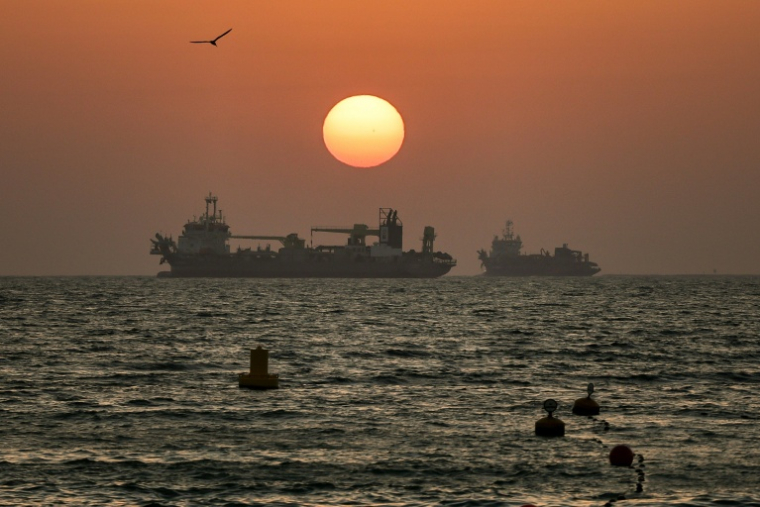
View of the Strait of Hormuz. (AFP/FADEL SENNA)
Iran fired several missiles against Israel on Sunday, which said it had intercepted them, breaking a ceasefire already very weakened on the hundredth day of the war in the Middle East.
“The Air Force has so far intercepted all the missiles fired from Iran,” according to an Israeli military statement after two waves of missiles fired in the direction of Israel.
Warning sirens sounded across large swaths of northern Israel, according to the army.
This is the first time that Iran has fired missiles against Israel since the April 8 ceasefire.
Hostilities also continued on the other front of the conflict, in Lebanon, from where projectiles were fired towards Israel on Sunday, despite a ceasefire theoretically in force, provoking an Israeli response which struck the south of Beirut on Sunday, killing two people and 20 injured.
While the United States strives to dissociate the two fronts, for Iran, they are in fact inseparable.
Iran also warned on Sunday that its missile attacks on Israel were a “warning” in retaliation for the Israeli bombing of the southern suburbs of Beirut, warning that any new aggression would be the subject of a “stronger response”.
“The Iranian terrorist regime has made a serious mistake by once again choosing the path of terrorism,” replied Brigadier General Effie Defrin, the spokesperson for the Israeli army, during a short televised address.
– Trump calls Netanyahu –
Worried about ongoing negotiations with Iran, US President Donald Trump said he would call Israeli Prime Minister Benjamin Netanyahu to ask him not to retaliate against the missile strikes, Axios media reported.
“We are on the verge of concluding a final agreement with Iran. It will be a good agreement. I don’t want it to fall through because of what is happening now,” he said according to Axios journalist Barak Ravid, who said he spoke with him on the phone.
Israel announced the closure of all schools in the country, while Iraq announced on Sunday evening the temporary closure of its airspace, as did Syria partially.
Iran also closed its airspace in the western part of the country on Sunday evening until further notice.
In another interview with a Fox News journalist, Donald Trump asserts that the Iranian strikes “are not going to help the negotiations.”
“We are very close. I would say that an agreement could be signed Monday, Tuesday or Wednesday of this week. And here is what is happening,” he said according to journalist Trey Yingst, who also said he spoke with him on the phone.
According to him, Mr. Trump told him that he was “not very happy” with the Israeli strike that targeted Beirut on Sunday.
“Come back to the negotiating table and make a deal,” he said to Iran, according to Fox News.
The Israeli army will continue its operations “throughout Lebanon” and “intensify pressure” on the Lebanese Islamist movement Hezbollah, its spokesperson declared on Sunday evening.
Hezbollah for its part confirmed having targeted several military positions in northern Israel on Sunday morning.
Meanwhile, the head of Iranian diplomacy Abbas Araghchi discussed the “latest developments” in the Middle East with his counterparts from the United Kingdom and Turkey as well as the Pakistani mediator, according to his ministry.
– “Legitimate targets” –
Previously, Iran had threatened to attack American and Israeli interests in the Middle East after this Israeli strike on Beirut, further distancing a possible agreement to end this war which entered its hundredth day on Sunday.
This conflict, triggered on February 28 by Israeli-American strikes, set the Middle East ablaze and shook the world economy.
“The naval blockade imposed on Iran and the green light given today by the United States to the Zionist regime” place American and Israeli interests “in the region of legitimate targets,” Iran’s chief negotiator, Mohammad Bagher Ghalibaf, warned on X.
Despite these developments, attempts at mediation continue.
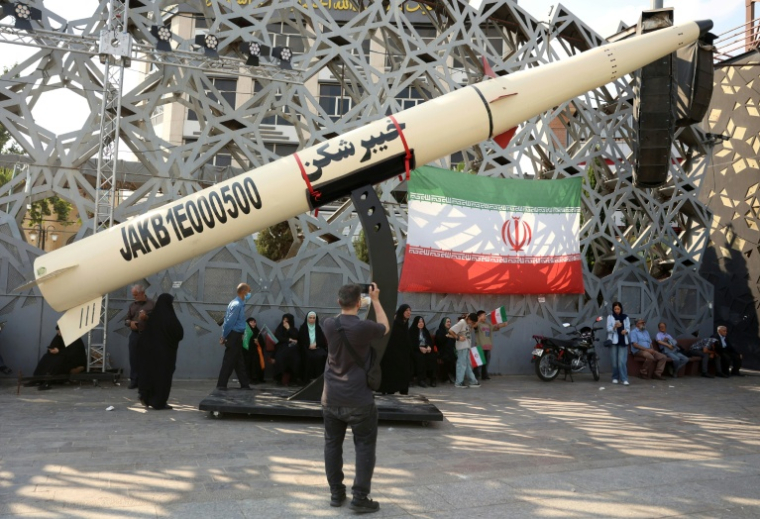
Demonstration of support for Supreme Leader Mojtaba Khamenei in Tehran, June 4, 2026 ( AFP / – )
According to state television, the Minister of the Interior, Mohsin Naqvi is in Tehran carrying a “special letter” addressed to the supreme guide Mojtaba Khamenei which contains “a very important message”, he underlined without revealing its content.
In Tehran, uncertainty and economic slump weigh on residents.
“I have the impression that this situation will last for a while – a sort of suspended state, where some people fire missiles, others launch drones, and I doubt that all this will lead to real stability,” Farhad, a 35-year-old chef, told AFP.
– “Surgical” –
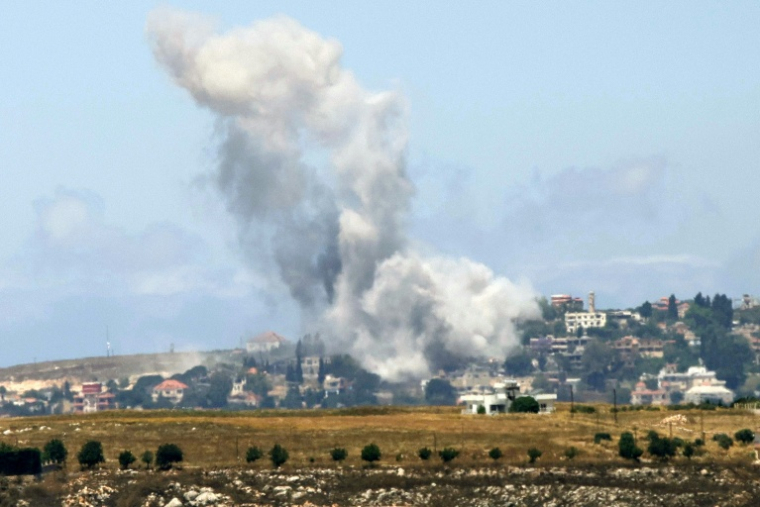
Israeli bombing near the village of Mayfadoun, in southern Lebanon, June 6, 2026 (AFP / -)
In this context, Donald Trump pleaded, addressing his Israeli ally, for more “surgical” strikes against Hezbollah, while reiterating that he does not demand that Lebanon be part of an agreement to end the war with Iran.
Lebanon, Iranian assets frozen abroad, exit from the stock of highly enriched uranium, control of the Strait of Hormuz: there remain “quite insurmountable points of tension”, comments Héloïse Fayet, researcher at the French Institute of International Relations (Ifri), for AFP.
On the question of assets, essential for Iran asphyxiated by decades of international sanctions, the American president still warned on NBC that he would not release the money before an agreement with Tehran.


