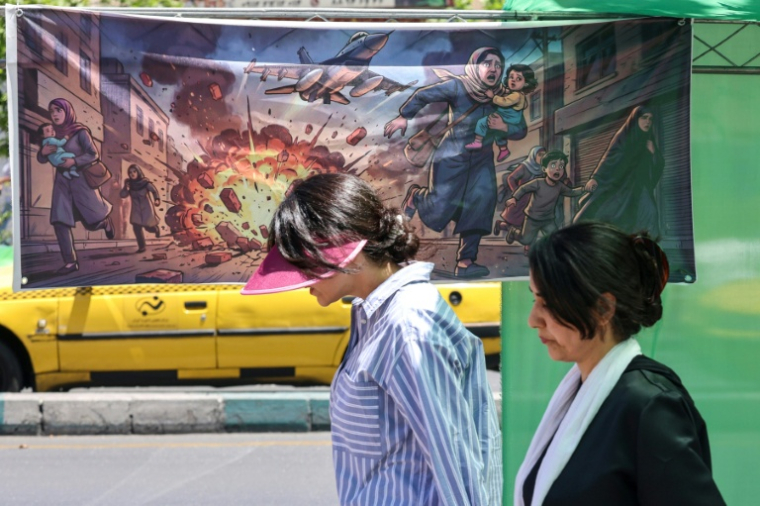
Iranian women pass in front of a poster representing the Israeli-American strikes against Iran, May 9, 2026 in Tehran (AFP / ATTA KENARE)
Iran announced Wednesday evening that it was examining a new American peace proposal via the Pakistani mediator, with Donald Trump warning that the situation was “on the edge”, between an agreement or a resumption of hostilities.
“We have received the points of view of the American side and we are currently examining them”, declared on state television the spokesperson for the Iranian Ministry of Foreign Affairs Esmaïl Baghaï, expressing however a “great mistrust” vis-à-vis the United States.
He also reiterated the demands of the Islamic Republic: “unfreezing of blocked Iranian assets” abroad and an end to the American blockade of Iranian ports.
These remarks come after a second visit in a few days to Tehran by the Pakistani Minister of the Interior, Mohsen Naqvi, the mediating country in this conflict.
On the American side, Donald Trump left the door open to diplomacy by affirming “not to be in a hurry”.
“We’ll see what happens. Either we’ll reach an agreement or we’ll take slightly tougher measures. But I hope that doesn’t happen,” the US president told reporters from Joint Base Andrews, near Washington.
“It’s on the line, believe me.  If we don’t get the right answers, it can go very quickly. We are all ready to act. We have to get the right answers. They will have to be completely, 100% satisfactory. ”
The billionaire added that an agreement with Iran would save “a lot of time, energy and lives”, believing that it could be concluded “very quickly, or within a few days”.
The hope of progress in the negotiations caused oil prices to fall: a barrel of Brent fell 5.63% to 105.02 dollars. In reaction, European stock markets ended sharply higher and on Wall Street the Dow Jones index gained 1.31%.
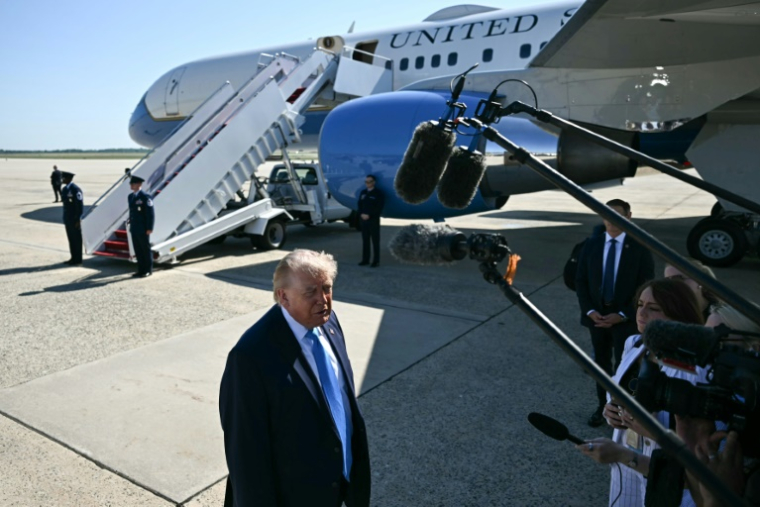
Donald Trump speaks to the press at Andrews military base, May 20, 2026. (AFP / Kent NISHIMURA)
– “Well au-delí of the region” –
On Tuesday, Donald Trump said he would give Tehran “two or three days” to reach an agreement. An ultimatum swept aside by the Iranian power.
“Iran will never give in to intimidation” and must “strengthen its preparations in order to provide a strong response to any new attack,” warned Iran’s chief negotiator, Mohammad Bagher Ghalibaf, believing that the enemy had “not given up its military objectives and was seeking to trigger a new war.”
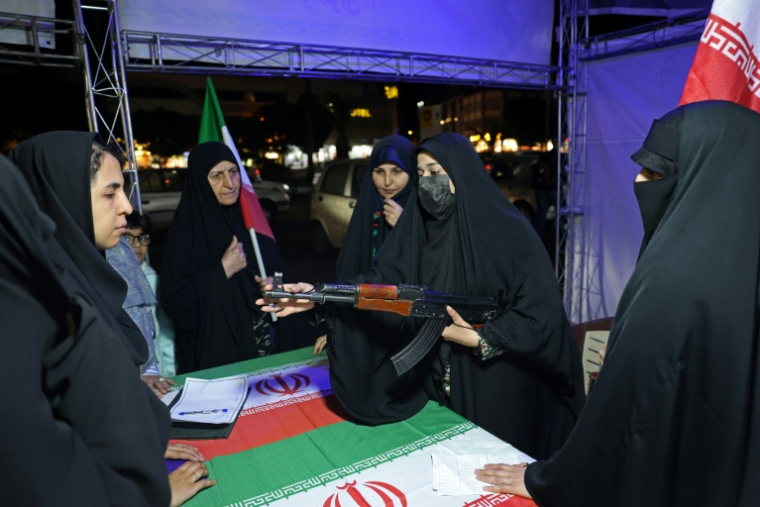
Women learn how to use firearms at a stand in Hafte Tir Square in Tehran on May 17 (AFP / -)
The Revolutionary Guards, the ideological army of the Islamic Republic, have threatened to extend the war “well beyond the region”.
Since the entry into force of a fragile truce on April 8 after more than a month of war, discussions have stalled, with the two countries sticking to their positions and increasing their invectives.
Only one real negotiation session, unsuccessful, was held on April 11 in Pakistan and negotiations are now continuing behind the scenes.
The conflict, triggered by an Israeli-American attack on Tehran on February 28, left thousands dead, especially in Iran and Lebanon, where pro-Iranian Hezbollah attacked Israel, which then invaded the south of the country.
It has also seriously disrupted the world economy, between a jump in oil prices and rampant shortages of raw materials, due to the near blockade of the strategic Strait of Hormuz by Tehran.
– “Seize the opportunity” –
In the Gulf, hard hit by the war, Riyadh has put pressure on Iran. Welcoming that Donald Trump “is giving diplomacy a chance”, his Foreign Minister, Prince Faisal bin Farhane, urged Tehran to seize the opportunity to avoid “an escalation”.
In retaliation for strikes on its soil, Tehran has carried out attacks across the region, targeting in particular the rich Gulf petromonarchies allied with Washington.
And in Israel, the army triggered the maximum alert level, saying it was “prepared for any development”.
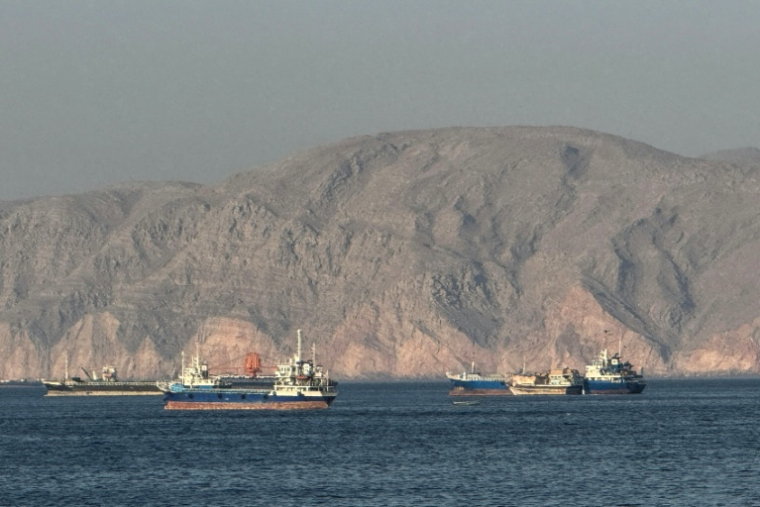
Ships at anchor in the Strait of Hormuz, off the port town of Khasab, on the Musandam Peninsula, northern Oman, May 17, 2026 (AFP / -)
A major issue in the war, the Strait of Hormuz, through which a fifth of the crude oil and liquefied natural gas consumed in the world previously transited, remains under the control of Tehran, which formalized at the beginning of the week the creation of an organization responsible for supervising this sea route and charging passage fees.
Some 26 ships crossed it in 24 hours, announced the Navy of the Revolutionary Guards, including a South Korean oil tanker “in coordination with Iran”, for the very first time since the start of the conflict, according to Seoul.
For its part, the American army announced that it had boarded an Iranian-flagged oil tanker, suspected of having attempted to violate the American blockade of Iranian ports.