The American drone strategy is gradually taking shape in the Pacific. Adaptability, reduced costs: the American army relies on feedback from the conflict in Ukraine to enrich and diversify its capabilities. But these new tactics still raise questions from some officers.
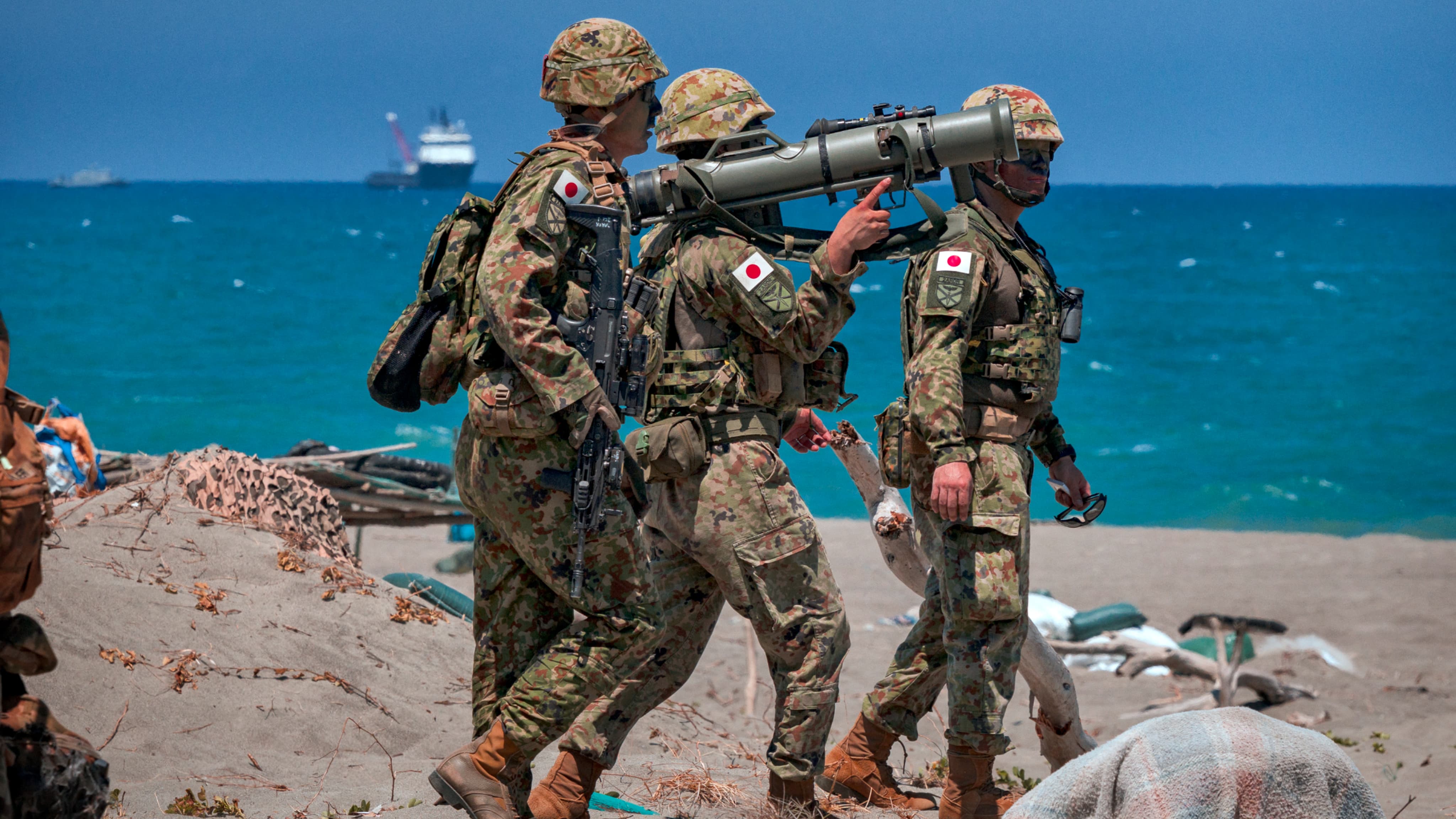
From April 20 to May 8, thousands of American, Filipino and Japanese soldiers participated in the annual “Balikatan” military maneuvers, organized in the north of the Philippines. This edition stood out as one of the largest ever carried out in the region, with the participation of around twenty allied countries. France, Canada and New Zealand also took part.
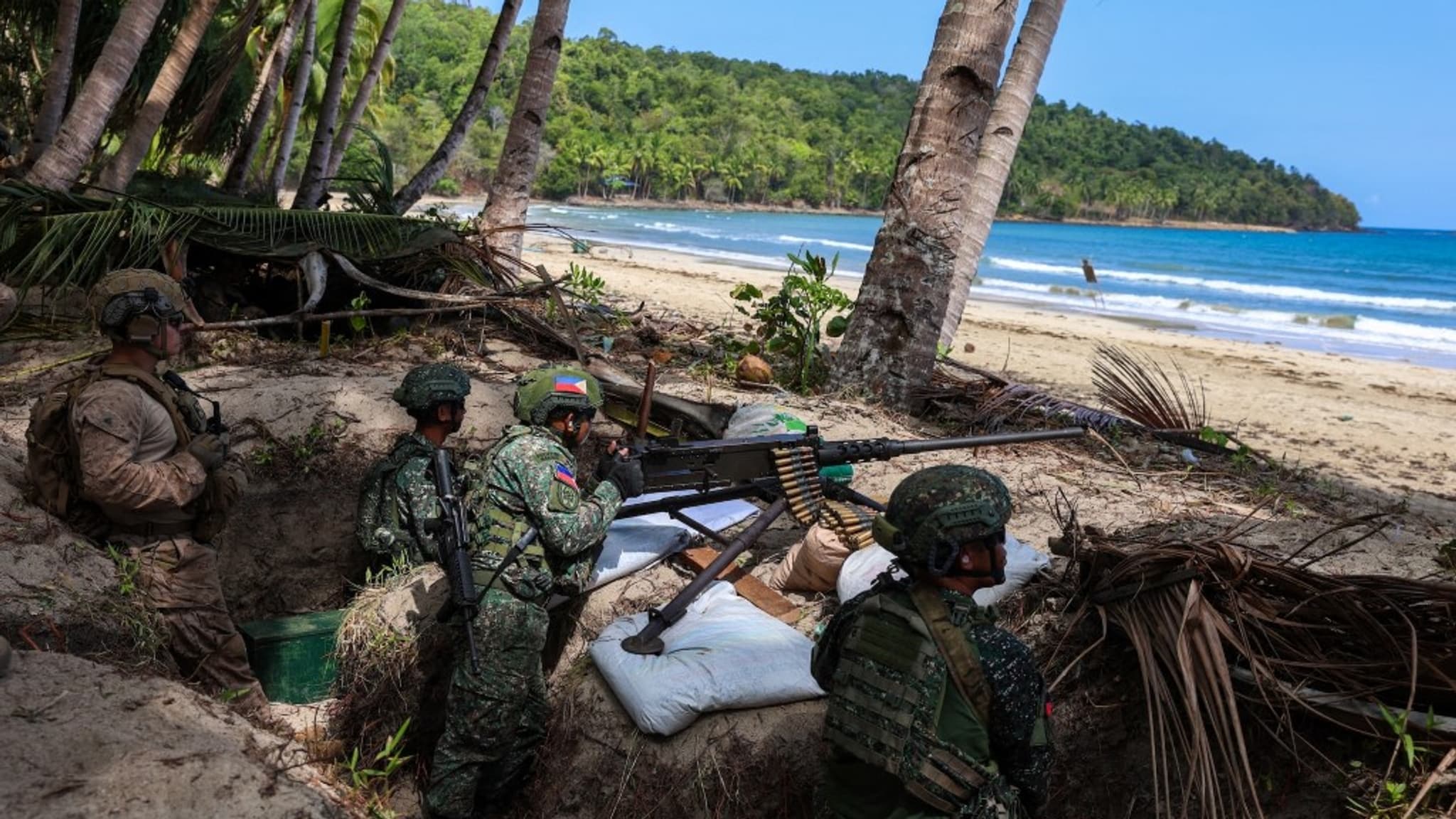
For nearly three weeks, the forces involved carried out crisis scenarios in almost real conditions: coastal defense, maritime strikes, amphibious operations, live ammunition firing, as well as exercises integrating rockets, mortars and drones. Beyond these now classic training sessions, drones took center stage this year.
The 25th American Infantry Division notably carried out operations by mobilizing land, maritime and air drones, mixing reconnaissance and strikes via small kamikaze drones. Alongside Philippine forces, American soldiers simulated the capture of enemy positions in a context of “drone warfare”, in heat reaching 36°C.
This commitment illustrated the ongoing transformation of this division, nicknamed “Tropic Lightning”, a pioneer in the integration of new technologies. More broadly, it confirms an underlying trend: drones are now omnipresent in the operations of American land forces in the Pacific.
New operational challenges
declared General Ron Clark to the specialized site DefenseOne, insisting on a doctrinal shift that is now accepted. “In current battles, we should never send a soldier when we can send an unmanned system,” he added, hammering home the idea of a war where machines tend to replace humans on the front line.
A development confirmed on the ground by Colonel Adisa King, commander of the 3rd mobile brigade: “It reduces the risks a little, but it allows us to see further,” he explained to the Defense News media. But this rise in the power of drones still poses logistical and operational challenges. “The challenge is knowing how to carry out a massive deployment. What would happen if I had ten drones?” asks Adisa King.
“They go up to disrupt the enemy or to improve my visibility, and we bring them down to lower altitudes. But the problem is maintaining operational condition,” he admits. The American army is thus banking on a so-called “practical” innovation, directly from the field: certain systems, such as the Kestrel drone (a compact FPV quadcopter capable of operating in a swarm and being used as an attack drone) are designed by the soldiers themselves, a sign of a profound change for a army long focused on heavier and centralized equipment.
An eye on Ukraine and the Middle East
These experiments are part of a broader development, fueled by feedback from conflicts in Ukraine and the Middle East, where drones have profoundly transformed tactical balances. “Faced with the exponential proliferation of drones, the importance of passive defense measures cannot be overemphasized,” warned Lieutenant General Matthew McFarlane, commander of I Corps, on the sidelines of Exercise Balikatan.
“We are fully aware of the need to protect ourselves against this very real aerial threat that we are seeing around the world,” he added, emphasizing that adaptation is not just about attack, but also about survival in the face of a now omnipresent threat.
In his opening speech, Admiral Samuel Paparo, Commander of the Indo-Pacific Command, emphasized the proliferation of drones, which he considers one of the major transformations of contemporary warfare. He evokes a real “commodification” of combat “and by commodification, I mean that everyone has it”, through the massive distribution of small unmanned systems, inexpensive and easily accessible.
Taking the example of Ukraine, one of the highest-ranking American officers in the Pacific underlines the violence of this mutation: Russian forces would lose “around 100 men per square kilometer of land that they conquer and then lose”, describing the conflict as a “vast laboratory of this commodification of deaths at low cost”.
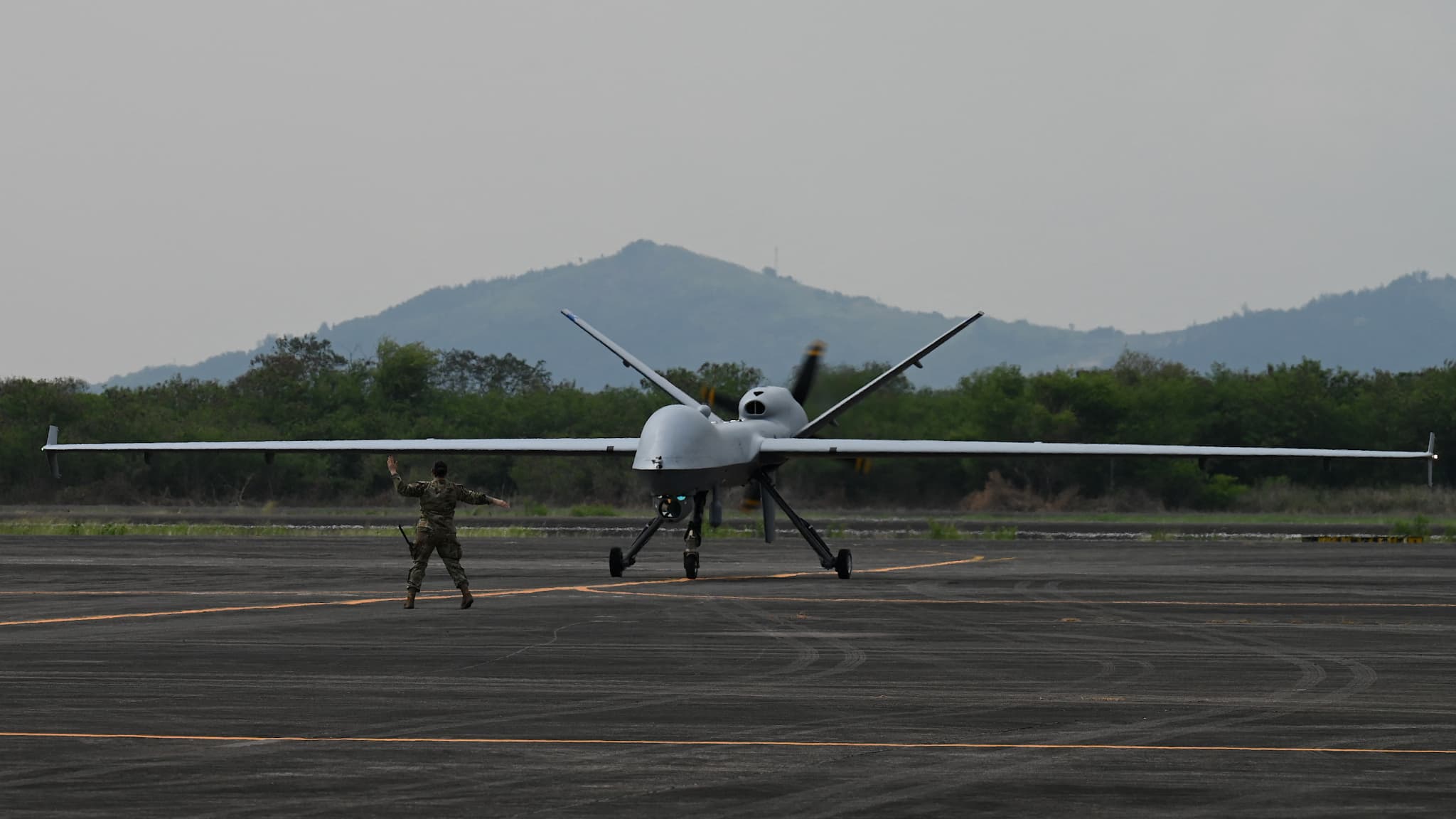
In this context, Beijing’s strategy, based on accelerated robotization and droneization of its armed forces, also fuels the thoughts of American strategists. China is banking on swarms of small drones, heavier attack drones, but also on quadruped robots capable of operating in a coordinated manner, “in packs”. From Taiwan to the South China Sea, pressure still remains strong in this region of the world.
A strategy called into question?
But should we nevertheless switch to “all drones” and relegate conventional warfare to the background, or even abandon certain technological sectors? For General Xavier Brunson, the answer is clearly no. “Some will tell you that the lesson to be learned from the conflict in Ukraine is drones, drones, drones and more drones. I disagree,” he told DefenseOne.
“It’s superficial and easy. We must not apply Occam’s razor to strategic questions. We must not believe that the simplest solution is necessarily the right one. This is not the case.” In other words, reducing current transformations to the rise in power of drones alone would amount to drawing hasty and incomplete conclusions.
According to him, we must always question strategies and decisions so as not to get stuck: “what will be the next strategic breakthrough?”, he asks. “Because if we don’t think about it, if we don’t dedicate our efforts to imagining this next disruption, then in ten years we will still be using drones thinking that this is still the right path,” he puts into perspective.

The head of the American forces in Korea therefore calls for broadening thinking and anticipating future changes. “The next step”, according to him, could well be in the “commercial space”. In what form is an open question. Space as a zone for rapid deployment of equipment, as an eye always open to the world or even as a battlefield? For the armies of the whole world, the stakes are therefore major. We must not remain prisoner of the immediate lessons of current conflicts… but prepare well for the future, by drawing on technology today…