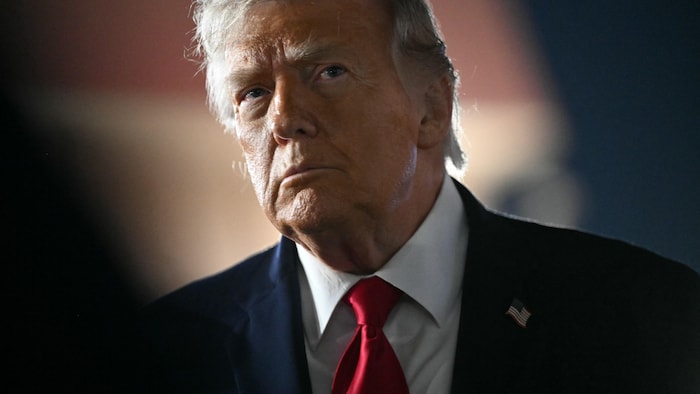
Iran has sent a new proposal to the United States aiming to reopen the Strait of Hormuz and end the war. At the same time, Iranian Foreign Minister Abbas Araghchi and US President Donald Trump continue to clash.
Essential Information:
- The war in Iran is in its 59th day on Monday, April 27, 2026. A fragile ceasefire is still in place between Tehran and Washington. However, according to an Iranian state media, Tehran has proposed a three-point negotiation plan to Washington to find peace in the Middle East, focusing on a total ceasefire, management of the Strait of Hormuz, and the Iranian nuclear issue.
- In Lebanon, the ceasefire, in effect since April 17 and extended for three weeks, is being put to the test. On Sunday, the Lebanese Health Ministry reported 14 deaths in Israeli airstrikes in the south of the country. Israeli Prime Minister Benjamin Netanyahu has ordered a strong strike against the pro-Iranian Hezbollah in Lebanon.
- Must be extended by “three weeks,” said Donald Trump late Thursday after talks between Israel and Lebanon at the White House. Following the deaths of two French soldiers in Lebanon in an attack attributed to Hezbollah, French Foreign Minister Jean-Noël Barrot denounced “a war crime.” This Saturday, new victims are being counted following Israeli airstrikes. Israel, meanwhile, accuses Hezbollah of not respecting the ceasefire.
- Negotiations for the end of the war in Iran remain tense. Iranian Foreign Minister Abbas Araghchi stated that it was unclear if the United States was “truly serious” about diplomacy, after talks in Pakistan, while Washington canceled the sending of its delegation to the mediator country. Trump maintains that “nobody knew who was in charge” in Iran but reminds that “if they want to talk (the Iranians, editor), they can call us.”
- Assessment and consequences. The war in the Middle East has resulted in over 3,540 deaths to date, according to the HRANA rights defense group based in the United States. The Strait of Hormuz, through which 20% of oil and natural gas transit, is still blocked. A senior official in the Iranian Parliament stated that Tehran had received its first revenues from passage fees it had established in the strait.
Live Updates
Iran and Lebanon Situation:
The war in Iran, which broke out on February 28 after Israeli-American strikes, is ongoing. On Tuesday, February 21, Donald Trump announced an extension of the ceasefire between the United States and Iran without setting a new deadline. New negotiations between Washington and Tehran are being considered, but neither party has confirmed their presence or a definite date to sit down at the table.
“A comprehensive ceasefire only makes sense if it is not violated by a naval blockade and the hijacking of the global economy,” denounced Iranian Parliament President Mohammad Bagher Ghalibaf. The President of Iran asserts that “the American blockade and threats” were the “main obstacles to true negotiations.” In other words, whether from the American side or in the Iranian camp, the statements do not really encourage optimism for new negotiations, before a hypothetical plan for lasting peace in the Middle East.
Iran’s New Negotiation Plan Proposed to the United States
On Monday, April 27, according to the Tasnim news agency of the Revolutionary Guards Corps, the Iranians have transmitted a three-phase negotiation plan to the Americans through Pakistan to end the war. The first point concerns an agreement for a total ceasefire, with a guarantee that the war does not resume, neither in Iran nor in Lebanon. If an agreement is reached here, negotiations can move on to the second point: the management of the Strait of Hormuz. “Coordination will be established with the Omani side to develop a new legal regime,” wrote the Tasnim media. Finally: the postponement of talks on the Iranian nuclear issue and uranium enrichment.
Check out the interactive map below for updated information: