Key figure in the military regime, this general trained in Russia embodied the hardline of power in Mali. His death, at the heart of an attack on his residence, shakes a security apparatus already under tension.
The shock is proportional to the attack. In Mali, Defense Minister General Sadio Camara, a central figure in the military regime, was killed on Saturday, April 25, in the assault on his residence in Kati, a garrison town at the gates of Bamako.
The ruling junta confirmed his death on Sunday evening during the ORTM television news, citing a suicide vehicle attack and declaring a two-day national mourning.
The news, first revealed by the international press, including Le Figaro, was confirmed during the day by Jeune Afrique and RFI, as well as by several family and security sources. According to these sources, some of his relatives, including his second wife, also perished in the attack.
At 47, this officer trained in Russia embodied a generation of military officers convinced that regaining sovereignty required a clear break with Western partners. He was one of the architects of the system put in place after the coups of 2020 and 2021.
An army man
Little known to the public before 2020, Sadio Camara made his mark in the shadows of the barracks. A career officer, he belonged to the inner circle of military officers who took power in August 2020, alongside Colonel Assimi Goïta.
Among this group of young officers, he stood out for his command of defense issues and his network within the military establishment. Quickly, he became indispensable.
Appointed Defense Minister in the transitional government, he was briefly sidelined under international pressure before returning in force after the second coup in May 2021. His return marked a shift to a tougher stance at the top of the state.
The architect of the Russian pivot
It was under his leadership that Bamako underwent one of the most significant geopolitical shifts in its recent history.
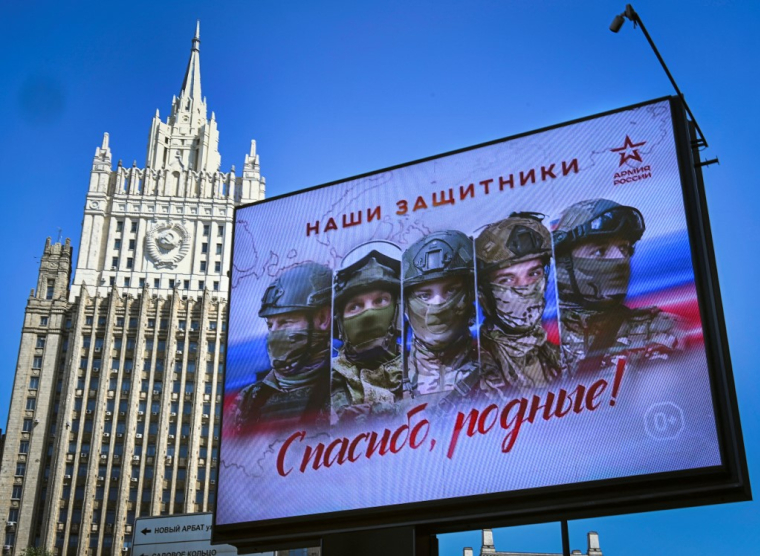
In a context of deteriorating relations with France and its European partners, Sadio Camara oversaw the rapprochement with Moscow. He was one of the main proponents of the arrival of the Wagner Group – subsequently renamed Africa Corps – to support the Malian army in its fight against jihadist groups.
This strategic choice, presented as an act of sovereignty, reshaped the country’s alliances. But it also exposed the regime to new dependencies and criticism of the methods used in the field. Sadio Camara was sanctioned by the US Treasury in 2023.
An offensive security doctrine
Militarily, Sadio Camara advocated an offensive approach: regaining control of the territory at all costs.
The recapture of Kidal in November 2023, the historic stronghold of Tuareg rebellions, was highlighted as one of the successes by the authorities. A symbolic victory meant to signal the return of the state to the north of the country. But behind these advances, the security reality remains fragile. Jihadist groups, including the Support Group for Islam and Muslims (JNIM) affiliated with Al-Qaeda, retain a strong capacity for harm. Attacks are increasing, even in areas that were previously relatively spared.
A strategic target
The minister’s death comes after an unprecedented offensive since the junta took power in 2020. At dawn on Saturday, jihadist fighters from JNIM, affiliated with Al-Qaeda, and Tuareg rebels from the Azawad Liberation Front (FLA) launched coordinated attacks on strategic targets.
Bamako, Kati, but also Gao, Sévaré, and Kidal were simultaneously targeted. In the capital, fighting broke out around the airport and the military base of Sénou, while helicopters flew over the city. The main roads leading to sensitive sites were blocked.
In a statement issued on Saturday evening, JNIM claimed responsibility for the operation, claiming to have targeted “the president’s residence,” “the defense minister’s residence,” and the Bamako international airport. The jihadist group declared a “victory,” claiming close coordination with its “brothers” from the FLA.
The displayed coordination between JNIM and FLA marks a turning point. Until now, jihadists and Tuareg rebels pursued separate, sometimes competing objectives. Their tactical convergence reflects a profound restructuring of the security landscape.
According to several analysts, this offensive aims not only to inflict military losses but also to shake the heart of power. By targeting Kati and Bamako, the assailants are directly hitting the junta’s military apparatus.
In any case, the disappearance of Sadio Camara creates an area of uncertainty. It weakens a security apparatus that could falter at any moment and could reignite internal tensions in a regime under pressure.
One question now dominates all discussions: how could the Defense Minister of a country at war be targeted in his home in Kati, one of the most secure sites in Mali?