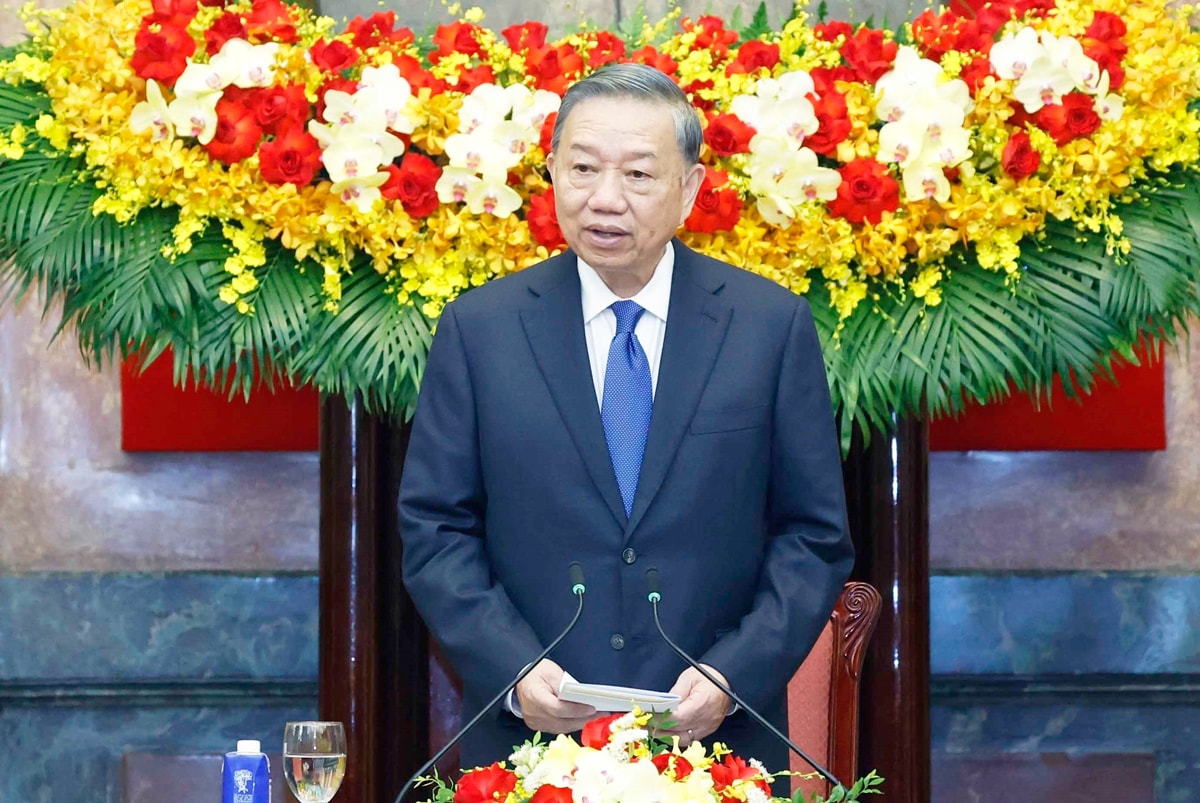
German Minister of Defense Boris Pistorius, General Ingo Gerhartz, commander of the allied inter-armed forces in Brunssum (right), and Bundeswehr Chief of Staff Carsten Breue visited the NATO exercise site “Steadfast Dart 26” in Putlos, Germany, on Wednesday, February 18, 2026. [AP Photo/Fabian Bimmer]
On Wednesday, German Defense Minister Boris Pistorius and Bundeswehr Inspector General Carsten Breuer presented a comprehensive military strategy for the first time in Bundeswehr history. While parts of the document remain classified, the excerpts published leave no doubt about its nature: Germany is methodically preparing for a major war, notably against Russia.
The secrecy surrounding it is politically revealing. It shows that the specific war measures, capabilities, and plans being developed go far beyond what is publicly communicated. Yet, even the official summaries clearly indicate that the German government is taking a decisive step in terms of military rearmament and war preparations.
At the core of this strategy is the declaration to make the Bundeswehr “Europe’s most powerful conventional army” and position Germany as the leading military power within the EU and NATO. This objective aligns fully with the National Security Strategy and defense policy guidelines through 2023, but the strategy goes further in its concrete implementation.
The military strategy revolves around the idea that “Germany, as Europe’s leading economy, must and will play a leading role within NATO in the face of a complex and increasingly acute threat environment, including militarily. This marks a paradigm shift and confirms our intent to influence matters,” stated Breuer.
The “comprehensive military defense concept” comprises a military strategy and capacity profile. Up to now, according to Breuer, the Bundeswehr has struggled to clearly define its security policy objectives and explain how it intends to achieve them. “The answer to this question lies in the military strategy, and the answer to how to implement it lies in the capacity profile.”
In other words, German imperialism is clearly reaffirming its preemptive goals and simultaneously establishing the necessary military conditions for their realization. At the heart of this apparatus is the military offensive against Russia, which has intensified in recent days with the signing of a new “strategic partnership” between Germany and Ukraine and the summoning of the Russian ambassador.
During the strategy presentation, Pistorius boasted, “We are the biggest supporter of Ukraine, from which we also benefit, as we learn from the experiences of Ukrainians on the battlefield for our Bundeswehr.” This statement can only be interpreted as a warning. Hundreds of thousands of lives have already been claimed by the war against Russia in Ukraine. The Defense Ministry and the General Staff are considering similar “experiences” for the Bundeswehr and young conscripts.
The new military strategy openly designates Russia as a central threat and directs all military planning towards a total war against the nuclear power. The known contents to date of the military strategy and associated rearmament plans include:
– Massive increase in personnel: Bundeswehr will experience a significant expansion of its personnel, with at least 260,000 active soldiers and a considerable strengthening of reserves. In total, personnel should reach at least 460,000 men. To achieve this growth, which is just the beginning, the reinstatement of mandatory military service is being prepared.
– Establishment of fully-equipped large formations: Germany commits to provide NATO with several fully operational divisions, including heavy mechanized forces for warfare in Eastern Europe.
– Permanent stationing and frontline presence: The deployment of a German combat brigade in Lithuania is part of a long-term advanced deployment on the Russian border.
– Acceleration of armament and modernization: Massive investments in heavy armaments, air defense systems, drones, cyber defense, and space capabilities. Projects such as the mass production of modern weapon systems are expanding.
– Logistics and mobilization: The establishment of a complete military logistics structure for rapid troop deployments across Europe (“military mobility”) and to ensure supply in case of war.
– Integration into NATO and EU structures: Germany assumes a leading role within multinational command structures and operational planning. Germany will “strengthen cohesion between Eastern, Central, and Western Europe from the heart of the continent and maintain links with North America,” as specified in the published part of the strategy. Germany will thus become “an even more essential military partner for its European allies” to “strengthen Europe’s ability to act.”
– National command and control capacity: “The capacity for planning and commanding national operations must be ensured at the operational level,” demands the document. This includes also “the command of multidomain operations as well as the task that follows for interdimensional command of precision strikes in depth.”
– “Total defense”: The military strategy is explicitly linked to civilian structures. The state, the economy, and society must be oriented towards the eventuality of war.
The title itself of the strategy, “Comprehensive Military Defense Concept,” clearly indicates that its implementation is not limited to the military domain but encompasses the entire society.
Pistorius himself made it unequivocally clear at the Hanover trade fair. Last weekend, he openly called on German companies to orient themselves more towards the needs of “comprehensive defense.” They must gradually convert their production to meet military requirements and cooperate more closely with the Bundeswehr. Pistorius directly linked this requirement to the assertion of German power.
“Given our size, economic power, and geostrategic role, Germany has the responsibility to do much more than before. And, of course, not just for our security, but for that of the whole of Europe,” stated Pistorius to the gathered business representatives. This includes sustainable value creation. “Industrial power” is an essential part of defense and, consequently, “aspects related to security and defense policy must always be considered as much as value creation for companies.”
This prepares the transition to a war economy. In case of emergency, the industry, infrastructure, and workforce must be directly put to use for military operations. Logically, this approach echoes the previous phases of German war preparation on the eve of the First and Second World Wars, except that it is unfolding today in the context of a globalized and highly developed economy.
The necessary financial resources have already been gathered. The “special fund” and war credits, amounting to hundreds of billions of euros and supported by all traditional parties, including the left-wing Die Linke and the Greens, finance the most extensive rearmament program since the end of World War II.
At the same time, the militarization of society is accelerating. The reintroduction of conscription, forced integration of schools and universities into military programs, and the expansion of security forces’ powers are integral parts of this development.
The new military strategy reveals that German imperialism, with its historical crimes and catastrophic defeats in the 20th-century world wars, intends to assert its interests through military force once again. In a context of increasing geopolitical tensions between imperialist powers themselves, notably between Europe and the United States, and economic crises, the ruling class is implementing a policy that inevitably leads to catastrophe.
For workers and youth, this means they are facing a reality systematically downplayed by official bodies: the preparation for a major war is not an abstract hypothesis but a concrete government policy. It has nothing to do with defending “democracy” and “freedom” against a Russian, Iranian, or other aggressor but aims, as in the past, to impose imperialist interests through violence and destruction.
The decisive political question is therefore how to counter this evolution towards a Third World War. The militarization of society and the transition to a war economy can only be stopped by a politically conscious movement of the working class, directed against the capitalist system that spawns war and rearmament. Under these conditions, the construction of an international socialist movement against war is not an abstract perspective but an immediate necessity.
(Article originally published in English on April 24, 2026).

/2022/12/02/638994d9d5adf_61168cfc8256bf7ea5ef3720-1.png "DIRECT. War in the Middle East: Tehran responds after American strikes on Iran by targeting American bases")