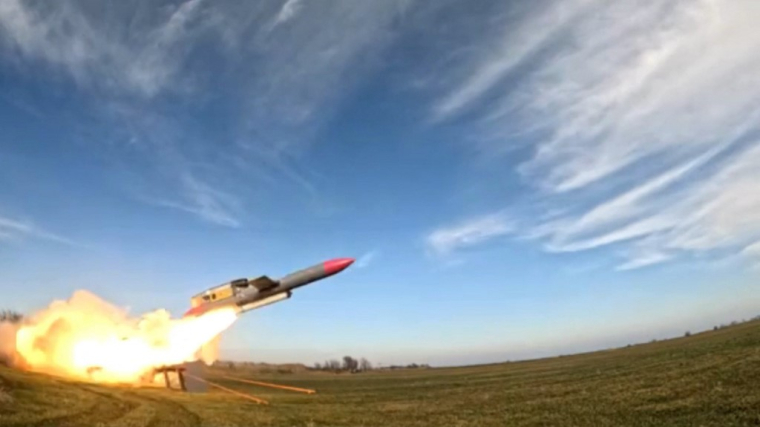
The United States would be able to defend Taiwan in the event of an invasion by China? Two months after the start of the American-Israeli offensive in Iran, several American officials are forced to recognize: if a conflict were to break out in Asia, Washington would face a shortage of short-term ammunition, which would expose its troops to increased risk, they confide to the Wall Street Journal.
The Center for Strategic and International Studies (CSIS) released a report on Tuesday expressing similar concerns about the depletion of American stocks. According to the report, the U.S. military had depleted about 27% of its stocks of long-range Tomahawk missiles and more than two-thirds of its Patriot interceptors in Iran.
“Some critical ground attack and missile defense munitions were already in short supply before the war and are even more so now,” explains Mark Cancian, co-author of the report. And he adds: “It will take years before we can rebuild these stocks.” An operation that could take up to six years, according to several sources cited by the American press.
The White House officials have so far refused to estimate the cost of the war against Iran, but two independent think tanks claim the expenses are staggering: between 25 and 35 billion dollars, or just under one billion dollars per day, as summarized by the New York Times.
The Pentagon claims that no conflict with China is on the horizon for 2027, but one thing is certain: Beijing is increasingly investing in defense. China has already stated its desire to exercise complete sovereignty over Taiwan by 2049, the centenary year of the founding of the PRC.
China is a much more formidable adversary than Iran. It possesses over 600 nuclear warheads and a rapidly expanding intercontinental ballistic missile program, according to a December 2025 report from the U.S. Department of Defense. Analysts also note that Beijing has a growing fleet of military drones.
War simulation exercises conducted by American think tanks have concluded that in the event of a Chinese takeover of Taiwan by force, the fighting would be brutal and could result in the loss of tens of thousands of American, Chinese, and allied soldiers, as well as numerous ships and hundreds of aircraft.
According to analysts, a significant stockpile of American munitions would be essential to counter the Chinese missile arsenal, which would likely be fired at aircraft and warships to prevent them from freely navigating. Otherwise, “human losses would be more significant,” says Kelly Grieco, a senior researcher at the Stimson Center.
To address this situation, the Pentagon is working to acquire more munitions, including diverting some interceptors originally intended for European countries. In January, the administration announced seven-year agreements with major arms companies, including Lockheed Martin, to increase the production of defense systems. The White House has also asked Congress to approve expenditures of around 350 billion dollars for critical munitions in the 2027 budget.
Despite these realities, the Trump administration wants to save face and not show any signs of weakness. “The foundation of this story is false,” says White House spokesperson Karoline Leavitt in a statement. “For now, I see no real cost impacting our China deterrence capability,” even dares Admiral Samuel Paparo, commander of U.S. forces in the Pacific, questioned by the U.S. Senate Armed Services Committee… admitting nonetheless, almost in so many words: “There are finite limits to the ammunition stockpile.”