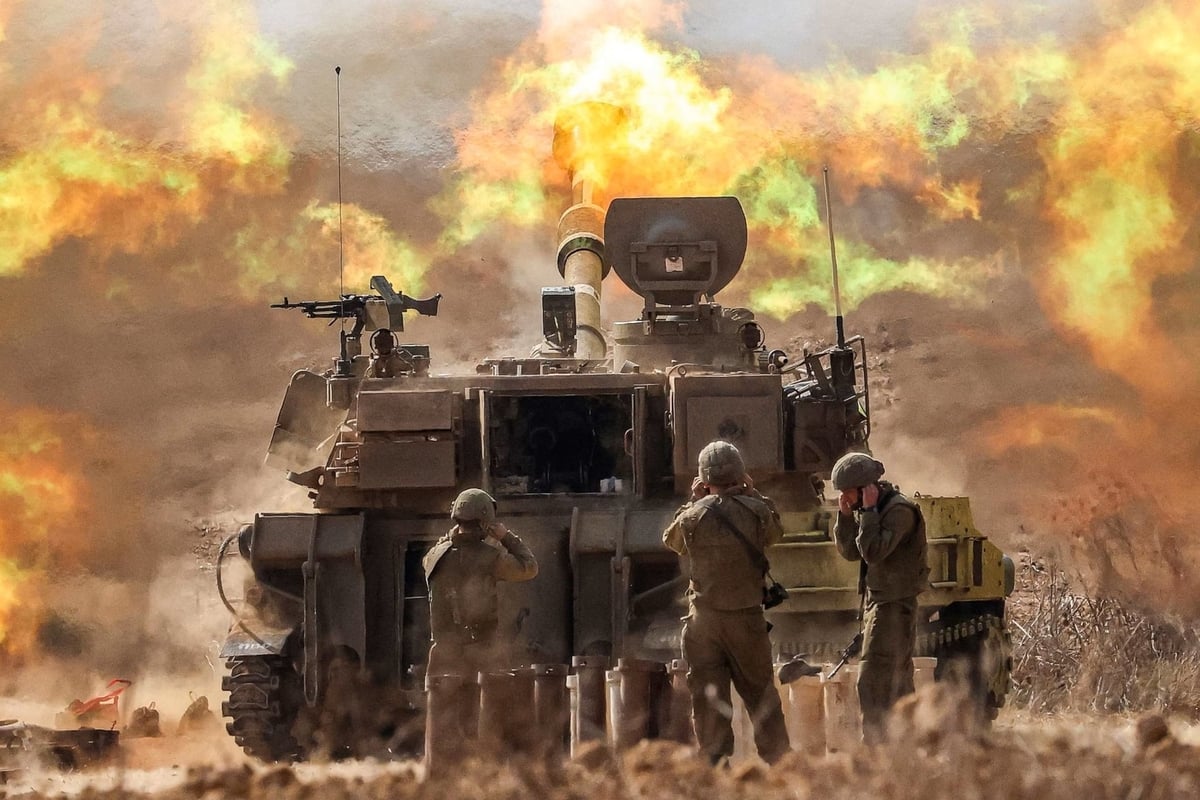
BEYROUTH: The Israeli army, which has been ordered to use “all its force” in case of a threat despite the ceasefire with the pro-Iranian Hezbollah, demolished new houses in southern Lebanon on Sunday, according to a state media outlet.
“Prime Minister Benjamin Netanyahu and I instructed the Israeli defense forces to act with all their strength, both on the ground and in the air, including during the ceasefire, to protect our soldiers in Lebanon against any threat,” Defense Minister Israël Katz said.
He added that the army also received the order to demolish any structure or road that was “trapped” and threatened the soldiers.
The goal is “to destroy houses in villages near the border that were, in all respects, terrorist Hezbollah forward positions threatening Israeli communities,” he said.
The Israeli army also reported killing an “armed terrorist” who “violated the terms of the ceasefire” by approaching soldiers and posing an “immediate threat.”
“Done deal”
Israel “continues to destroy what remains of the houses in the city of Bint Jbeil,” the Lebanese official news agency (ANI) reported.
Located near five kilometers from the border, it was the scene of fierce fighting between the Israeli army and Hezbollah before the ceasefire took effect on Friday.
Similar Israeli operations involving sweeping and explosive house destruction took place in several other border towns, the agency reported, also mentioning Israeli artillery fire in one instance.
They are all located behind the “yellow line” marking that the Israeli army says it has established, as in the Gaza Strip.
On Sunday, it published a map showing its “advanced defense line” and a red zone along the border, where its forces are operating to dismantle Hezbollah sites and “prevent direct threats” against northern Israel populations.
Turkey accused Israel of seeking to create a “done deal” in Lebanon and denounced, through its Foreign Minister Hakan Fidan, Israeli “expansionism.”
Lebanon was drawn into the Middle East war on March 2, when Hezbollah attacked Israel in retaliation for the Israeli-American offensive against Iran.
Israel responded with massive strikes, causing more than 2,300 deaths and one million displaced people, and invaded the southern part of the country.
Roads and Bridges Repaired
Lebanese Prime Minister Nawaf Salam is scheduled to visit Paris on Tuesday, following the death of a French peacekeeper in an ambush attributed to Hezbollah on Saturday, which Hezbollah denied responsibility for.
French President Emmanuel Macron, denouncing an “unacceptable attack,” “will call on the Lebanese authorities to shed full light on it, to identify and immediately prosecute those responsible,” according to the Elysée Palace.
A ceremony was held at Beirut airport before the repatriation of the body of Sergeant-Chef Florian Montorio.
He was “posthumously decorated with medals from the UN and the Lebanese army in recognition of his dedication to peace in southern Lebanon,” a statement from UNIFIL (United Nations Interim Force in Lebanon) said.
While the situation remains very unstable in the country, the Lebanese army is taking advantage of the cessation of hostilities to repair damaged infrastructure. It announced the reopening of a road and the repair of bridges previously made impassable by Israeli strikes in the south.
Israeli army strikes on bridges over the Litani River, about 30 km north of the border, had virtually cut off southern Lebanon from the rest of the country.
While some displaced persons have hastily returned home, many hesitate to come back due to the fragility of the ceasefire that halted hostilities ongoing since March 2.
In the village of Debbine, a man inspected the damage caused to his house, while people wandered near the rubble of destroyed buildings, an AFP correspondent observed.
Further south, residents of Srifa unloaded their belongings, mattresses, and washing machines, but elsewhere, others came to retrieve their personal effects before leaving.