French Economy Minister Refuses to Pay to Cross the Strait of Hormuz In Washington, where he is attending meetings of the G7, G20, and the IMF, the French Economy Minister, accompanied by the Governor of the Bank of France, insists that Paris will not pay to cross the Strait of Hormuz.
In a serious atmosphere, the French Minister of Economy and Finance, Roland Lescure, is holding meetings in Washington with the G7, G20, and International Monetary Fund (IMF) countries. The war in Iran and its impact on our economies are the main focus of global finance ministers gathered in the American capital. “The range of possibilities is still very wide,” given the uncertainty about a de-escalation of the conflict and a blockade of the Strait of Hormuz.
On Tuesday, the IMF presented three scenarios, including one based on an extension of the conflict beyond 2026, which would raise global inflation to 6%. This scenario, according to Bercy’s chief, cannot be ruled out yet. Roland Lescure expressed, “I don’t want to pay a dollar to pass Ormuz,” referring to various threats of tolls at the exit of the Persian Gulf.
Despite the urgency in the Middle East, the minister emphasized that “it is out of the question for Ukraine to be a collateral damage of the war in Iran”. Roland Lescure emphasized, “Russia should not reap the benefits of this crisis”. The surge in oil prices for over six weeks has allowed Moscow to increase its export revenues. Washington had lifted sanctions for a month. On Wednesday, the US Treasury Secretary, Scott Bessent, announced that he would not extend this moratorium favorable to Kremlin’s interests. Regarding the surge in oil prices, Roland Lescure stated that “if it is necessary to release stocks again, we will do it”.
Acting “without haste” on interest rates Alongside the minister, the Governor of the Bank of France, François Villeroy de Galhau, in his last “spring assembly” of the IMF before leaving in late May, assured that “we will act without hesitation but without haste”. In the central bankers’ coded language, this means that the European Central Bank (ECB) will raise rates to control inflation if it becomes firmly established. The challenge faced by the finance ministers, and warned by the IMF, is not to raise rates too quickly at the risk of stalling growth.
Among less urgent topics that Roland Lescure mentioned as one of the three priorities in his discussions in Washington are rare earth minerals. He declared, “It is out of the question to replace one dependency (hydrocarbons) with another, that of rare earths”. China holds almost a global monopoly on the refining of these essential minerals for energy transition and has already restricted its exports. Roland Lescure mentioned “unanimous support” from France’s partners on this issue.
/2026/06/12/6a2b9ec7ebd49299920844.jpg "US military opens investigation after destruction of drinking water tanks in Iran")
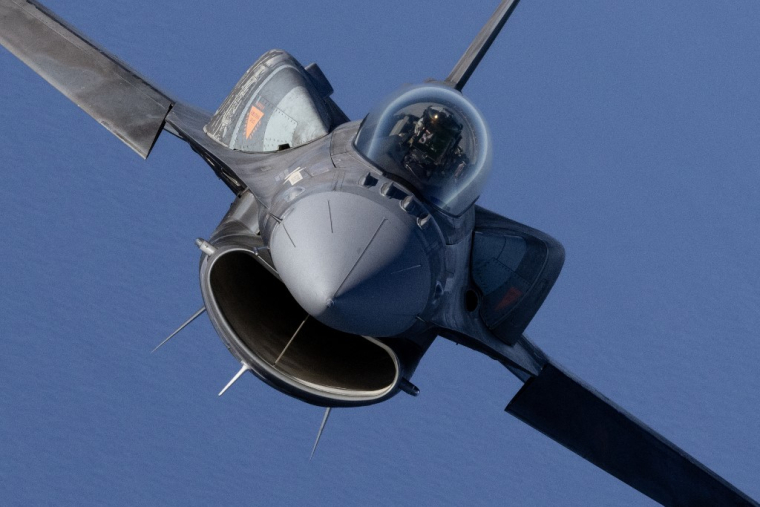
/2026/06/12/6a2bd18d8af1c253720555.jpg "\"Is he a genius in the art of the deal or is he talking nonsense?\"Donald Trump’s strategy against Iran raises questions, according to a geopolitical scientist")
:fill(black)/2026/06/12/6a2bec4b439d4699079284.jpg "Coupe du monde : les stades de la démesure")