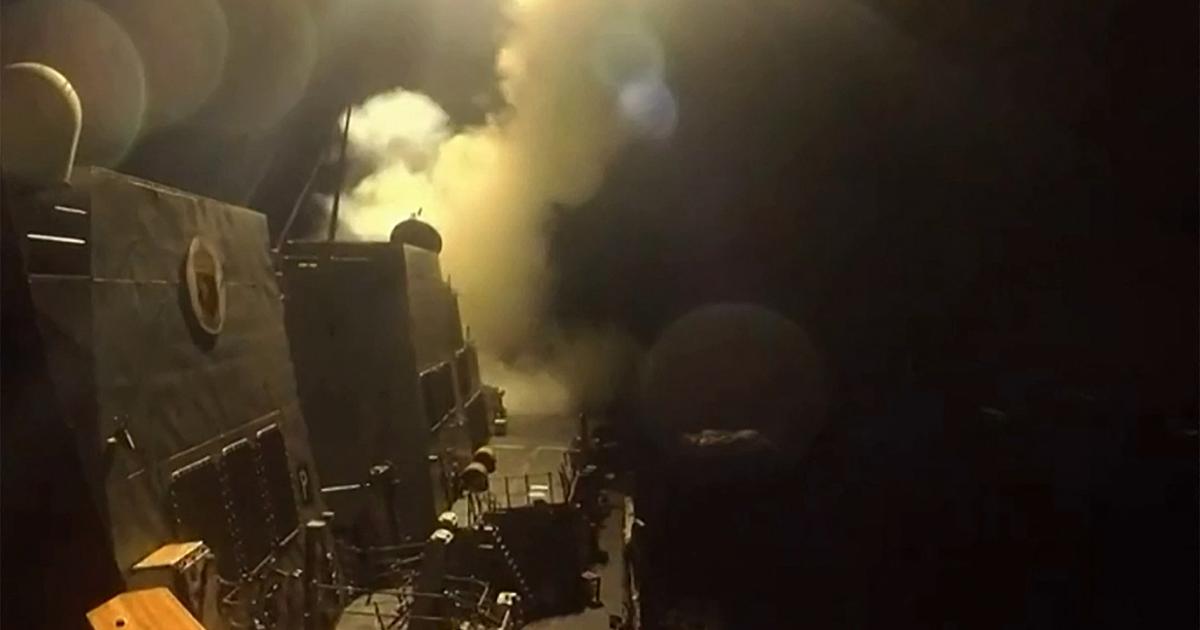
After the failure of talks with Iran, Donald Trump announced the implementation of a naval blockade in the Strait of Hormuz. This blockade is set to begin on Monday, April 13 at 4 p.m. French time. The American command center (CENTCOM) specified the terms of the naval blockade in a statement on its website.
“The blockade will be applied impartially to ships of all nations entering or leaving Iranian ports and coastal areas. CENTCOM forces will not impede the freedom of navigation of ships within the Strait of Hormuz.”
Leaders from around the world, like the Spanish Defense Minister Margarita Robles, have criticized the establishment of this blockade. The Iranian army considers it “illegal” and an “example of piracy.” But is this American naval blockade truly against international law?
In normal circumstances, under maritime law, this blockade would be illegal. However, in the context of the war in Iran and the Middle East, where “international humanitarian law” – also known as “the law of armed conflict,” applies, this is not the case.
“A naval blockade is a classic and lawful instrument of war,” said Leslie-Anne Duvic-Paoli, a law lecturer at King’s College in London and author of a book on the United Nations Convention on the Law of the Sea. “It is an economic pressure tactic, aiming to weaken the opponent by cutting off their commercial and supply flows.” Given that this American naval blockade is part of an armed conflict, it “appears, at this stage, to be in accordance with international law.”
This form of pressure, authorized by international law, is still regulated. “Three conditions are essential,” said the specialist: “not to block access to the ports and coasts of neutral states, allow the passage of humanitarian aid, and apply the blockade impartially.”
This aligns with three articles in the San Remo Manual, a legal text adopted in 1994 that codifies “the international law applicable to armed conflicts at sea.”
Based on the information provided by CENTCOM, these three conditions seem to be met. According to Leslie-Anne Duvic-Paoli, the announced measure would target ships heading to or from Iranian ports without closing the entire Strait of Hormuz. This would prevent affecting Oman, the other coastal country of the strait.