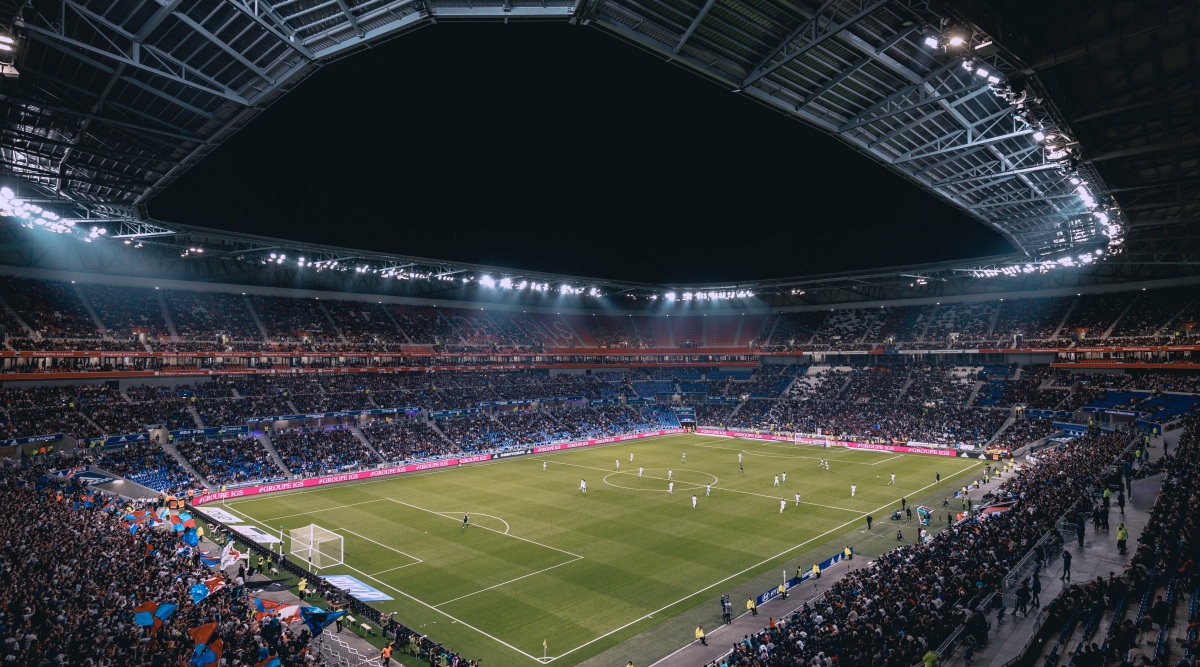
The Professional Football League has unveiled its anti-discrimination initiative, featuring a unique branding during the 31st day of Ligue 1 and the 32nd day of Ligue 2.
Published
Updated
Reading time: 2min

Alicia, Jérémy, Axel… These names will be carried by Ligue 1 and Ligue 2 players during the matches scheduled between April 24 and April 27, instead of the usual player name branding. These are names of victims of homophobia, racism, sexism, or antisemitism. During an unprecedented mobilization weekend, the Professional Football League (LFP) has decided to innovate in tackling all forms of discrimination, not just homophobia.
Starting on Friday, players will swap their usual names for those of discrimination victims. Thirty-four names, selected in collaboration with LFP partner associations including Her Game Too, Foot Ensemble, and Licra, will be displayed on the jerseys. Behind each name lies a real story, stemming from testimonies, to remind that racism, sexism, homophobia, or antisemitism are still a daily reality. Players will choose the name they want to wear but without knowing the story behind that person.
Off the pitch, clubs will promote this campaign on their social networks, highlighting these names accompanied by real stories. Broadcasters like beIN SPORTS and Ligue 1+ are also joining the operation to explain its significance to the general public.
This mobilization is part of a broader action plan launched by the LFP in 2021. Awareness workshops, training, and reporting tools are multiplying: over 150 sessions have already been organized in 45 professional clubs to change mindsets.
In recent seasons, several players had refused to wear the rainbow-themed jersey branding, often for religious reasons, such as Nantes’ Mostafa Mohamed or former Paris Saint-Germain player Idrissa Gana Gueye. The League denies giving in to their demands by removing this branding. “In the workshops addressing all forms of discrimination, we opened doors and had more dialogue. Hence, it was necessary to find a system in line with the field feedback from these workshops,” explains Jérémy Belaygue, LFP’s communication and CSR director. “We will have more impact by mixing discriminations; it’s not about making one discrimination invisible rather than another, but about having a discourse that will be better received by the general public.”
“The commitment of those fighting discrimination is much stronger,” assures Abel Boyi, president of Tous Uniques, Tous Unis. “Players also have wounds regarding the issue of discrimination and feel ignored on this subject, and it is important to have their commitment to have an impact. If we manage to find this intersection where they will engage, we have won.”
“We have pressed the LFP to have rainbow colors on the jerseys for years, and to be honest, we pressed to do the opposite. We never thanked the players for wearing it; we only saw controversies about those who refused to wear it,” regrets Yoann Lemaire, president of the association Foot Ensemble. “The players’ feedback was that they were not given a choice; we had to try something else. And as the players do not know the story behind the name they will wear, some, who are homophobic, will wear the jersey of a victim of homophobia. For those I know, after the match, I will tell them.”