Opening summary
Welcome to our live coverage of the crisis in the Middle East.
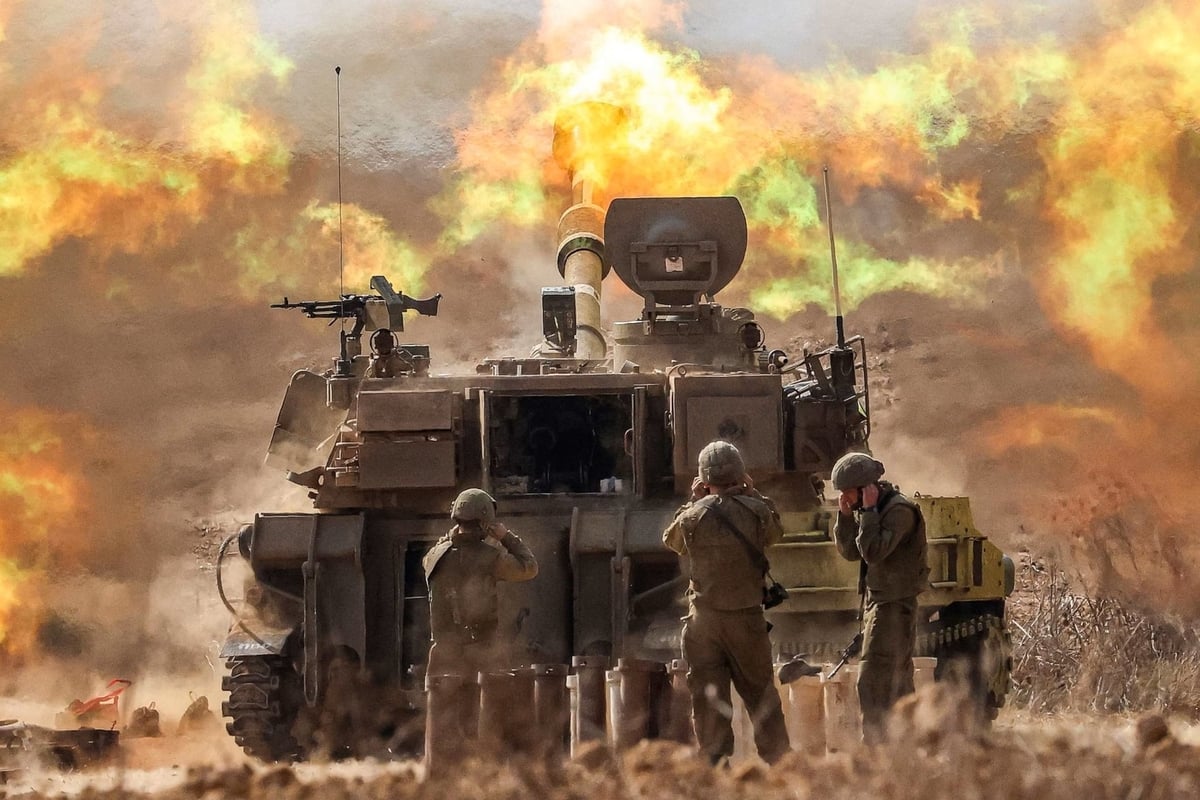
Iran says it has launched a missile attack at an airbase in Jordan hosting US forces, after also targeting Kuwait and Bahrain. The Revolutionary Guards said missiles have targeted the Muwaffaq Salti airbase, which is known to host US F-35 fighter jets and other aircraft.
Neither Jordan nor the US has acknowledged any attack, but if confirmed it would likely be the first time that Iran has targeted Jordan since the start of the ceasefire in April.
The US strikes on Iran followed the downing of a US Apache helicopter over the strait of Hormuz, from which two crew members were rescued in a stable condition. In a post on social media Trump said the US “must†respond to the helicopter crash.
Here is the latest:
-
The US launched multiple waves of strikes on Iran in response to a military helicopter crash off the strait of Hormuz that Donald Trump said Iran had downed. The Associated Press reported that the Apache helicopter that crashed went down after colliding with an Iranian drone, but it was not clear whether the collision was intentional.
-
US strikes were reported across Iran's southern coast, on the strait of Hormuz. After more than three hours of military action, US central command (Centcom) said strikes were “completedâ€, adding that the US remained ready to defend against “unjustified Iranian aggression.â€
-
Soon after, Iran launched retaliatory attacks against the US, according to the countries state media, which said American bases in the region and the US fifth fleet in Bahrain were targeted with drones. Kuwait and Bahrain issued air raid alerts and reported that air defences were active in repelling attacks. Iran also claimed it had targeted a US base in Jordan with long range missiles.
-
Iran's foreign minister, Abbas Araghchi, said no attack would go “unansweredâ€, soon after the US launched strikes on Iran. Posting an image of the strait of Hormuz with the label, “Forever Persian Gulfâ€, Araghchi says that “despite its defeats on the battlefield, the U.S. opted to test our determination.â€
-
Five hours before the airstrikes, Trump had posted on social media that the US “must†respond to the helicopter crash, from which two crew members were rescued in stable condition. Before his social media post, however, Trump appeared to downplay the crash, telling the Wall Street Journal in a phone interview that it “wasn't a big deal†and that “the pilot is fine.â€
-
Iranian state media reported that no air military operations have taken place in the strait of Hormuz over the past 24 hours, according to Reuters.
-
Lebanon's health ministry said 11 people were killed in Israeli airstrikes on the southern city of Tyre on Tuesday. The state-run National News Agency (NNA) had reported the first strike taking place not long before Israel's military issued an evacuation warning for the entire city and surrounding areas ahead of strikes there.
Key events
Iran's foreign minister, Abbas Araghchi, has held calls with his counterparts in Turkey and Saudi Arabia, Iranian media is reporting.
According to state media, Araghchi used the call to condemn the overnight attacks on Iran as a “violation of sovereignty and affirmed Iran's right to respond in legitimate defenseâ€.
If the US genuinely wants a deal it will have to engage with Iranian demands on sanctions relief, says Danny Citrinowicz, the former head of the Iran branch of Israeli military intelligence.
Today's exchange of strikes shows how easily both Iran and the US can slide towards another round of escalation, says Citrinowicz, who is now a nonresident fellow at the Atlantic Council.
He adds that regardless of how much pressure is applied, Iran has shown it will not abandon its current position and reach a deal without “meaningful economic reliefâ€.
double quotation mark If Washington is unwilling to accept that reality, it should recognize the likely alternative: continued confrontations with Iran that could eventually spiral beyond anyone's control and lead to military conflict under less favorable conditions.
double quotation mark Even a limited military campaign designed to weaken Iran would not fundamentally alter Tehran's negotiating position. It has not happened in the past, and there is little reason to believe it would happen now. Iran emerges from the latest exchange of blows convinced that it can absorb pressure and respond to attacks.â€
Allow content provided by a third party?
This article includes content hosted on platform.x.com. We ask for your permission before anything is loaded, as the provider may be using cookies and other technologies. To view this content, click ‘Allow and continue’.
Iran's foreign ministry has warned that its neighbours in the Gulf have a “legal and moral responsibility†to prevent American and Israeli strikes.
In a statement released hours after the exchange of fire between the US and Iran, the foreign ministry said there is a:
double quotation mark Legal and moral responsibility of all countries in the region (especially those located along the southern shores of the Persian Gulf) to prevent the US military and Israel from using their territory or facilities to plan, organise, execute, or support hostile actions against Iran.
Donald Trump has addressed the most recent exchange of strikes between the US and Iran – by posting a 26-year-old clip from the NBC show The West Wing.
Replying to the US military's announcement of “self-defense strikes†on Iran, Trump posted a 1.33 minute clip from the programme, which sees the fictional president, Jed Bartlet, and his aides debate the approach to take after a US military plane is shot down over Syria.
“What is the virtue of a proportional response?†Bartlet, portrayed by Martin Sheen, asks his chief of staff and military advisers.
After becoming angry at their answers he demands that they engage in a “disproportional responseâ€.
double quotation mark Let the word ring forth from this time and this place, gentlemen – you kill an American, any American, we don't come back with a proportional response. We come back with total disaster.â€
It is not entirely clear what message Trump is trying to convey – but he is perhaps unaware of how the episode ends. After the military presents Bartlet with a plan that would lead to hundreds of civilian casualties, the fictional president reluctantly picks the initial, proportional response.
Despite its final episode airing more than 20 years ago, The West Wing has remained a cultural touchstone to many Americans, with some calling it a “bittersweet comfort watch†in the age of Trump.
In 2016, as Trump secured his grip on the Republican party and launched his campaign for the presidency, pop-culture journalist Brian Moylan wrote in the Guardian: “The West Wing shows us a world where the political system works.â€
double quotation mark It reminds us of a time, not too long ago, when people in political office took their jobs very seriously and wanted to actually govern this country rather than settle scores and appeal to their respective bases.
You can watch the clip that Trump posted here:
The Wall Street Journal has reported that Donald Trump was not convinced of the need to retaliate against Iran after the Apache Helicopter went down earlier on Tuesday. He spent much of the day playing down the incident, telling reporters that it wasn't a big deal.
But according to the WSJ, his mind was changed after a briefing from defense secretary, Pete Hegseth, and chairman of the joint chiefs of staff, Dan Caine.
The Associated Press has reported that the Apache helicopter that crashed went down after colliding with an Iranian drone. It is not clear whether the collision was intentional, but US officials reportedly told the president that the attack merited a response nonetheless.
Trump would then go on to say that Iran shot down the helicopter, in a post on Truth Social, and declared that the US must “respond to this attack.†Hours later the US began the strikes on Iran.
The precarious US-Iran ceasefire explained
Wednesday's strikes by the US on Iran are just the latest in a series of ceasefire breaches that have escalated considerably in the last two weeks.
After weeks of conflict, the US and Iran agreed to a ceasefire on 8 April and entered into protracted negotiations to reopen the strait of Hormuz and resolve the issue of Iran's nuclear program.
Since then the US and Iran have exchanged strikes on at least four occasions, but in every instance both sides have characterised their actions as “measured†and “limitedâ€, and stressed the importance of maintaining the ceasefire.
The ceasefire faced its biggest test on Sunday, when Iran launched missiles at Israel in response to Israeli strikes on Beirut's southern suburbs. The Israeli military launched airstrikes on Iran in retaliation; the first exchange of fire between the two countries since the ceasefire was reached.
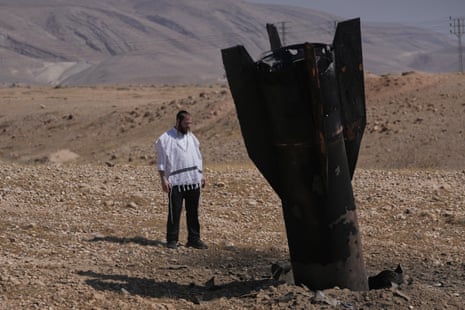
Fears of a return to a full-scale regional war in the Middle East eased on Monday, with Israel and Iran saying they had halted attacks on each other after an appeal from Donald Trump to “immediately stop shootingâ€.
The breaches of the ceasefire fly in the face of Trump's continued claims that a longterm deal with Iran is close. The US president is reportedly very close to agreeing to a series of Iranian demands that would allow the strait to reopen to traffic, and begin the process of a new round of nuclear negotiations. However Trump has for weeks promised that a deal is close, but failed to follow through on those promises.
US House speaker Mike Johnson is among the many senior American officials who have been playing down the significance of the strikes.
He called the strikes on Iran “targetedâ€, “proportional†and “defensive in nature.â€
Johnson said he spent several hours earlier in the situation room with Trump, the vice-president, JD Vance, secretary of state, Marco Rubio and defense secretary, Pete Hegseth, discussing the Iran war and other matters.

“We lament that has become necessary,†he said.
But he said after Iran struck US assets and personnel in the region, “We can't allow that.â€
Nearly all the missiles and drones launched by Iran over the last few hours were intercepted, a US officials has told the Reuters news agency.
The US official said that the military was not aware of any reports of harm to US personnel, or known damage to US locations at this time.
According to the official, the US struck nearly 20 targets in Iran on Wednesday morning.
We'll bring you more on this when we have it.
Jordan says Iranian missiles shot down before they reached their target
Jordanian armed forces said on Wednesday they intercepted and shot down five missiles launched from Iran toward the al-Azraq area in Jordan.
The military said that debris from the interception operation fell on Jordanian territory but caused no injuries or material damage.
Earlier Iran's Revolutionary Guards said they had launched a missile attack at an airbase in Jordan hosting US forces, after also targeting Kuwait and Bahrain. The missiles targeted the Muwaffaq Salti airbase, which is known to host US F-35 fighter jets and other aircraft.
As the US launched several waves of strikes on Iran, Asian share markets fell and oil prices surged.
Escalating tensions in the Middle East have unsettled markets, dimming hopes for an end to the months-long war that has pushed commodities higher and stoked inflation worries.
Japan's Nikkei fell 0.9% while the tech-heavy South Korean KOSPI slumped 2%.
Oil prices climbed about 1% in early trade, moving away from a seven-week low touched in the previous session. Brent futures rose 0.9% to $92.29 a barrel, while US West Texas Intermediate (WTI) crude climbed 0.8% to $88.97.

“Oil holding around $90 despite fresh Iran headlines suggests markets are not pricing a sustained supply disruption. That leaves room for a bigger repricing if energy infrastructure, shipping routes or U.S. involvement escalate,†said Charu Chanana, chief investment strategist at Saxo in Singapore.
US investor will be focused on inflation data, which is set to be released later on Wednesday. The report – covering the last 12 months through to May – will gauge the impact of the war, with a Reuters survey of economists predicting that inflation likely increased 4.2% in the perdiod.
Opening summary
Welcome to our live coverage of the crisis in the Middle East.
Iran says it has launched a missile attack at an airbase in Jordan hosting US forces, after also targeting Kuwait and Bahrain. The Revolutionary Guards said missiles have targeted the Muwaffaq Salti airbase, which is known to host US F-35 fighter jets and other aircraft.
Neither Jordan nor the US has acknowledged any attack, but if confirmed it would likely be the first time that Iran has targeted Jordan since the start of the ceasefire in April.
The US strikes on Iran followed the downing of a US Apache helicopter over the strait of Hormuz, from which two crew members were rescued in a stable condition. In a post on social media Trump said the US “must†respond to the helicopter crash.
Here is the latest:
-
The US launched multiple waves of strikes on Iran in response to a military helicopter crash off the strait of Hormuz that Donald Trump said Iran had downed. The Associated Press reported that the Apache helicopter that crashed went down after colliding with an Iranian drone, but it was not clear whether the collision was intentional.
-
US strikes were reported across Iran's southern coast, on the strait of Hormuz. After more than three hours of military action, US central command (Centcom) said strikes were “completedâ€, adding that the US remained ready to defend against “unjustified Iranian aggression.â€
-
Soon after, Iran launched retaliatory attacks against the US, according to the countries state media, which said American bases in the region and the US fifth fleet in Bahrain were targeted with drones. Kuwait and Bahrain issued air raid alerts and reported that air defences were active in repelling attacks. Iran also claimed it had targeted a US base in Jordan with long range missiles.
-
Iran's foreign minister, Abbas Araghchi, said no attack would go “unansweredâ€, soon after the US launched strikes on Iran. Posting an image of the strait of Hormuz with the label, “Forever Persian Gulfâ€, Araghchi says that “despite its defeats on the battlefield, the U.S. opted to test our determination.â€
-
Five hours before the airstrikes, Trump had posted on social media that the US “must†respond to the helicopter crash, from which two crew members were rescued in stable condition. Before his social media post, however, Trump appeared to downplay the crash, telling the Wall Street Journal in a phone interview that it “wasn't a big deal†and that “the pilot is fine.â€
-
Iranian state media reported that no air military operations have taken place in the strait of Hormuz over the past 24 hours, according to Reuters.
-
Lebanon's health ministry said 11 people were killed in Israeli airstrikes on the southern city of Tyre on Tuesday. The state-run National News Agency (NNA) had reported the first strike taking place not long before Israel's military issued an evacuation warning for the entire city and surrounding areas ahead of strikes there.