American Vice President JD Vance said he could go to Switzerland “this weekend” to begin these discussions with Iranian officials. “But that could change because it is not easy to get answers from a country like Iran,” he said at a press conference.
After the framework agreement which put an end to the conflict triggered on February 28 by the United States and Israel, which left thousands dead, mainly in Iran and Lebanon, and shook up the world economy, these discussions must address the Iranian nuclear program.
The protocol discusses a mechanism for processing stocks of highly enriched uranium “using, at a minimum, an on-site dilution method under the supervision of the IAEA (International Atomic Energy Agency)”, which Washington presents as a “major victory”.
While awaiting possible progress on this thorny issue, maritime traffic is resuming in the Strait of Hormuz, blocked by Iran since the start of the war. American forces “let more than a dozen boats pass,” JD Vance revealed Thursday. “We respect our commitments.”
“Look at the stock market!”
“We still have the feeling that today the Americans, finally Trump, only want one thing, and that is the reopening of the Strait of Hormuz and that the other issues that had been put forward to justify this war are no longer relevant at all,” analyzes Agnès Levallois, President of the Middle East Institute for Mediterranean Research and Studies.
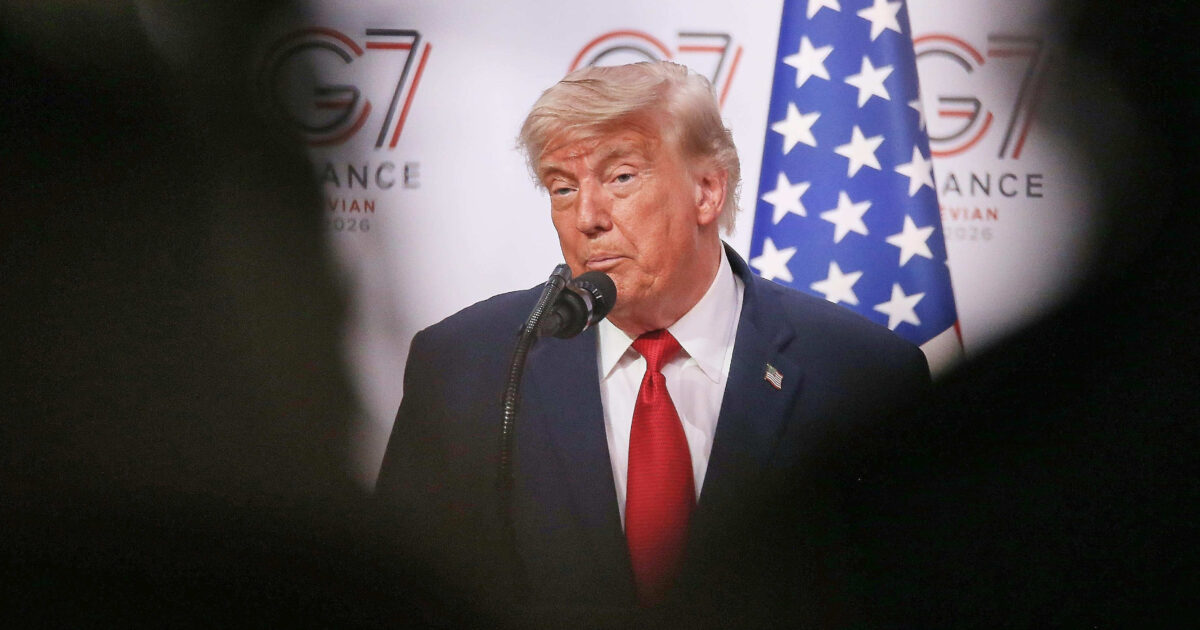
The American president welcomed the “falling oil prices”. “It’s a success,” he wrote on his Truth Social network, a day after signing the memorandum of understanding under the gold of the Palace of Versailles, in France. “Look at the stock market!” In New York, the Nasdaq gained 1.02% at the end of the afternoon and the Dow Jones rose 0.30%, while in Europe, Paris closed the day gaining 0.44%. The price of a barrel of Brent, oil from the North Sea, has fallen to around 77 dollars, compared to 60 to 70 dollars before the war.
But the American press is very harsh. Even Fox News, the White House tenant’s favorite television station, gives pride of place to those who “claim that the framework offers Iran enormous financial advantages, without requiring the dismantling of its nuclear infrastructure.”
The United States undertakes, in the event of a final agreement, to facilitate “with their regional partners”, particularly from the Gulf, the release of a fund of 300 billion dollars for the reconstruction and economic development of Iran, without this implying any participation American financial institution.
“Iran puissant”
On the Iranian side, the memorandum of understanding was signed by President Massoud Pezeshkian who welcomed a “historic” document emanating from a “powerful Iran”. It “recognizes the failure of the United States,” commented the main Iranian negotiator, Mohammad Bagher Ghalibaf.
Tehran can indeed congratulate itself on having obtained the promise of an unblocking of Iranian assets frozen abroad and the suspension of American sanctions on the sale of Iranian oil, as soon as the protocol is implemented.
But residents of the Iranian capital are cautious about the deal. “I very much doubt that it will be durable,” confides Mina, a 54-year-old psychologist. “Perhaps after 60 days (of negotiating a final text), hostilities will resume. The United States demands that Iran give up its uranium and leave Lebanon alone, which the Islamic Republic refuses. So I am almost certain that this agreement will not last,” she breathes.
Despite the appeasement, “the fight is not over,” Israeli Prime Minister Benjamin Netanyahu declared this Thursday, “other challenges await us.” He called for preserving the “vital relationship” between Israel and the United States, while the agreement has been the subject of strong criticism in Israel including within his government.
“Israel’s problem is not Donald Trump, and those in Israel who think that the president of the United States is their biggest problem need to open their eyes,” replied JD Vance
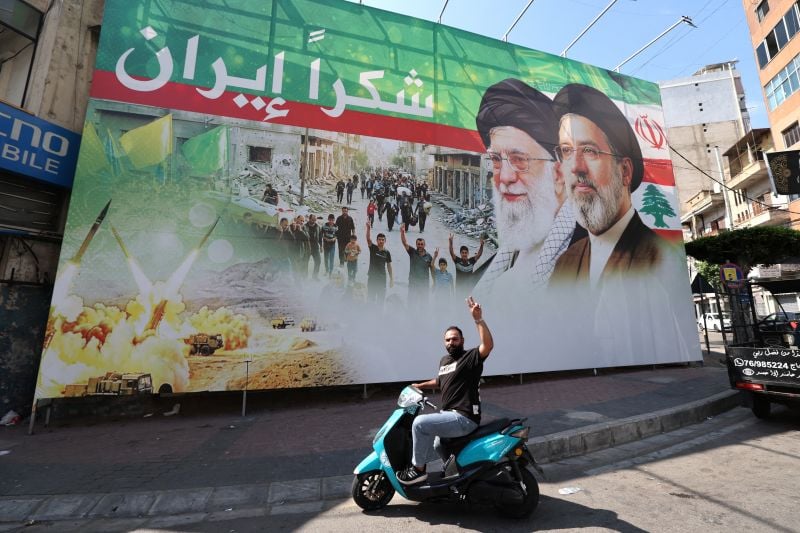
In Lebanon, Israel has continued its strikes against pro-Iranian Hezbollah since Monday’s announcement of the American-Iranian agreement, killing eight people, including three on Thursday. The leader of Hezbollah, Naïm Kassem, also sees in this agreement a “great victory” for Iran, which he thanked for having insisted that the Lebanese front be part of it. He called for “taking advantage” of this text to “expel Israel” from Lebanese territory, urging Beirut to stop direct negotiations with Israel, initiated since April under the aegis of Washington.