Following resolution 59-NQ/TW of January 24, 2025 relating to international integration in the new context, resolution 06-NQ/TW of May 19, 2026, relating to the implementation of the foreign policy guidelines of the XIV National Party Congress, reaffirms Vietnam’s strategic vision in this new era of development. This resolution defines the need to develop external relations commensurate with the country’s historical, cultural and national status, while encouraging a more proactive approach to integration, economic diplomacy and protection of national interests.
On this subject, a journalist from the Industry and Trade newspaper spoke with Mr. Pham Quang Vinh, former Deputy Minister of Foreign Affairs.
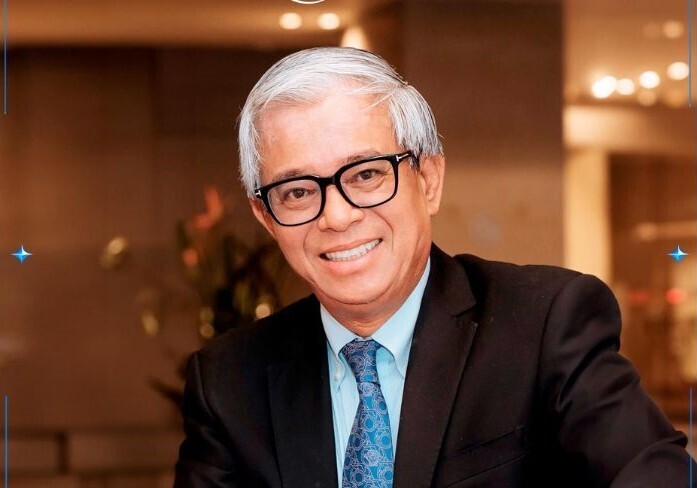
Mr. Pham Quang Vinh – former Deputy Minister of Foreign Affairs.
From integration to creating the rules of the game.
Sir, Resolution No. 06-NQ/TW was adopted to implement the foreign policy guidelines of the 14th Party Congress. What, in your opinion, is the strategic significance of this resolution in a rapidly changing world marked by intense competition strategic?
M. Pham Quang Vinh : Vietnam’s foreign policy in the new era must be part of the overall national development strategy, with a view to achieving the objectives set for 2030 and 2045. All foreign policy and international integration activities must directly serve the objective of rapid and sustainable development and strengthening the country’s position in this new era.
Consequently, foreign policy pursues two major objectives. First, consolidate, maintain and develop a climate of peace, stability and cooperation in the region and in the world, thus creating favorable conditions for national development. Second, actively support Vietnamese development progress in a direction that is more qualitative, more sustainable and more in line with national interests.
Vietnam has come a long way in international integration, moving from simply participating in joint initiatives and collaborating with other countries to a situation where it has the capabilities and position to jointly build the foundations for successful integration. This involves creating an environment of peace, stability and cooperative development, increasing opportunities for cooperation and participating in the development of common rules consistent with the interests of Vietnam and those of the international community.
In the economic field, the new constructive spirit requires that external relations broaden the scope of development, create new markets and attract investments more effectively. Vietnam currently needs sustainable and quality capital flows, linked to ecological transition, innovation and technology.
In an unstable global context, economic integration must help strengthen sustainable supply chains and improve the capacity to cope with the vagaries of international trade. In accordance with resolutions 59 and 06, foreign policy must be more proactive in order to create opportunities and new development spaces for the country.
The resolution calls for a shift from “market integration” to “market creation”, from “participation in the rules of the game” to “contribution to the development of the rules of the game”. Drawing on his years of experience in multilateral diplomacy and relations with major powers, what does he suggest to Vietnam to avoid being caught off guard by the new rules of the game regarding digital commerce, environmental standards, data, AI and supply chains?
M. Pham Quang Vinh : There are two aspects to consider. First, inheritance and continuity. It’s not that we haven’t created markets or established rules of the game in the past, but previously, given Vietnam’s limited capabilities and position, we were not able to take the initiative in a way that was more favorable to Vietnam and international cooperation. From now on, Vietnam must be more proactive, stronger and aim for better quality.
We must actively create and develop new markets, both domestic and international. It is important to emphasize that it is about creating new markets, not simply finding them. We have already explored the Asia-Pacific, Europe and North America markets. Recently, Vietnam has established itself in Latin America, the Middle East and parts of Africa. These areas require further development.
More importantly, in line with the new directions, and in addition to horizontal expansion, we need to create higher value-added segments in the supply chain so that Vietnam can participate more actively. We are currently implementing 17 free trade agreements with the world’s major economies, representing 90% of global GDP, providing an essential foundation.
The challenge is to enable Vietnam to participate in the high-end segment, offering higher quality products and taking full advantage of its competitive strengths to penetrate demanding markets such as Europe, North America or developed Asian countries. Vietnam still has a long way to go and cannot settle for tax breaks. It is clear that to establish itself more deeply in these markets, it must focus on quality, sustainability and global competitiveness, and not just on prices.
You may like
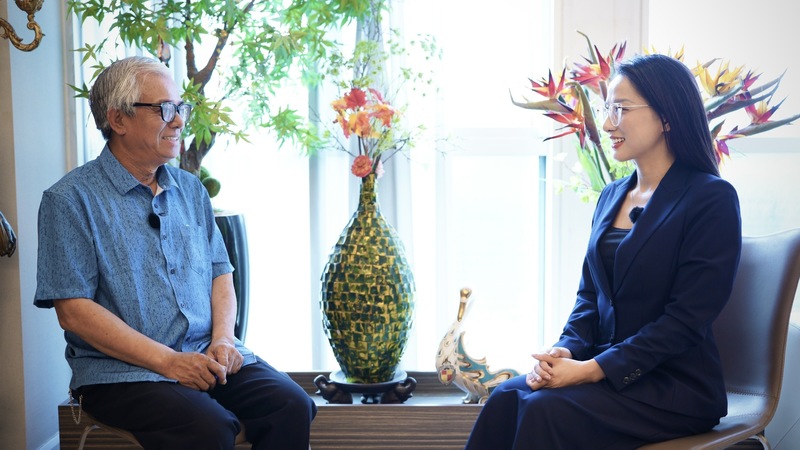
Ambassador Pham Quang Vinh, former Deputy Minister of Foreign Affairs, answers questions from a journalist from the daily Industry and Commerce. Photo: Thai Manh
Secondly, the internal market is of paramount importance. In the future, it will need to attract higher quality foreign investment, to build an ecosystem of interconnected supply chains and logistics services. Foreign investors can drive various manufacturing, value-added and industrial sectors. However, the strength of the national economic fabric must be fully integrated into this ecosystem. Vietnamese companies must participate in the provision of services, goods and favorable conditions so that the products produced bear both the name of the foreign company and the brand of Vietnam when exported.
On the domestic market, another issue is that strengthening business capacities must be accompanied by an increase in the purchasing power of Vietnamese society. This will significantly increase development opportunities, even within a country of 100 million inhabitants. If 100 million people consume at a very low level, the market will remain restricted; on the other hand, if consumption increases sharply, the size of the market will multiply accordingly.
Therefore, the main issue is for Vietnam to proactively exploit its domestic and international resources in a more sustainable and higher quality sector. At the same time, the reform and integration process must be accompanied by a strengthening of endogenous capacities and an improvement in the country’s productivity.
Currently, we are focusing our efforts on new resolutions that create new growth engines in Vietnam itself. This allows Vietnam to integrate more deeply into the international community while strengthening its integration capacity in this new phase of development.
Strengthen the economy
Energy security, food security, supply chain security and technological security are increasingly linked to foreign policy. In your opinion, how can we design an economic diplomacy that simultaneously serves development and strategic autonomy?
M. Pham Quang Vinh : Current foreign policy must be consistent with the country’s development objectives. At the same time, it must meet the requirements of internal economic reforms in Vietnam. Being part of this continuity implies knowing the needs of the country and understanding the development imperatives for 2030 and 2045. Therefore, foreign policy must seek opportunities for cooperation abroad, explore potential resources internationally to respond to national needs and develop concrete and substantial cooperation projects.
In the speech of General Secretary and President To Lam (during the National Conference on the Study, Understanding and Implementation of Politburo Resolution No. 06-NQ/TW on the Implementation of the Foreign Policy of the 14th Party Congress, June 11 – PV), a very relevant point was raised: we must take advantage of the advantages we have in our political relations with other countries to transform them into mutually beneficial and effective cooperation projects.
Vietnam currently maintains partnerships with more than 40 countries, including 15 global strategic partners. If these policy frameworks translate into concrete cooperation projects, they will create considerable value. More importantly, these cooperation projects must directly contribute to Vietnam’s major economic advances, at the dawn of a new era, such as innovation, digital transformation and ecological transition. If this is the case, the effectiveness of the country’s external relations will reach a higher level.
Therefore, the capacity of external relations in the coming period must be manifested in their ability to link national development needs with resources, markets, technologies and cooperation opportunities abroad. External relations should not be limited to the expansion of relations, but also contribute to obtaining concrete results in terms of development.
For foreign policy to achieve this objective, it cannot rest solely on the responsibility of the diplomatic sector; global coordination between ministries, agencies and national political, economic and administrative authorities is essential. These actors must cooperate closely to ensure smooth communication between domestic and external affairs. It is only under this condition that foreign policy can truly and effectively respond to the country’s new development needs.
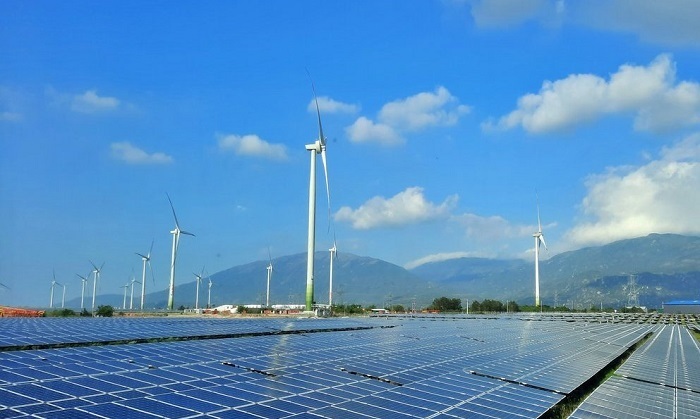
Ensuring energy security for technology and development – Illustration
Vietnam has the opportunity to further integrate into regional and global supply chains. In your opinion, what needs to be done for Vietnam to go beyond its role as a simple destination for capital flows and gradually become a link with high added value in the sectors of industry, logistics, semiconductors and green technologies?
M. Pham Quang Vinh : It is essential to understand that the current evolution of supply chains and investment flows is closely linked to two characteristics. Historically, investments have tended to flow towards the most profitable and favorable regions. Investors will favor sites offering better production and exploitation potential.
Source : https://congthuong.vn/ngoai-giao-kinh-te-khoi-thong-nguon-luc-kien-tao-khong-gian-phat-trien-moi-461221.html