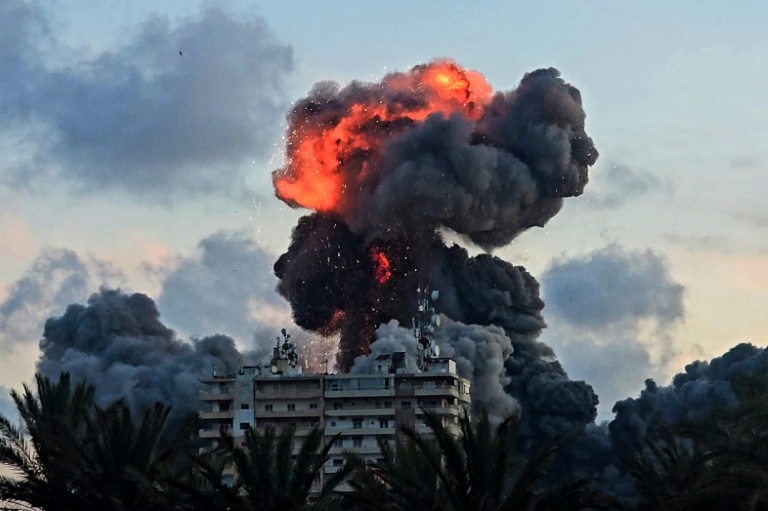
The world has settled into a high level of violence with, in 2025, the greatest number of state conflicts since the end of the Second World War and an explosion of attacks targeting civilians, according to a Norwegian study published Tuesday.
“Unfortunately, there is not much positive that I can extract from all this,” said Siri Aas Rustad, a researcher at the Peace Research Institute Oslo (PRIO), presenting the annual Conflict Trends report.
“Usually, I always manage to find something positive, but this year, the figures are shocking,” she told a handful of media outlets, including AFP.
In 2025, 65 conflicts involving at least one State were recorded in the world, a new historic high since 1946.
The number of interstate conflicts has also doubled in one year to eight, again a record in 80 years.
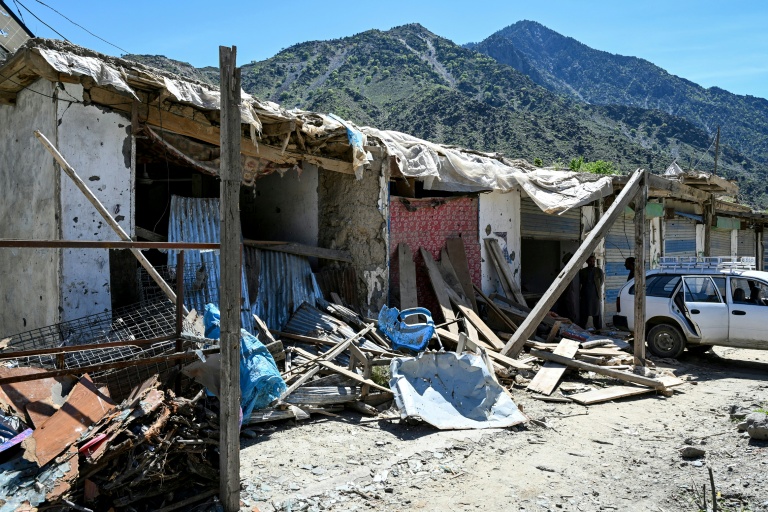
Among them were reignited border tensions between India and Pakistan, Afghanistan and Pakistan, as well as Cambodia and Thailand, the Russian invasion of Ukraine, the Israeli military operation in Syria, around the occupied Golan Heights, after the fall of the Assad regime, as well as several conflicts linked to regional tensions in the Middle East.
The year 2025 was the third deadliest since the end of the Cold War, with around 245,000 deaths directly linked to fighting or political violence, including nearly 76,500 attributed to attacks directly targeting civilians, compared to 14,200 in 2024.
The sharp increase in the latter figure is due to the conflict between the army and paramilitaries in Sudan, where it is estimated that the siege and massacres perpetrated in El-Facher (Darfur) alone left some 60,000 dead.
Since the end of the Cold War, only 2021 and 1994 have seen more bloodshed due to, respectively, the war in Tigray and the genocide in Rwanda.
Israel and the United States singled out
“What has happened over the last five or six years is that we have several major conflicts going on at the same time, and they seem to be taking turns. There is no respite in the world,” Rustad said.
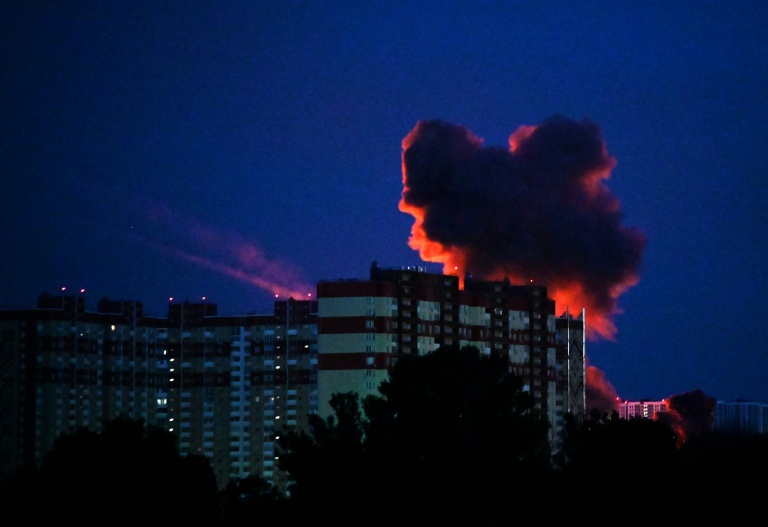
“And this is what is different from before: this high and continuous level of intensity of conflicts on a global scale,” she said, recalling that the planet had experienced several years without any conflict between States during the decade 2000-2010.
The study is based on figures compiled by the Uppsala Conflict Data Program (UCDP), attached to Uppsala University. It distinguishes three main types of organized violence: conflicts involving at least one state, non-state conflicts and unilateral violence against civilians.
Israel “is clearly one of the most aggressive countries in the world at the moment,” Rustad said, noting its involvement in conflicts of different types in Gaza, Syria, Lebanon, against Iran and against the Houthi rebels.
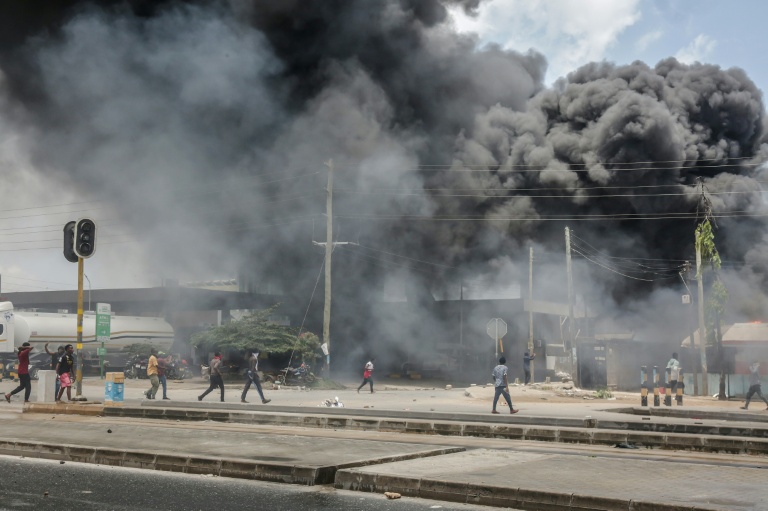
Certain deadly violence is sometimes largely ignored, as in Haiti (criminal gangs) or Tanzania (post-election violence).
“There are clearly more tensions in the world. It is safe to say that the United States has a lot to do with it. They are not just attacking and increasing violence, there are also the trade barriers that they are putting in place” since Donald Trump’s return to power, the researcher also said.
“We are putting a brake on collaboration. The Security Council is not functioning at the moment. We are moving towards a much more polarized world,” she added.
Africa remained the region most affected by conflicts of the first type (29). Followed by Asia, the Middle East, the Americas and Europe.
 â–