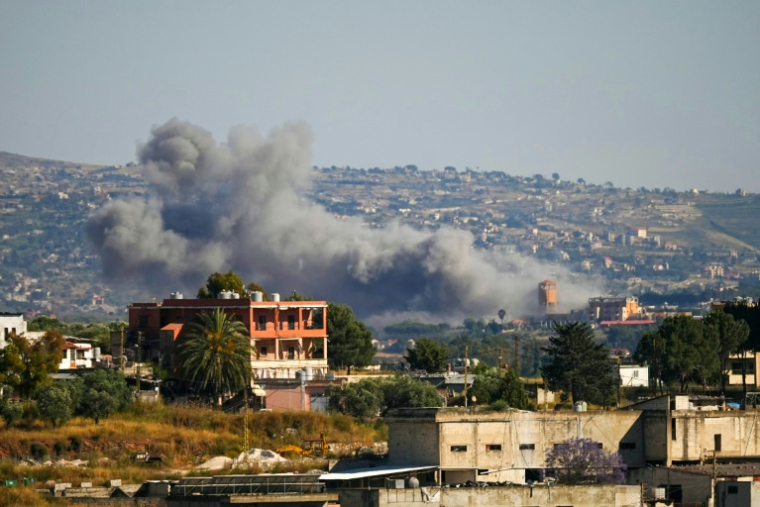
Smoke from an Israeli airstrike on the village of Zawtar al-Sharkiyeh on June 4, 2026 in southern Lebanon (AFP / Abbas Fakih)
Iran’s supreme leader, Mojtaba Khamenei, assured Thursday that the United States and Israel had suffered a “stinging setback” in the war against his country, at a time when peace negotiations between Washington and Tehran are stumbling in particular over the question of Lebanon.
His message was read in public on the occasion of the commemoration in Tehran of the death 37 years ago of the founder of the Islamic Republic, Rouhollah Khomeini, the day after a demonstration of optimism by Donald Trump, who considered an agreement with Iran possible this weekend, despite the resumption of attacks in the Gulf.
“Their main tool” to weaken Iran “is to sow the seeds of doubt, despair, fear, mistrust and division,” writes Mojtaba Khamenei, adding that “the enemy” has suffered a “bitter setback on the battlefield.”
“Everyone must, through (…) the preservation of unity and cohesion, mutual trust and the refusal to relay the enemy’s propaganda, neutralize his sinister plot”, adds the supreme guide, who succeeded his father, Ali Khamenei, killed on February 28 on the first day of the offensive Israeli-American, with other senior officials.
Since his appointment at the beginning of March, he has never appeared in public, with only written statements being attributed to him.
According to images from state television, in the crowd gathered at Ayatollah Khomeini’s mausoleum, faithful waved the flag of the Islamic Republic or of Lebanese Hezbollah, supported by Tehran and at war against Israel, their common enemy.
– “Arrêter la mascarade” –
“I am told that the negotiations are going very well”, their conclusion “could be this weekend”, said the American president on Wednesday, without excluding that they might fail.
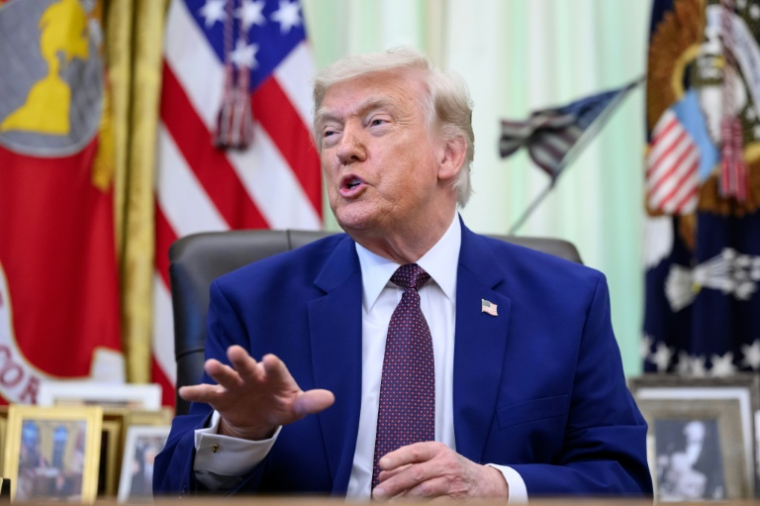
American President Donald Trump in the Oval Office of the White House, June 3, 2026 in Washington (AFP / Mandel NGAN)
In a hurry to find a solution, Donald Trump has hinted several times at a close agreement, without tangible results, while on the ground, new clashes between Iran and the United States in the Gulf are weakening the ceasefire which has come into force since April 8.
Confirming the discontent aroused in the United States by a conflict which is driving up energy prices, the House of Representatives passed a resolution – of symbolic significance due to the right of presidential veto – ordering a withdrawal of American troops engaged in the conflict.
Mr. Trump blasted an “unpatriotic” vote. “They know well where the negotiations are,” he wrote on his Truth Social network.
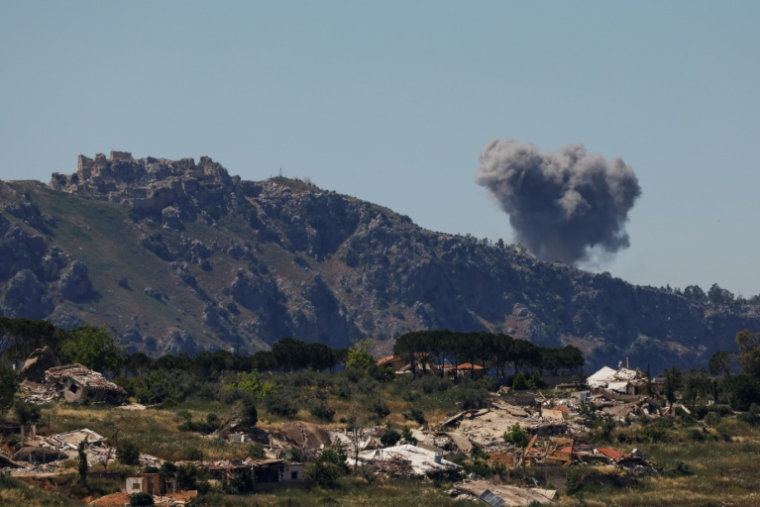
Smoke from an Israeli airstrike, near Beaufort Castle, in southern Lebanon, seen from a position on the other side of the border, in Upper Galilee, in northern Israel, June 4, 2026 (AFP / Jalaa MAREY )
One of the sticking points in concluding an agreement is the question of Lebanon, where Israel and Hezbollah clash.
Tehran warned on Wednesday of the risk of “large-scale resumption of war” in the event of an Israeli attack on Beirut.
Hezbollah leader Naim Qassem said Thursday that his movement was demanding a “global ceasefire” in Lebanon and Israeli withdrawal from the south of the country.
He called on the Lebanese authorities to “stop the charade” of negotiations with Israel the day after the announcement of an agreement in Washington, at the end of a fourth session of discussions, which provides for a ceasefire conditional on a “complete stop” Hezbollah fire.
The Shiite movement informed the Lebanese authorities of its refusal of this agreement, a Hezbollah official who requested anonymity told AFP.
In a message broadcast by his party channel, Naïm Qassem warned that there would be no security for northern Israel without security for the villages of southern Lebanon, where Israel has been carrying out daily strikes for weeks, despite a ceasefire in force since April 17.
– Attacks on Kuwait –
Israel announced that it reserved the right to strike Beirut in the event of an attack on its soil, and affirmed that the agreement provided “at this stage” for the maintenance of its army in the border area of southern Lebanon.
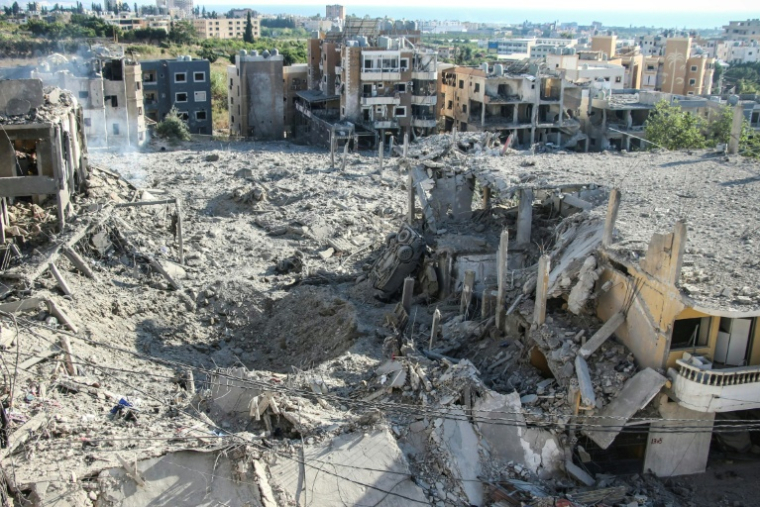
Buildings destroyed after Israeli airstrikes in Burj al-Shamali, near Tyre, southern Lebanon, June 2, 2026 (AFP / Kawnat HAJU)
The Israeli army reported in the morning an “infiltration of hostile apparatus” in the north of the country, and Hezbollah claimed night attacks against Israeli positions in Lebanon.
Unlike Tehran, Washington wants, according to Donald Trump, to “separate” the Lebanese case from discussions with Iran.
Another point of disagreement: the fate of Iran’s highly enriched uranium, which the United States and Israel accuse of wanting to acquire atomic weapons, which Tehran refutes.
Hostilities have resumed in recent days, particularly around the Strait of Hormuz, a strategic route for hydrocarbons blocked by Tehran, causing oil prices to rise again.
Kuwait accused Iran on Wednesday of a deadly attack (one dead and 63 injured) against its airport, saying it had been targeted in total by 13 ballistic missiles and 17 Iranian drones.
Iran denied attacking the airport, saying it targeted an air base in Kuwait, as well as a US naval base in Bahrain in response to US strikes on Qeshm Island, and an Iranian oil tanker.


/2026/06/12/6a2c14dee87b9839390389.jpg "On pourrait être morts : comment la guerre en Iran a frappé la préparation de léquipe nationale avant la Coupe du monde")
/2026/06/15/6a2fb1f6ad462276479705.jpg "\"Cave\" of the Pont Neuf damaged: JR confident of an upcoming reopening")