
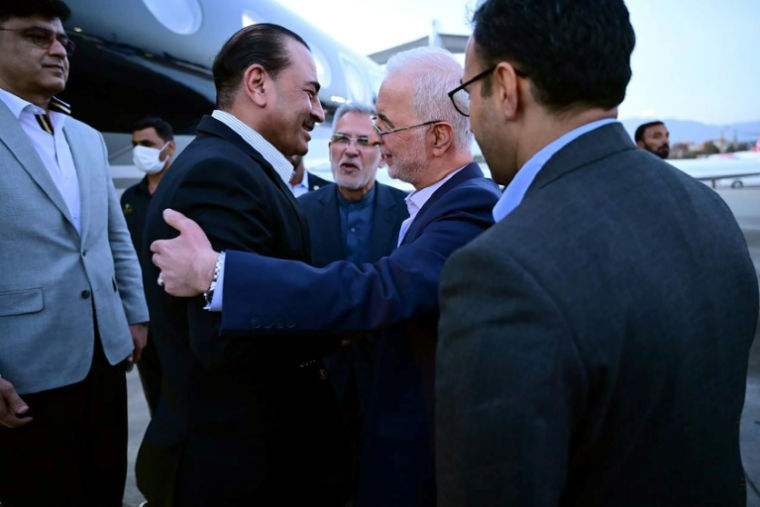
Photo released by the Pakistani army showing Pakistani army chief Asim Munir (l) greeted by Iranian Interior Minister Eskandar Momeni upon his arrival in Tehran, May 22, 2026 in Iran (Inter-Services Public Relations / HANDOUT)
The head of the Pakistani army, a mediating country in the conflict between the United States and Iran, went to Tehran on Friday to try to put an end to the war which is seriously disrupting the world economy.
“Marshal Asim Munir has arrived in Tehran as part of ongoing mediation efforts,” the Pakistani army announced in a statement late in the day.
Iran, however, dampened hopes of an imminent agreement.
“This is the continuation of the diplomatic process. We cannot necessarily say that this means that we have reached a turning point or a decisive situation,” warned the spokesperson for the Iranian Ministry of Foreign Affairs, Esmaël Baghaï, on state television.
According to him, the differences remain “deep” and “important questions” pending: the end of the war on all fronts, including in Lebanon, the situation in the Strait of Hormuz and the American blockade of Iranian ports, he listed, this time quoted by the Isna news agency.
At this stage, the nuclear aspect, where again the gap between the two parties is large, is not addressed, he insisted.
– Unpopular war –
Since the entry into force of a fragile truce on April 8 after more than a month of conflict, only one unsuccessful negotiation session was held on April 11 in Islamabad.
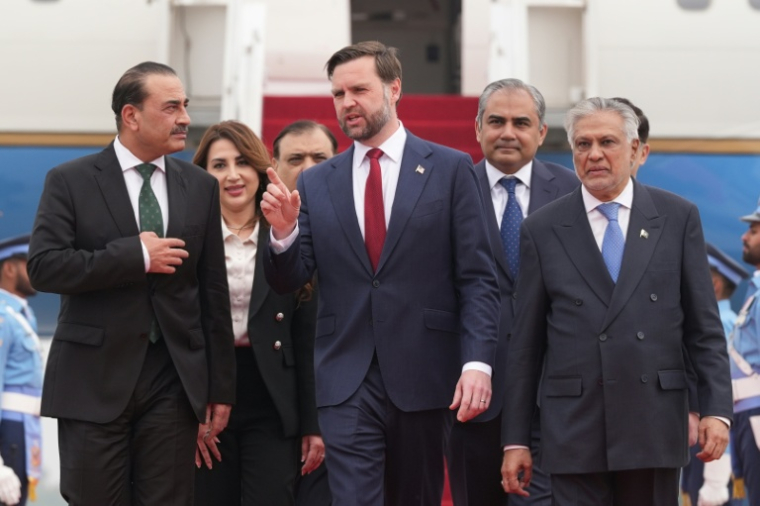
US Vice President JD Vance (c), Pakistan Army Chief Asim Munir (l) and Pakistani Deputy Prime Minister and Foreign Minister Mohammad Ishaq Dar in Islamabad for talks with Iranian officials, April 11, 2026 (POOL / Jacquelyn MARTIN)
Since then, discussions have continued behind the scenes. Summarizing the situation, US Secretary of State Marco Rubio said on Friday that there was “progress, but we’re not there yet”.
“I hope that will change. Honestly, that might not be the case,” he said on the sidelines of a NATO meeting in Sweden.
Despite these diplomatic efforts, martial declarations continue on both sides.
The Iranian government has reiterated that it will “never give in to intimidation” and the Revolutionary Guards, the ideological army of the Islamic Republic, have threatened to extend the war “well beyond the region” in the event of a new American attack.
“Iran has lost its navy, its air force, everything has disappeared, its leaders have disappeared,” declared President Donald Trump during a speech near New York.
“If you read the ‘fake news’, you might think that everything is going well. But that’s not the case. They are desperate to reach an agreement,” he added, after having repeatedly threatened to annihilate the Islamic Republic.
The White House indicated that he would stay in Washington this weekend, contrary to the initial plan.
The American president is looking for a way out of this unpopular war in his country, which has seriously disrupted the world economy, due to the virtual blockade of the strategic Strait of Hormuz by Tehran, through which a fifth of crude oil and natural gas normally transit. liquefied liquid consumed worldwide.
– Deaths in Lebanon –
Other countries, notably Qatar, which like its neighbors has been hit hard by this maritime blockage, are also increasing their mediation efforts.
The spokesperson for the Iranian Ministry of Foreign Affairs confirmed the visit of a Qatari delegation on Friday, welcoming the “valuable efforts” of many states to “prevent further escalation” even if “Pakistan remains the official mediator of the negotiations”.
The world stock markets wanted to believe in an agreement: the European stock markets closed the week on the rise, just like Wall Street which ended on a record for the second session in a row.
On the oil market, however, there is nervousness due to fear of a shortage of supply: a barrel of Brent from the North Sea increased by 0.94% to 103.54 dollars, and its American equivalent, a barrel of WTI, gained 0.26% to $96.60.
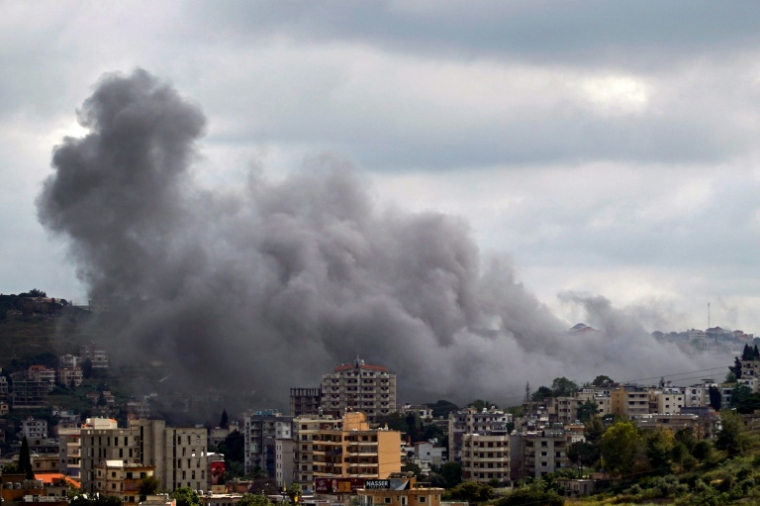
An Israeli airstrike on the village of Nabatiyé, in southern Lebanon, May 22, 2026 (AFP / Abbas Fakih)
In Lebanon, Israeli strikes continue despite the ceasefire in force between Israel and pro-Iranian Hezbollah since mid-April.
On Friday, ten people, including a young girl and six rescue workers, two of whom were affiliated with a movement allied to Hezbollah, were killed in the south of the country, according to the Lebanese Ministry of Health.
Furthermore, Israel carried out five air attacks Friday evening in eastern Lebanon, near the Syrian border, a region hitherto spared by Israeli strikes, announced the official Lebanese press agency NNA.


