I subscribe to the “Info” newsletter
The situation in the Middle East remains extremely tense despite the ceasefire that came into force on April 8 between Iran and the United States. After more than a month of conflict triggered by the Israeli-American strikes on February 28 against the Islamic Republic, diplomatic exchanges are struggling to progress and military threats are increasing again.
The President of the Iranian Parliament, Mohammad Bagher Ghalibaf, accused the United States on Wednesday May 20 of wanting to relaunch hostilities against Iran. In a message relayed by Iranian media, he affirmed that Washington had “not given up its military objectives” despite the economic and political pressures already exerted against the Islamic Republic.
Iran ready to expand conflict beyond the Middle East
According to Mohammad Bagher Ghalibaf, Iran must now strengthen its military preparation in order to respond to any new attack. He also insisted that his country would “never give in to intimidation”, accusing the United States of still hoping for an Iranian “surrender”.
At the same time, the Revolutionary Guards have threatened to widen the conflict well beyond the Middle East in the event of new American strikes. The Iranian ideological army claims to have still untapped military capabilities despite the fighting of recent weeks.
Donald Trump keeps up the pressure
For his part, Donald Trump once again threatened Iran with a resumption of strikes if no lasting agreement was found quickly. The American president mentioned a deadline of “two or three days” to obtain progress in the indirect discussions initiated between the two countries.
Despite these very harsh statements, Washington ensures that diplomatic contacts continue. American Vice President JD Vance even spoke of “good progress” in exchanges with the Iranian side.
The negotiations, carried out in particular with the help of Pakistan, have however remained blocked since a first unsuccessful meeting organized in Islamabad on April 11. Each camp remains in very distant positions.
A conflict with already heavy toll
The war that broke out on February 28 profoundly destabilized the region. The Israeli-American strikes cost the lives of several senior Iranian officials, including Supreme Leader Ali Khamenei, provoking a wave of Iranian retaliations against several American and allied interests in the Gulf.
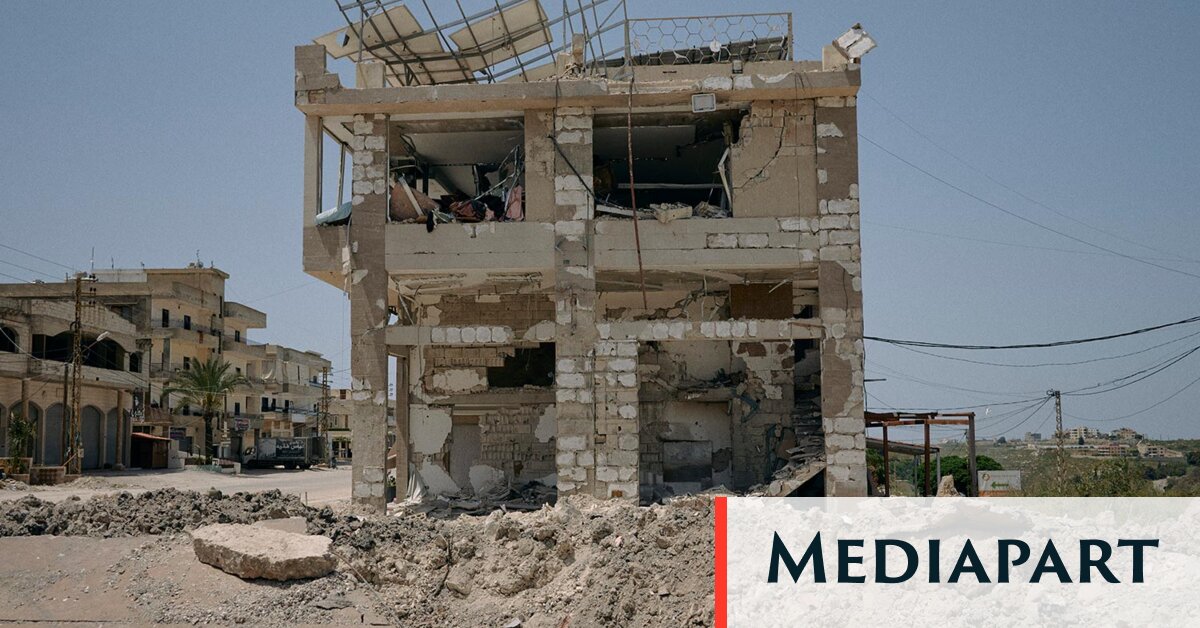
The conflict also affected Lebanon, where Hezbollah opened a front against Israel, provoking an Israeli military intervention in the south of the country.
Â
Beyond the human toll, estimated at several thousand deaths, the war caused a strong global economic shock. Oil prices have soared and international supply chains have been disrupted due to tensions in the Strait of Hormuz.
The Strait of Hormuz at the heart of concerns
One of the main issues today remains control of the Strait of Hormuz, a strategic passage through which nearly a fifth of the world’s crude oil traditionally passes. Since the start of the conflict, Iran has severely limited maritime traffic in this area. Iranian authorities now require ships to obtain authorization from the armed forces before crossing the strait.
On Wednesday, the Revolutionary Guard Navy announced that it had authorized the passage of 26 commercial ships over the past 24 hours, including oil tankers and container ships. South Korea confirmed that a South Korean tanker had crossed the strait “in coordination with Iran”, a first since the start of the war.
Iran has also formalized the creation of a new structure responsible for supervising this strategic maritime route: the Persian Gulf Strait Authority. This body could allow Tehran to impose more control on maritime traffic and potentially new rights of passage.
Russia and China call for dialogue
Faced with the risk of escalation, Russia and China have shown their diplomatic support for Iran. During a meeting between Vladimir Putin and Chinese leaders in Beijing, the two powers considered that the American and Israeli strikes violated international law.
Moscow and Beijing called for a rapid resumption of negotiations in order to avoid a new regional outbreak likely to further aggravate the global energy crisis. Qatar also pleaded for allowing “more time” for diplomacy, while several mediators are discreetly trying to maintain dialogue between Tehran and Washington.
A truce still fragile
Despite the existence of a ceasefire, the situation remains extremely unstable. The intersecting threats between Washington and Tehran, the absence of a diplomatic breakthrough and the persistent tensions around the Strait of Hormuz are fueling fears of a rapid resumption of hostilities.
The oil markets remain particularly attentive to developments in the situation. If oil prices fell slightly after the announcement of the passage of a South Korean ship through the strait, investors remain concerned by the possibility of a greater blockage of maritime traffic.
Iran now appears to be seeking to show that it retains strategic control over the region while avoiding, for the moment, a large-scale direct confrontation with the United States.
News from the RTL editorial team in your inbox.
Thanks to your RTL account, subscribe to the RTL info newsletter to follow all the daily news
S’abonner à la Newsletter RTL Info